23:05
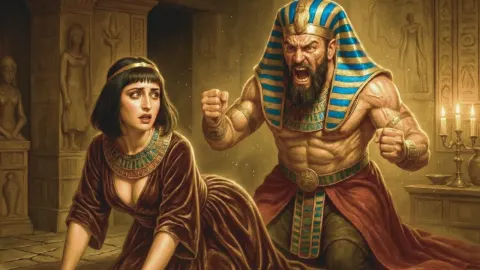



-Two and a half thousand years ago, ancient Greeks told of a terrifying catastrophe, the destruction of Atlantis. It was a tale of utter devastation and carnage, and has captivated the world for over 2,000 years. Atlantis, a once glittering city that had ruled the waves, now sank beneath them, obliterated from the face of the earth by a terrible natural disaster. Atlantis was described as one of the greatest places on Earth, luxurious, rich, and powerful. But for centuries, people have wondered, was it just a story, or did such an amazing city ever exist before it sank beneath the waves?
Now I'm on a journey through Greece to find out if there's any fact buried amongst the fiction. From clues hidden at the tops of mysterious mountains to discoveries buried deep beneath the ground, I'll trace the extraordinary story of the search for this legendary world. He wants this to be Atlantis. -He really wants this to be Atlantis. [Dan] Exploring today's incredible hunt for the ancient lost city. -I was determined to find it. [Dan] I'll uncover a world of luxury and beauty and evidence of brutal destruction. And I'll dive beneath the waves to find remains of an ancient city buried beneath the seas.
Incredible archaeological discoveries, extraordinary detective work. This is the hunt for the real lost city of Atlantis. [♪ peaceful music playing] I love being in Greece. I love the landscape, the rugged mountains, and then the beautiful coastline and the sea. I love the fact that there are so many historic sites to visit here. It's a place of magic, a place of mystery. And really, there's no bigger mystery than the strange ancient Greek story of the city of Atlantis, which lies underneath the waves.
It seems rather unlikely. And yet I'm off to visit a place now where I've been told that's exactly what I'm going to see. The first destination on my hunt for Atlantis is Pavlopetri, an isolated spot on the barren, southern tip of mainland Greece, where the ancient fragments of a destroyed lost city lie beneath the waves, like the legendary Atlantis. There is an air of mystery surrounding this beautiful stretch of coastline. The rocky shore is covered with strange crater-like pits where human bones have been discovered.
The waves lap against huge stone blocks that look manmade. But for thousands of years, no one had really investigated what was going on here, until a British archeologist, Nicholas Flemming, arrived at Pavlopetri hunting for sunken sites. Just like today, the beach was scattered with shards of ancient pottery. You can see these two bits here. Actually, this is a much better piece.
Look, it's like the rim of a drinking vessel or a storage container. And you can tell that this pottery had all been rubbed very smooth by the actions of the waves. It had probably been washed ashore from somewhere just out there. So he put on his scuba gear and went swimming, and instantly he started to see wonderful things. Over the next year, he would uncover a submerged ancient city. Had he found Atlantis? These waters can get quite rough, churning up the sand and burying everything. So I'm really hoping that some of what Flemming saw back in 1967 is still visible.
Luckily, I've got local diver George to guide me, and he knows this seabed like the back of his hand. Okay, here goes. Let's go and see what's beneath the waves. The sea is fairly shallow here, so I don't have to dive too deep to explore. It's amazing. The water's beautifully clear. At first, you look at shells and bits of rock, then you swim a bit closer, and you realize these are shards of broken pottery from thousands of years ago. Although the water's clear, years of rough seas have buried what Flemming saw back in the '60s.
And you have to look carefully to see any remains. But when you do get your eye in, you can see straight lines in the rocks. Those rocks are far too neatly lined up. They're far too straight to be put there by nature. They look like a wall. And George tells me that this was once the wall of someone's house. Shifting sands have covered the rest, but I'm swimming over the foundations of an entire neighborhood here. By scanning the seabed, archaeologists have been able to piece together the remains of the city and a sense of its layout.
You can make out rectangular shapes, which they identified as buildings and courtyards. There are rows upon rows of them spreading across the sea floor. And there's not only the homes of the living, but the graves of the dead. They stretch all the way from the beach to under the water. It looks like these, these holes, these, I think, this must be the cemetery. These must be graves.
[grunts] Well, I've visited ancient sites all over the world. I've been high in the mountains. I've been in deep jungles, but I have never dived on an ancient site beneath the waves. Unless you know what's beneath the waves here, this just feels like a lovely remote beach, a beautiful spot. But in fact, down there, there is the remains of a thriving, a bustling ancient city. The buildings would have been up to two stories high, packed together. They would have been trading with the Aegean Islands round into the Ionian.
This was a busy, dynamic place of life. But now all that's left are a few foundations beneath the waves and the graves of their dead. So could this really be a match for the spectacular city and the events described in the Atlantis story? Well, I think it's a possibility. But this is a region plagued by earthquakes and volcanoes. So now my hunt for Atlantis is taking me to where the story began, Athens. Where I'll discover that Pavlopetri is not the only candidate for that lost world.
Athens, two and a half thousand years ago, it was here that one of its most famous residents first told the incredible story of Atlantis. I've come to one of his favorite hangouts, the Agora, back then, the central meeting place in Athens. This place would have been a hive of activity, people coming here to shop, to chat, to gossip. Day and night, anyone who was anyone, beggars, tradesmen, and politicians, and, of course, philosophers. And the most famous of them was Plato, the man who first tells us about Atlantis and how it was destroyed.
To discover the real inspiration behind Atlantis, I need to get to the bottom of exactly what Plato wrote. All right, come on, then. The big question, Atlantis, fact or fiction? -You had to start with the hardest question, didn't you. -Yes, let's get into it. Jasmine Elmer is an expert on ancient Greece. -I would say it's definitely a story, but with little reality sprinkles on top.
-Hang on, that sounds a bit philosophical to me. There wasn't actually a city called Atlantis. [Jasmine] No, there's no real city called Atlantis. It's a mythical place that's made up by the philosopher Plato. -But I can go looking for the places that might have inspired Plato. -Yeah, totally right. What you will find is potentially these kind of places that have a similar story about them that could have inspired the, the story of Atlantis.
-And so how does he describe it? -Well, he talks about it being this kind of huge island sits out in the Atlantic Ocean, which to Greeks is this kind of like vague space somewhere over there, but it's absolutely huge. -Is it kind of a flourishing civilization? -Yeah, absolutely. I mean, first of all, it's a land rich in resources. So they had their own minerals and metals that they could mine. They had fertile plains, so they could like grow loads of amazing fruit and vegetables. They had exotic animals, even like elephants.
They also imported a lot of goods as well. So they had lots of luxury around them, colorful temples and palaces as well. Essentially what the Greeks would perceive as a very advanced civilization. [Dan] To begin with, the picture Plato paints of Atlantis is idyllic, a sprawling, prosperous city surrounded by olive trees, a busy port filled with ships, magnificent squares, and luxurious bathhouses. But it doesn't stay that way for long. In the story, this perfect city is hit by a cataclysmic earthquake before a terrifying tsunami buries it beneath the waves. And Plato was living in a society where the
earth does move quite a lot. -Exactly. I mean, this is what the reality sprinkles was I mentioned earlier on, because, absolutely, the Greeks are living in a world where natural disasters are occurring. That's where you get this kind of modern idea that Atlantis is this submerged city that we might be able to find. [Dan] Well, Pavlopetri ticks the submerged city box, but from what I saw, it doesn't feel that it was ever grand enough to have been an inspiration for Atlantis. I need a new lead, a place that feels more believable, more spectacular.
150 years ago, there was a breakthrough archaeological discovery at a place that I think might fit the bill, a place on Greece's largest island to the south of here. Across the Aegean Sea from Athens, that island is Crete. And the extraordinary discovery made here late in the 19th century changed everything. Suddenly, people began to wonder if Crete could have been the inspiration for Atlantis. [Dan] A man who was brilliantly called Minos, after the legendary king, who'd once ruled over this island, discovered some strange, large stone blocks just
down there in a place called Knossos. Not much was made of it at the time because the island was embroiled in a bitter war. But word of it did get out, and 20 years later, a famous British archaeologist arrived in Crete. He was on a mission to investigate the mysterious finds. His name was Arthur Evans. Almost at once, their efforts were rewarded. As they shoveled away mountains of dirt from this section here, they revealed these huge stone blocks, which seemed to be forming a corridor. This was the first glimpse that something monumental really lay beneath their feet. With mounting anticipation, Evans, leading a 30-strong team, carried on digging. And then just weeks later on the 5th of April 1900,
Evans came face-to-face with something incredible. Early that morning, the team were clearing some dirt off on the standing walls, and they started to see what looked like an image painted beneath. It was damaged, but soon features were visible. It was a human. It was life-size with rich red skin, slim waist, eyes shaped almost like almonds. And it was holding a cup. Nothing like this had been seen before. Evans guessed that it was ancient. In fact, no one had looked into those eyes for three and a half thousand years.
This amazing discovery was an ancient civilization, lost and buried here. just like Atlantis. It was the start of a rapid succession of spectacular find after find, painted corridors, rooms full of magnificent jars, and grand staircases. And then on April the 13th, after eight more days of frenzied, backbreaking digging, the team worked their way to this spot. Evans was about to uncover the most remarkable, game-changing discovery of his life. At first, it wasn't clear what he'd found.
It was a finely crafted room, and there was evidence of beautiful paintings on these walls. There were benches along the edges, and there were steps leading down to this strange sunken pit that reminded Evans of a communal bathhouse that you might find in a Roman site. But then he made an astonishing discovery. Just opposite the pit, there was a beautifully crafted chair. In Evans's mind suddenly, this was not a bathroom. This was a throne room. The heart of some ancient royal palace. Gradually, an incredible lost world was coming back to life before their eyes.
News of the remarkable discoveries captivated the world. With evidence of a royal throne room, Evans was certain he'd found the palace of King Minos, the legendary ancient king of Crete. The archaeologist named the civilization Minoan after the king. But some people began to make another connection. Could this lost world actually be the inspiration for Atlantis, the magnificent island city that had been devastated in Plato's story? There are interesting parallels between this place and Plato's Atlantis. First of all, Knossos is on a huge, lush island. That's a big tick. And then Plato describes a royal palace that befitted the greatness of the kingdom.
It was made up from buildings of many colors by blending the stones for the sake of ornament. Well, that could be describing this palace. He also describes how sacred bulls were allowed to roam free through the Palace of Atlantis. And there's one thing you see plenty of here, and that's images of bulls. [Dan] As Evans excavated, he discovered images of bulls throughout the site. Even wall paintings of Minoan people leaping over the back of charging bulls. And this was just the beginning. As Evans and his team excavated over 14,000 square meters,
the parallels between Knossos and Plato's story of Atlantis seemed to grow and grow. Plato described that the size and beauty of Atlantis was astonishing to see. Just like the enormous complex of grand buildings here, in Plato's story, the royal citadel in Atlantis is surrounded by mighty mountains, just like Knossos. Atlantis was a mighty sea power. Plato tells us that its vast harbor was crowded with merchant ships, and there was a constant din of noise and shouting day and night. And like Atlantis, the Minoans also dominated the seas.
In the 1960s, one man became captivated. His name was Spyridon Marinatos. He was a local archaeologist and the curator of the museum in town. Marinatos had first visited Knossos while archaeologists excavated it. He'd been blown away by their beautiful discoveries, but he'd also been fascinated by something else they'd unearthed. As the team excavated the palace, they realized that it had been repaired, changed at various points in its lifetime. It had obviously been through quite a lot.
Like Atlantis, the Minoan civilization had vanished almost without trace for thousands of years. No one knew why. In the story, Atlantis had been the victim of a terrible natural disaster. But had a natural disaster also wiped out the civilization here? Marinatos was now on a mission to find out. His investigations have been studied by Minoan expert Steve Kershaw. I mean, what do you think happened here? -There's a palace here that's been inhabited for 450 years, going through all sorts of different phases of destruction and rebuilding, and modification. And some of those destructive events were natural, the kind of things like earthquakes.
Some of them may have been manmade as well. -And so some of that could just be accidental fire. -It could, indeed. But Marinatos really wanted to get to the bottom of this. And he's found traces of volcanic dust on the island. So he thinks it's something volcanic, but he doesn't think that the volcano is on Crete. He thinks it's on a nearby island. [Dan] Marinatos wants to prove that a volcanic eruption from a nearby island had destroyed the Minoan civilization here. And he had a very specific island in mind, Santorini, which lies just 60 miles away. And it's home to an enormous volcano.
So is Marinatos looking for this volcano solution a little bit because of his obsession with the story of Atlantis? -It's very possible. He, he knows that story. He likes that story. And he, in a sense, wants that story to be true. -He wants this to be Atlantis. -He really wants this to be Atlantis. [Dan] In his story of Atlantis, Plato says that Atlantis wasn't just one island but made up of several islands.
Could Santorini be one of the other islands mentioned in the story? I'm now heading to the island of Santorini, 60 miles away across the sea. Santorini is home to the biggest and most volatile volcano in the region. If you look, look at these rock formations, this whole island is basically one enormous volcano.
[eruption] Just 17 years before Marinatos arrived, Santorini's volcano had erupted, spewing ash and fireballs 1,000 meters into the sky. What if an even more violent eruption had occurred three and a half thousand years before, at the time when the Minoan civilization discovered on Crete reached its height? That could mean that there was a city buried here beneath the rock. [Dan] A busy city with docks and harbors. But where should Marinatos start his hunt for this lost port? There are 42 miles of coastline on this island.
It must have seemed like mission impossible, but little did Marinatos know on the coast of Santorini he was about to make the greatest archaeological discovery of his life. In 1899, some laborers in a quarry just inland from here started finding some mysterious objects. They didn't know what they were, but they thought they looked ancient. Marinatos was intrigued. This was the perfect position for a port city right on the coast. So gathering together a team, he started to investigate here.
He had no idea how deep they'd have to dig. The volcanic ash and rock is 30 meters high in some places on the island. But remarkably, on the very first day, they made a breakthrough. They were digging through stuff just like this here. And he was ecstatic when about four meters down, he starts to make out the shape of pots. In his expert eye, they were clearly storage jars and storage jars that looked to be exactly the same type and date as the ones he was so familiar with from Knossos in Crete. But that was nothing because a few days later, he would discover an entire buried city.
He called it Akrotiri. Wow. Over the next seven years, the archaeologists feverishly excavated. Wall after wall, room after room and building after building slowly began to appear from beneath the three and a half thousand year old ash and rubble. And as they dug, they began to reveal striking similarities with the story of Atlantis. Located by the sea, it was almost certainly a port city. With its impressive multi-story buildings, Akrotiri had clearly been wealthy, just like Atlantis, and as more and more of the ancient city surfaced from the ash, the similarities grew even stronger. So what, what are we looking at here?
-So this is one of the main streets of the town. And you've got houses on either side. You can just see the remains of the walls. Then a main street that would have been paved with beautiful flagstones. And then the most remarkable thing, I think underneath it, you've got a drainage system. [Dan] That gutter there? [Steve] That gutter, yes. That humble gutter is actually a mark of extremely high civilization. [Dan] Amazing. [Steve] There's flushing lavatory systems, and that would have all gone into that and flushed it out into the sea.
-I mean that wasn't normal at the time presumably. -No, that is highly sophisticated. There's, there's not many cultures have got that level of water engineering in their states at this time and, and these people have got it down so well. -And that, I guess, allows everyone to live together in this crowded way without getting terrible diseases. -It's going to help. One of the reasons that people have drawn parallels between here and Plato's Atlantis is precisely this facility with water engineering, because the Atlanteans are kind of the ultimate water engineers.
They create bathhouses with both cold and hot, not just for their elite classes, but for the, the rest of the population, and indeed not just for the human population, but for the horses, the beasts of burden and the animals. So we have cleanliness pervading Atlantis. -So in Plato's Atlantis even the animals are clean. -They are. -So for Plato and the ancient Greeks, water management, that said, you are an advanced civilization. -It does indeed, yeah. -And they're doing it here. -They're doing it right here. -Brilliant. It was like Atlantis itself had been found in stone.
You no longer had to imagine it. You can walk through the streets, you can almost sense the people that had once lived here. Today, many of Akrotiri's finest treasures lie in Santorini's Archaeological Museum in the town of Thera. Each one gives a fascinating insight into that lost world and the parallels with the story of Atlantis. I love these murals. This was painted onto the wall of one of the grandest houses in Akrotiri. And it's such a special thing to have an image of their world painted by the people who actually lived in it.
Just look at this wonderful island here. It's lush. You've got fantastic detail. It looks like trees, deer, perhaps a lion up there. And then my favorite bit, this armada of ships and boats heading out across the sea, some of them under oar, some of them sail-powered. Some of them look ceremonial, like it's almost a kind of festival experience. Dolphins all around them, and they're arriving in somewhere that I think looks quite like Santorini, barren red cliffs, a sense of the volcanic with colored buildings, people greeting them. This is a wealthy maritime world, a world of color and vibrancy. Could this settlement at the end here actually be Akrotiri?
Was this what it looked like before it was destroyed in that volcano? The other thing that really strikes me when you look at this, you look at the animals, the richness of the colors, the buildings, the ships. If you did want a picture of Plato's Atlantis, this is pretty much it. Marinatos had discovered that, like the Atlanteans, who ruled over several islands, the real-life Minoans flourished both here and on Crete.
The Minoans, too, were clearly a massive sea power with connections as far away as Egypt, and they suffered an epic natural disaster. The idea that these places were the inspiration for Plato's Atlantis is compelling. The problem I have with it is that it took place over 1,000 years before Plato was writing, and we've got absolutely no evidence that Plato had ever heard about it. In fact, there is no account, no mention of the destruction of Akrotiri in any ancient source at all. Possibly, we've lost those sources over the years. And possibly, it was such an enormous event that it was just talked about, handed down from parent to
child over the generations. So despite all the incredible similarities with Atlantis, I'm going to continue my search. And luckily there is another contender. Through an incredible piece of detective work, archaeologists have just discovered another lost city on the coast of mainland Greece. Perhaps the inspiration for Atlantis lies closer to Plato's home of Athens and much closer to Plato's time.
[Dan] Greece, nearly two and a half thousand years ago, news of a terrible natural disaster reached the city of Athens. About 100 miles away, along the coast, a huge tsunami had smashed into the shoreline. A once bustling, vibrant port now lay beneath the waves. The devastated city was called Helike, and intriguingly, its destruction occurred just 13 years before Plato wrote about Atlantis. There are some very interesting parallels. For example, people in Greece at the time said that the population of Helike must have somehow enraged the sea god Poseidon, and he was the one who destroyed the town.
Well, in the same way, Plato's Atlantis is smashed by a vengeful god. It's an interesting coincidence. A vanished city, destroyed by a tsunami in Plato's lifetime certainly seems like a good candidate as the inspiration for Atlantis. The problem was that for centuries it was impossible to explore the connection because Helike had vanished without a trace.
Apart from a few ancient stories, there was no evidence that the city had ever existed at all. But just 35 years ago, archaeologists began to hunt. And all that would change. Their search would turn out to be one of the most brilliant pieces of archaeological detective work I have ever come across. Just heading up the coast now, following in the footsteps of those brilliant archaeologists, and I cannot wait to see what they uncovered.
At first, the archaeologists only had a very rough idea where to look for the ancient city of Helike, 100 miles west of Athens on the coast. Once they arrived, they began to scour every inch of the seabed around the shore, using sonar equipment, hunting for the city. After three years, they had found absolutely nothing. Not one ruined building, not one piece of pottery.
But they didn't give up hope. Instead, they did something surprising. They began to look inland. Now that might sound like they're swapping their search for a drop in the ocean to a needle in a haystack. But the archaeologists had a theory. What if the old coastline was actually inland from where the modern beach is? That would mean Helike wasn't underwater. It was underground. The archaeologists began looking back at the ancient stories to see if there could be anything in this theory. They concluded that in their previous hunts, something had been lost in translation.
Helike wasn't buried under the sea, but lost under an inland lagoon. And they had some useful clues. The ancient records named a few places, which archaeologists hoped might help them pinpoint its location. I've come a mile or two in from the coast now, and apparently, one of the key landmarks is hidden in these cliffs above me now. One of the stories referred to a magical cave high up in the mountains.
This was the cave of Herakles. You may know him by his Roman name, Hercules. He's the half-man, half god who performed the 12 labors. While the ancient Greeks would climb up to the cave, they'd kneel down before a statue of Herakles just in there. They'd roll some dice, and the statue would apparently tell their fortunes for them. It still feels like a bit of adventure coming up here today. But more recently, this cave was also the vital piece of evidence that helped archaeologists fix the position of the ancient city of Helike. In ancient times, a geographer visited here and significantly wrote down a detailed description of the area.
He mentions this cave. He mentions the ruins of Helike, which you can still see in the shallows. And he mentions the town of Aigio, which is still in existence today. And that allowed archaeologists to piece together what this coastline might have looked like two and a half thousand years ago. Here is the coast, here is the sea. We know he mentions the cave here, and he mentions the town of Aigio, still in existence on the coast today. Now, he says that Aigio was four and a half miles from the ruins of Helike. And he says that the cave was three miles from the ruins of Helike, which means Helike should be around about here.
X marks the spot. That is where they need to start looking. [Dan] January 2000. On the Greek coast, 100 miles west of Athens, the atmosphere was buzzing. After decades of searching, archaeologists had finally targeted a location for the lost city of Helike. They'd always wondered whether Helike was inspiration for Atlantis. Now, at last, they had a chance to find out. It wasn't the easiest place to dig. As you can see, the countryside is packed with dense olive groves. And once they'd cleared these trees away, they dug into the ground and found water quite close to the surface. The water table was very high. All of it just made digging a difficult process.
They nervously dug through the waterlogged soil, and it gradually became clear that something was buried here beneath the ground. Little by little, stone blocks emerged, forming the outline of walls. Pebbled floors slowly came into view, and there were enormous storage jars dotted across the site. They realized that, amazingly, the lost city of Helike had been beautifully preserved beneath the soil after thousands of years.
The archaeologist leading the hunt for the lost city was Dora Katsonopoulou. So, Dora, what are we looking at here? -We are walking through a major building complex. Here was a thriving industry of textile. They were making textile. They were selling textile. Lots of products going in and out. Lots of coins found here showing exchange with many cities around Greece, a very, a very rich place. [Dan] This ancient factory is just one of the many pockets that have been found so far.
The evidence already shows that over 2,000 years, this city grew to be huge, rich and powerful, just like Atlantis. And the evidence also suggests that this once glorious place was destroyed in exactly the same way as Plato's Atlantis, starting with a massive earthquake. -About 600 meters east from this building we have found in one of our excavations the ruins of a classical building that was destroyed by this earthquake of 373 BC, and actually the way the walls are destroyed shows that there we have a tsunami action. [Dan] Wow. So you can tell from the archaeology that the buildings were knocked over by a tsunami.
[Dora] Yes, exactly. [Dan] Wow. Atlantis and Helike had shared exactly the same fate. And as evidence surfaced from beneath the ground, Dora dug further into the ancient records about Helike, where she discovered another incredible connection. Just like Atlantis in Plato's story, Helike had been a bustling port. On the night of the catastrophe, it was harboring a whole fleet of Spartan warships. Extraordinarily, the admiral of this fleet was Plato's most bitter enemy. -We found by looking again into the ancient sources that Plato had also a personal interest in the Helike destruction.
Plato was traveling a lot, and in one of his travels he was captured. -Wow. -And so the person tried to sell Plato into slavery. -What? -Slavery. And here in Helike, the night of the earthquake, there were anchored here in Helike's port Spartan, 10 Spartan ships. Their admiral was called Polis. This Spartan admiral was the person that years ago, had tried to sell him into slavery. And he got drowned here.
-No. -Oh yes. -So we know that this destruction would have had a big impact personally. -Yes, yes. -On Plato? -On Plato, yes. -Cool. Out of all the places I visited on my hunt for Atlantis, Helike really does seem to tick the boxes as a real candidate for the inspiration for Plato's story. The destruction of Helike didn't just occur within Plato's lifetime, but it had killed off his arch enemy.
I would love to go back to the agora here in Plato's time and grab him by the shoulders and ask him what his inspirations were. Was it Helike, Akrotiri, or Crete, or one of the other places I've been to? Or was it all just a product of his own imagination? In my mind, when Plato was conjuring up his fabulous story of Atlantis with its glittering palaces, bustling ports, and its terrible destruction, the chances are that he was picking and mixing from all the extraordinary places that I've seen. And would he be amazed to discover that two and a half thousand years later people are
still fascinated by the Atlantis story? It's contributed to archaeologists making remarkable discoveries, and will that interest in Atlantis continue, and will it drive us to discover yet more ancient ruins beneath the waves?