59:41
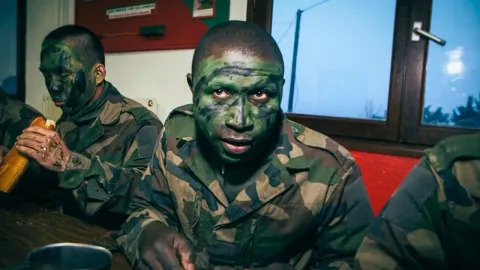



Why were the Japanese so brutal in World War II? Japan is known as the land of anime, sushi, and sumo. Today, when outsiders think of Japan, the first thoughts that come to mind are probably Godzilla, impeccable politeness, and technological innovation. In the last century, however, there was a different, far darker reputation garnered by the land of the rising sun. What caused this infamous reputation for cruelty? Bushido. The explanation has its roots that go back for centuries. Japan was a patchwork of feudal states, which were in a near constant state of war, reaching its height during the Sengoku Jidai period, which began in the mid-15th century, ending in 1603 with
the establishment of the Tokugawa Shogunate. With the endless fighting, tremendous cultural emphasis was placed on the warrior class, the samurai. During the stability of the Tokugawa Shogunate, this cultural attitude was formalized into a warrior's moral code of conduct called Bushido, which means way of the warrior. Bushido changed in its tenets over the centuries, but some of the main principles, such as self-sacrifice, reckless bravery in the face of the enemy, and unquestioning loyalty to one's daimyo or lord, never changed. The age of the samurai ended after the Meiji Restoration in 1868. The once strict social classes of the
previous eras were eliminated, and Japan underwent rapid industrialization after centuries of isolation. Bushido was re-adopted for the modern age, with Emperor Hirohito and his military officers being substituted for the shogun and daimyo. Its teachings dominating actions before and during the Second World War. Japan began to modernize rapidly using Western industrial, technological, and military innovations. And the Bushido code was adapted to fit into the modern landscape. In the years before the outbreak of war, the Japanese school system had fully embraced the regimented militarism of Bushido. Students were indoctrinated into a system of unrelenting discipline that emphasized obedience to authority as the highest of
virtues. This would be enforced by cruel methods, such as being beaten by their teachers, struck with canes or wooden swords, being forced to run laps until dropping from exhaustion, or hold heavy objects on outstretched hands, and whatever else their instructors could come up with. This type of indoctrination led to a generation who had unflinching loyalty to their emperor and their superiors. And they would obey without question. No retreat, no surrender. Perhaps the most infamous aspect of Japanese culture during this time was the willingness to fight to the bitter end. According to their view on warfare, surrendering was an unbearable disgrace, a mark of shame for any fighting man.
When other armies would see the futility of fighting and give up, the Japanese military would keep fighting regardless of the casualties. For comparison, for every Allied soldier taken captive in World War II, three would be killed on the battlefield. While the Japanese military would suffer 120 dead for every one of its soldiers taken captive. Often, they would resort to bonsai charges, hurling themselves at the enemy rather than surrender. This was named after their battle cry "Tenno Heika Banzai", roughly translated as "Long live the emperor". One of the most famous bonsai charges happened on July 6th, 1944 on Saipan. After 3 weeks of battle, the Americans had captured much
of the island and were closing the noose on the remaining Japanese defenders. Rather than surrender, Lieutenant General Yoshitsugu, the commanding officer, committed seppuku or ritual suicide in the face of his failure, another samurai tradition. The remaining men and officers, as well as many civilians, then threw themselves with reckless abandon at the American lines, hoping to kill as many soldiers before being killed in the fierce fighting that ensued, much of it in desperate hand-to-hand combat. For the next 12 hours, they rampaged around the island, overrunning several American positions before the bitter end. It was estimated that around 4,300 Japanese soldiers died this way rather than surrender, the largest banzai attack of the war. They
weren't alone in their fanatical defiance. Hundreds of civilians threw themselves off of cliffsides rather than allow themselves to be captured by the horrified Americans. While this was the largest banzai attack of the war, they would be repeated over and over again during the island-hopping campaign. Any survivors committing seppuku, preferring death to capture. Many Japanese soldiers would also fake surrendering, then drop a grenade or pull a pistol on American soldiers that had dropped their guard. After several of these incidents, the Americans, for the most part, stopped believing attempts at surrender, simply shooting the supposedly surrendering soldier rather than take the risk. The
most extreme example of this attitude of never surrendering was the kamikaze, translated as divine wind. These were pilots who would deliberately crash their planes into enemy ships as a last-ditch desperate attempt to halt their inexorable advance on the Japanese homeland. These pilots were sent on a one-way mission to damage as much enemy naval strength as possible. Kamikaze attacks reached their peak in 1945 at the Battle of Okinawa, the last stepping stone before Japan itself. Swarms of these fanatical pilots struck the American fleet, killing over 5,000, the largest loss of life the US Navy suffered in a single battle. Even with their Pacific empire in ruins, the Japanese nation would not give in, even
resorting to handing out bamboo spears to school children. During planning for the invasion, the American military was expecting to have to fight the majority of the population. In anticipation of Operation Downfall, estimates of potential Allied casualties reached as high as 1 million, and half a million Purple Hearts were produced, a number so high that these original medals are still being given out today. Don't get taken prisoner. Since the very concept of surrendering was inconceivable to the Japanese military mindset, they had nothing but contempt for enemy combatants that laid down their weapons. These men had given up their honor, and in an honor-bound
society, these made POWs the lowest of the low. Compounding this was Japan's attitude towards the Geneva Convention, which governed the treatment of POWs. Japan did sign the convention, but failed to ratify it. As a result, they didn't abide by its tenets, with some officers derisively calling it the Coward's Code. So, when Allied troops surrendered, such as when 80,000 British, Indian, Malaysian, and Australian soldiers gave up at 1942 at the fall of Singapore, they were taken aback. How could any self-respecting fighting man give up so easily? As they had no honor, the prisoners were treated as animals with little regard for their
well-being. Forced to work at doing hard labor, they were deliberately starved, beaten, and executed for the slightest of infractions. They could be used for bayonet practice or decapitated with an officer's swords on a whim. Because of this treatment, the death rate among POWs was appallingly high. For comparison, the death rate for an Allied soldier in a German POW camp was about 1.2%. Those unfortunate enough to be taken by the Japanese suffered a death rate as high as 37%. The treatment of civilians. This blatant disregard for human life also encompassed civilians as well. In addition to their form of Bushido, the Japanese also held deeply xenophobic views towards outsiders, especially the Chinese. As early as 1931, Japan began
to encroach on Chinese territory, which erupted into the Second Sino-Japanese War in 1937. In December of that year, the Japanese army captured the city of Nanking. During the next 2 months, the population was systematically subject to one of the most brutal sackings in history. Estimates vary, but between 100 and 300,000 Chinese civilians were killed with countless incidents of torture, assault, and murders committed. At one point, a pair of Japanese officers competed with one another to see who could decapitate 100 Chinese the fastest. Though they exceeded this number by murdering 106 and 105, respectively. By far, the most horrifying aspect of this disregard for human life was Unit 731, short for Manchu Detachment 731, a chemical and
biological warfare research team. This unit of the Imperial Japanese Army performed experiments on captive prisoners, mostly Chinese and Korean subjects. The prisoners would be infected with various diseases to document the progress. Limbs would be hacked off and organs would be removed while the victim was still alive to determine the progress of the disease still in living tissue. Weapons would also be tested on living subjects, including guns, knives, bayonets, explosives like grenades, flamethrowers, and anything else in the Japanese arsenal would be used on the captives. The effectiveness jotted down for study.
These are just a few of the horrors that Unit 731 inflicted on the defenseless. After the war, the Japanese government and people distanced themselves as much as possible from the fanaticism of the mid-20th century. With pacifism written into their constitution, Japanese culture has shifted, now focusing much more on technological advancement and connection with the outside world, a 180-degree change from their past. The cliffs of Saipan were never meant to echo with screams, but in July 1944, American soldiers stood frozen as whole Japanese families stepped towards the island's rocky edges. Some clung to one another. Some prayed. Many just wept.
And then, one after another, they jumped. For many civilians, it was the final order that they would ever receive. Japanese soldiers had told them that the Americans would torture them. Propaganda had shown the Americans as demons with claws and fangs. Surrender was described as worse than death. Five-year-old Koyu Shiroma remembered his father's desperate warning, "The Americans will kill you. You must die yourself." Moments later, Koyu followed the crowd and leapt, but survived because his clothing snagged on a branch. This horror wasn't an isolated incident. Similar scenes unfolded on Tinian, on Saipan, and later, on a scale, at Okinawa. And behind all of it
was the same driving force, fear. Fear built over years of propaganda, fear hardened by battlefield experience, and fear fueled by a realization that the enemy, Japan, once mocked, might in fact be unstoppable. So, here's the question directly. Did the Japanese truly fear the Americans during World War II? Long before Pearl Harbor, Japanese perceptions of the Americans were shaped by resentment and cultural friction. The United States had imposed severe economic sanctions in response to Japan's wars in China and its expansion into French Indochina. These embargoes, especially on oil, threatened Japan's entire war machine. To many Japanese citizens, this American position looked deliberately hostile and humiliating.
Propaganda reinforced this. Americans were portrayed as weak, individualistic, and lacking any form of bushido, the warrior's fear that the Japanese ideology prized above all else. The West was decadent, lazy, and spiritually empty. Technically advanced, sure, but fundamentally soft. To a society steeped in martial culture, this distinction mattered. Japan believed its collective discipline and willingness to sacrifice would triumph over America's material abundance. In short, before the war, many Japanese looked down on the Americans. They didn't fear them. Once war broke out, Japanese units gained first-hand experience fighting Americans in places like Guadalcanal, the Philippines, and the Solomon Islands.
Their reports reveal a complex picture. On one hand, American infantrymen were noted to be skilled riflemen, capable grenade users, and usually supported by extraordinary artillery fire. The Japanese were struck by how quickly American forces adapted, how well they used combined arms, and how effectively they leveraged their industrial might, but the early assessments still echoed pre-war arrogance. Japanese officers wrote that the Americans lacked initiative, scouted poorly, and were overly dependent on firepower. Supply dumps were described as extravagant, which reinforced the belief that Americans were spoiled and soft. At this stage, the Japanese saw their enemy as
capable, but still inferior in spirit. That perception wouldn't last. By late 1943, something changed. Despite heavy casualties, American forces kept pushing forward. The US Navy replaced sunk ships at staggering speed. Lost aircraft were replaced in greater numbers. Infantry divisions rotated fresh troops into battle, while Japan's ranks grew thinner and younger. For Japanese soldiers, this was unnerving. The American industrial base, immense, distant, and untouchable, was an enemy of its own. Diaries and interrogations revealed comments like, "They never stop coming. Their ships return faster than we can sink them.
It's like fighting the tide." This was the beginning of genuine fear, not of American courage, but of American inevitability. As the Pacific campaign intensified, one group in particular came to symbolize American ferocity, the US Marine Corps. From Guadalcanal onward, Marines earned a reputation as relentless assault troops. Japanese propaganda amplified this reputation, portraying Marines as inhuman barbarians, murderers, sadists, and even criminals recruited from prisons. Absurd rumors circulated claiming Marines were forced to kill their own families to prove their loyalty. Wild? Yeah, but effective. Many Japanese soldiers came to believe that to surrender to the Marines was equivalent to torture or execution. Civilians absorbed this
belief, too, setting the stage for the mass suicides that would shock American troops in 1944 and '45. By the time the American forces had reached Saipan, fear among the Japanese population had hit its peak. After brutal fighting and a final desperate bonsai charge, Japanese defenders were shattered. The civilians, conditioned for years to believe that the Americans were monsters, now faced what they believed was their fate. Hundreds, possibly over a thousand, chose suicide. Journal entries from American soldiers described the scenes in disbelief. Entire families walking calmly to the edge, bowing towards the sea, and jumping hand in hand. US troops
tried to shout assurances, even posted Japanese-speaking interpreters, but to little effect. Fear had replaced reason. Of Saipan's roughly 20,000 civilians, as many as 13,000 died during the battle, though exact numbers are difficult to verify. This tragedy made one thing undeniable. Japan's wartime propaganda had succeeded far too well. Several factors reinforced Japanese terror as the war continued. One were feigned surrenders and brutal close-quarters fighting. Japanese soldiers often pretended to surrender before detonating grenades or using knives at point-blank range. US medics often moving unarmed to treat wounded men were killed this way.
American troops learned not to trust surrender gestures, which led to legitimate surrenders sometimes being met with preemptive gunfire. To Japanese observers, this looked like proof of American savagery. Two, the trophy taking. While not widespread, the taking of skulls, teeth, and ears by some American servicemen horrified both the Japanese and the American high command, which eventually issued strict prohibitions. Japanese civilians and soldiers often heard rumors, some true, most exaggerated, that Americans collected body parts as trophies. Given the climate of mutual dehumanization, these stories spread rapidly. Once the media and newspapers got a hold of them,
they became yet another reason surrender seemed impossible. Three was the American firepower. Perhaps nothing provoked more dread than American artillery and naval bombardment. Japanese diaries frequently mention the earth-shaking power of US naval guns, nighttime bombardments that made sleep impossible, and shells that fell endlessly. To soldiers that were raised to believe in spirit over machinery, this display of overwhelming industrial power was psychologically crushing. By 1945, the Pacific War had become a feedback loop of terror. Japan taught its people that Americans were monsters.
Japanese soldiers acted in ways that hardened Americans into distrust. American responses confirmed Japanese fears, which in turn justified more resistance and more brutality. Neither side saw the other as fully human anymore. Okinawa, just 340 miles from mainland Japan, was the last and bloodiest battle of the Pacific. Between 100 and 150,000 civilians died, many caught between the two armies, many more pressed into forced labor, and thousands encouraged or coerced to commit suicide rather than surrender. When the US planners studied Okinawa's casualty rates, they concluded that an invasion of Japan itself might kill millions, both allied and Japanese. The Japanese government, meanwhile, broadcast increasingly desperate propaganda,
urging civilians to resist to the death, warning again that Americans would commit atrocities against anyone who surrendered. Fear had consumed the home islands. And yet, when American forces finally occupied Japan after its surrender, many civilians were shocked to be treated with professionalism and restraint, proof that wartime propaganda had shaped a distorted image on both sides. Did the Japanese fear the Americans? The answer is unquestionably yes, but not in a simple way. At the start of the war, the Japanese mocked Americans as soft and undisciplined. On the battlefield, they came to respect American firepower and adaptability. As defeat became inevitable, that respect
turned into fear of American strength, of American brutality, and of propaganda-fed nightmares that convinced thousands that death was preferable to capture. In the end, fear shaped how the Pacific War was fought, how civilians behaved, and how millions understood their enemy. It magnified brutality, fueled resolve, and contributed to tragedies that still haunt the memory of the war today.