16:26



Hello and welcome to Incident Genius, a byite-size masterclass in podcast form. Every Monday and Friday, you'll hear worldleading scientists and experts talking about the most fascinating ideas in science and technology today. I'm Jason Goodger, commissioning editor at BBC Science Focus. Today, we have the honor of being joined by Professor Mark Modovnik, a material scientist based at University College London, best-selling author and presenter of several BBC science documentaries. Thanks very much for joining us, Mark. Hello. Yeah, thanks for inviting me. So, you're a material scientist. So, a lot of people perhaps don't know what this is. You know, you can study of GCSE in physics,
biology, chemistry, but not material science. So, what exactly as far as I know, so what exactly is it? It is kind of uh annoying that because materials are everywhere. Like I mean, just look around you. You're wearing them, you're sitting on them or you're standing on them. You know, all of our tech is made of materials. all of our houses, our transport, our roads. Imagine taking all those materials away and we're left shivering naked. I mean, we're not human as we would really recognize ourselves. We wouldn't survive. So materials, you know, is comes before physics, chemistry. It's like much more ancient, you know, like we in fact, the ages of civilization are named after materials.
You know, it's the stone age, uh, you know, and the copper age and the bronze age and the iron age and so on. So it's baffling to me that the first thing you learn in school on in the science world is not material science. It's totally baffling. So let's stick with this history thing a bit then. So going way back like as you mentioned our ancestors were in a way sort of fantastic material scientists. So we've got sort of pottery like you say, iron work, bronze work, paper, glass like the list is pretty much endless. But can we sort of nail down some specific points in time where significant change really happened?
Yeah. Well, so you got the ancient times and let's say the stone age, you know, kind of you can go back a million years and find stone tools. So like and this is the kind of flint, you know, the ability to kind of make stones into cutting tools is kind of in the archeological record. You can see it very clearly, but pro but the stuff you can't see that's disappeared, it was probably there too. So for instance, it's kind of clear that our common ancestors, which are sort of monkeys and apes, you know, they already understand wood. They already use wood in a way to kind of modulate their environment. And we must have been doing that too. And the idea that we weren't doing that seems fanciful. So, so we were kind of
using wood for shelter, using wood to make fire, which is a big moment in time because that is a that then makes the possibility of the next jump happen, which is that, you know, maybe that maybe fire is just controlled to cook food first of all, and that turns out to give you much more calories. You know, you it's not just more taste and there's a big explosion in the human brain around that time. So, you and that's that's thought to be due to the fact there's many more calories in. So you can dedicate a lot more energy to thinking u and you don't have to search for food as much because you're getting more calories. So there those things are happening in the
material world. And then there's this moment, this incredible moment which we're not sure exactly when it happened, but you know this is like um you know 15 20,000 years ago where someone somewhere and you know there's evidence that it's in the Middle East um puts a kind of weird colored stone in the fire like a copper sort of greeny blue stone and next day or you know next week they looking at the fire and they find the metal copper were in there. So they've transformed a stone into a metal. And before that metals, I mean metals are not in their lives. There are a few that come from space. Meteorites do land and we know that you they use them as kind of jewelry and stuff, but once you realize that the
rocks all around you have hidden kind of materials in them and they are insanely useful, then this opens up, you know, the kind of technological um bounty that happens. So we get the copper age because copper tools be are the best tool and copper is a metals are the best tool material. They're better than stone because you can keep reshaping them and remolding them and re you know remelting them and with a stone they're great but once you've broken it you've broken it. So imagine you go to the you know the wood with a stone axe which they did. Um and you're felling trees to make shelters which we know they did. uh and you're making string and rope, which we know they did, but then you suddenly have a copper knife or a copper axe and you are much
more powerful. You're much more versatile. And I'm afraid was also a better military. It was actually a better and that's the drive to make it even better was the bronze age cuz turns out copper is great. you can mold it and you can sharpen it and you know it's a very versatile tool material. But if you add tiny amounts of things like zinc or arsenic, you get bronze and they worked out how to do this and then you get something that's 10 times stronger. And so there's a massive kind of just expansion. And the bronze age is a very, you know, you can see it in the archeological field. It really allows things like the pyramids to be built, right? So you have copper and bronze tools. you have massive cities huned out
of rocks. How do you shape rocks without metal tools? Answer, you just can't. So, you know, this idea of a permanent city, permanent roads and the Romans, you know, and all of, you know, the Chinese, you know, incredible um versatility and building these enormous civilizations. This comes out of metal tools and it's really impressive. along the way. Of course, you know, they're using fire to take clay and make it into ceramics, and you can have what's amazing about that is not just, you know, you can drink out of these things like cups, like I've got one in my hand, but you also um you can have containers. Now, it's very hard to underestimate the importance of containers because if you want to
survive winters or you want to survive droughts or you want to survive, you know, periods of time where you're without, you know, food or water or you need to store and you need to store in places that are not that rats and other vermin and things are not going to get into. And that turned out to be a big problem to solve. And in the end, you know, these ancient cultures like the Greeks, you made these enormous amphora, you know, the store um first of all, olive oil. And well, olive oil, why olive oil? Because it was absolutely the most important material in their lives.
Like it was a it was the thing that gave them light in the evenings because they had oil lamps. It gave them food. Um it was a currency to pay their taxes in. Um so all sorts of things happen when you can make a big container and store things like olive oil. Um you know and then yeah and then of course once you work out that there are so many materials you can make then of course our ancestors being clever people no less clever than us right we sort of like to think of ourselves as clever than them. It's just we have we're building on their achievements. Exactly. And so we've inherited all these amazing materials like paper invented by the Chinese or the compass, magnetic compass invented by the Chinese allowing you to navigate an incredible magic material
and that's where the word magnet comes from. Magic. Oh, I didn't know that. Yes. So like it's just it's such a brilliant subject this because it really explains how it is that we came from sort of naked apes to what we are today which is these material loving people and making people. So let's fast forward then to the current time. Um and one material that's in the news often or class of materials is rare earth elements. So what are they and why are they so important? Coming back to the rocks like so what do the rocks hold? I mean basically everything in your life is made either from rocks or from natural materials like trees and I mean that's the two things we get our materials from and the rocks you know we live on a planet with lots
of rocks and they hold about a hundred elements we've worked out. So the chemistry comes along much later than material science. Um and chemistry sort of says, "Okay, look, actually, what is everything made of? Is made of atoms?" And so rocks are made of atoms? Yes. Metals are made of atoms? Yes. Your clothes are made of atoms? Yes. Well, it's kind of a big mind-blowing moment in my primary school education. I seem to remember that moment, oh my god, my body is made of atoms. Yes. And which type of atoms? Are they mark atoms? No, they're carbon atoms. They're hydrogen atoms. You know, this is a so working out what's the ingredients of all of these things. It turns out there's about hundred of these
types of atom and we arrange them in something called the periodic table which either tyrannizes people at school or they love I mean it's it's quite confusing actually but let's take those 100 atoms and start thinking about what which ones are most valuable to us. Well, of course, you've got gold and that's a currency and it has lots of technological advantages and you things like iron or copper we talked about in terms of our evolution of our, you know, tools, but quite now we have electronics. And so the electronic atoms, what are they? Well, it turns out lithium is one of them. Really important for batteries, cobalt, um, and they're these rare earth atoms. A, they're misnamed. They're not rare. There's
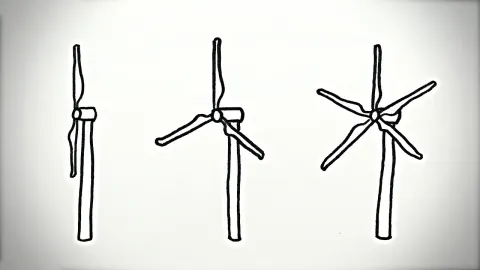
actually a lot of them in the earth's crust, but they're kind of hard to get hold of. Um, they're not everywhere. So, they tend to be mined in particular places like China, um, or Australia or Canada. They turn out to be things like neodymium. Now, wow, you may never have heard this atom neodymium, but it's got a very interesting magnetic properties. Like, if you want to make the strongest permanent magnets around, you have to have neodymium. It's the one. And so great, we want to make some Why do we need magnets? Well, it turns out if you want to get electricity from the wind, you have to have a wind turbine. What's it doing? It's rotating a coil of wire around a neodymium
magnet. And if you want to get the most efficiency out of that system, you need a lot of neodymium. And so this rare earth element um is important. And then okay, now we want to make the transition from petrol cars to electric cars. Guess what? We need an electric motor. How do you make an electric motor really efficient? you need a neodymium magnet in it. These rare earth elements and it's not just neodymium are peppered into the technology of what we see as the kind of um green transition technologies um and you can't do without them. Solar cells, you know, wind turbines, electric cars, um our phones, you know, we need them and if we want to live in that world, which we do, so presumably they're a sort of finite limited resource.
Well, now is that true? Um, I think there's sort of two futures that we can envision. One is that so we're going to have 10 billion people by 2050 and let's say everyone wants an electric car and renewable energy and phones and laptops and so on, right? Headphones, right? Then we need all this neodymium and probably there's enough for everyone in the earth's crust, right? But the problem is that to get it, you have to use a lot of energy. And at the moment that energy is fossil fuel energy and that means that you have to heat the planet basically in order to get the stuff out. There is actually if we're going to go down to net zero and get not stop doing that then it become then the
stuff is not going to be so easy to get hold about a cheap enough price. So it really is down to the price. If you're willing to pay a lot of money like people are for gold then you can dig a lot of rock up and get a lot of gold out but it's incredibly inefficient. And if you want to do that for neodym and all the other rare earth and for the lithium and all the other things, it turns out that we'll just we'll boil the planet. So it's it's more the energy and the pollution. So the other thing I haven't mentioned in mining is that actually when you mine rock, you have to you know imagine taking a whole mountain and just crush crushing it up. That's essentially what mining is. You then have to kind of take
what is a tiny proportion of that to get your neodymium out. The rest of it what do you do with? Turns out you have to wash it and you have to constantly sort of put it somewhere. And of course there are people who live around there who rely on all the water and their water gets kind of polluted by this process and if you don't do something about it you can really poison them all um you poison if you're not careful all the wildlife and all the biodiversity. So the more you ramp up mining turns out the more you impact the health of the planet and the community. So it even if you have kind of renewable energy you still it's not the whole story. Um, and that's why recycling these materials and
and conserving them is much better if we can do it and still provide 10 billion people with the stuff they want to live in. I mean, that feels like a given like why should we in a rich country, you know, be more privileged than someone else. So that's the task at hand. Yeah. So sort of sticking with energy then obviously it's one of the biggest problems facing the human race at the moment. So what role can material science play in this? So things like solar cells, what sort of advances can we look forward to in this sort of area? Yeah. So I mean at the moment one of the big um move towards renewable energy is use of solar cells and we only have to harvest 1% of the light coming from the sun to meet all
our energy needs. So, one, think of that 1% like that doesn't seem so hard and we completely can go off fossil fuels. Um, not well, not quite completely. There's a few other things that need to be put in place, but essentially in terms of energy. So, wow, how do they work? They sound like magic. Turns out there are these sheets of silicon and then there are silicon chips basically on a vast scale like on a kind of building size scale like you've seen these wind these are solar farms that cover acres and hectares and that's getting hold of this element called silicon which is very plentiful but in order to get it to actually do this trick where when light hits it converts the light into electricity you have to do all sorts of very
sophisticated u manufacturing and that's the same manufacture has to happen to make a silicon chip that does is the brain of your phone and the brain of your computer and drives the whole internet. Like we rely on silicon chips completely. So, we're very good at it. It works really well. Um but we can't make them cheap enough yet um to compete with cheap oil everywhere. And I think that's one of the big challenges. Um and people say, well, let's make a cheaper version. Like, can't we make a cheaper version? Actually, it is really like you need a billion-dollar plant to make these things. So, it's not a cheap operation, but there are
cheaper solar materials coming along and they're called proskites and they're not just silicon chips which are stiff, you know, these big board-like things you see, black board-like things you see. These are flexible things. You could wear these, right? You can weave them into your clothes. You can weave them. So, this is very exciting and this is one of the big areas where a breakthrough in material science um has already happened. I mean these materials exist and they are very efficient or at least as almost as efficient as silicon.
Um they have their own problems in terms of like durability is one of them. Um and they have elements in them that are quite difficult to get hold of as well. Um but I think this is a big area which will see huge improvement in the next decade. Definitely. Yeah. So I think one interesting uh idea here is architecture. So, can you envision a time when we will be able to build a building that generates its own electricity? Yeah, I think that's coming. And I think that's that's kind of like it's obviously possible cuz trees do it, right? You can have trees 100 meters high, right? And they do it. So, we can do it. Like, we're not we're clever enough to do it. Um, it's it's not whether we can do it or not, it's
whether we can afford it or not. Like, it's an exp at the moment and a very expensive thing to do. Um, and the question is, can we do it and be competitive with other building methods? And I think we can do it. And it all depends on us realizing that when you invest in a building, you should be also kind of investing in harvesting its own energy so we're sustainable and we can, you know, it can last the test of time and support us. But there's there's other it's not just harvesting energy for electricity we can do. Um there's there's these things called um photochromic materials and they are materials that change color um with heat and so we can already do this. You can already make the roof of a building white and reflective of light in the
summer and then in the winter that same roof changes to dark and absorbs energy. So you all the light that hits on it you can absorb into the building and you can you don't need so much electricity to heat it. So imagine a world and it's like it's not impossible. Imagine a world where you know you have a terrace of houses or some high-rise in your city and in the winter it changes color like it like the autumn trees. That's a great future that we could look forward to. So we've kind of touched on it there but um a big field of research at the moment is smart materials. So can you tell us a bit about what we mean by saying the word the phrase smart material? Yeah, smart materials is this
idea that a material well it basically means that we haven't got materials that are as smart as that now. As soon as we have them we no longer call them smart. We just sort of take them for granted. So in a way that glass is a smart material right let light through. Hooray we can have a window without the wind coming in. Oh now we don't think of it as a smart material but it is a smart material. It's a you know very smart material. Um ditto solar cells right? Ah, we can harvest electricity from the sun. Hooray. Now we just think of it as a solar cell. Um, so smart materials tend to be these things on, you know,
that do things we haven't seen before. And actually the things we that are coming are self repair. So materials that can heal themselves when they get damaged. They already exist. We there are paints now that you can put on cars that when they're scratched overnight, the scratch is healed by the paint itself. And we're working and many other labs around the world are working on more sophisticated versions of that. So the idea is that the smart materials of the future, we call them animate materials because they're kind of intelligent and they have the ability to move and change. um these animate materials will like make a bridge out of one of these and you know if it gets hit by a big storm as a result of
climate change for instance instead of us having to physically go put scaffolding up inspect the damage you know apply for funding be refused apply and wait until 20 years later when it's crumbling and everyone's in outrage instead of that which is what we currently do this bridge will heal itself it knows it's cracked and over time. Maybe it'll take a few months, maybe it'll take a year, but over time it will heal itself. And these technologies exist already. They're just not very they're they're not they're quite limited in their kind of healing capacity and they are expensive. So another area is nano materials that a lot of people get excited about. So what's what's going on there, you know?
Yeah. Well, nano so one of the we talked about atoms like these everything's made of atoms and okay so they kind of sound like these magic ingredients but actually what material science shows you is that's not the only thing you need to make a something as marvelous as a smartphone or as marvelous as a skyscraper or a jet engine whatever these are marvelous things but it they're not just about choosing the right atoms turns out you can just choose the right atoms and that the way they're assembled inside the material either makes them amazing and they can harvest light or they can resist very high stress very high stresses or they can't, they're weak. And so what material science over the years has worked out is that when you look inside, let's say, a metal, what
you find actually is it's made of crystals. And just like the crystals on your, you know, on a ring, like just like a diamond crystal, like that's what's inside a metal. So that was like blows our mind number one. And then the crystals themselves have internal structures. And you keep zooming in. All these structures make a difference to the strength. They all make a difference to the electronic properties. They all make a difference to the magnetic properties. If you if you change them, you can do these smart things. You can make these incredible properties. But if you get it wrong, the whole thing falls apart. So, it's not just the atoms, it's how they're arranged. And there's this particular
scale which is about like 10 atoms big called the nano scale. And that scale has a very specific property which is that at that scale those atoms seem to kind of operate as if they have um some power to self assemble themselves like they you don't have to put them where they need to be. They will arrange themselves into the right properties. And so there's a there's this nanocale which everyone's very excited about because basically it means if you break something at nanocale it will selfheal. And if you can you can make things that make themselves. Um, but also this it has weird properties. Like there's just loads of properties that involve um plasma states and quantum states that allow you to do weird color changes that in a
solution which allow you then to give someone a diagnostic for a disease which literally is just take some saliva and put it mix it with this nano particle inside the solution and it will tell you whether you've got a particular disease or not. And if so those kind of tricks at the nano scale and the controlling the nanop particles are really opening up a lot of diagnostics in medicine for instance. Yeah. So I think sort of sticking with that anyone around my age would have seen the movie Inner Space where um they shrink a person pilot down and he goes into somebody's body. But how you know is that realistic? Can we make these little nanobots? Obviously, we won't shrink ourselves, but can we make little
medical nano nanobots? I mean, we're already doing it. I mean, I think you know, the um you know, the vaccines now, you know, they're essentially little bots. You know, they're bots that are have a particular function in a cell and they go and you put them in you inject them in and off they go to the cell and that they do their thing. They kind of initiate this um this response, this immune response. So we are putting nano particles in or nano machines and machines is probably the right word. I mean I know that sounds weird but we think of a machine at our scale as something as wheels or cogs or things that you know but a machine but that but molecules are so complex that they are really little
machines. They do things. They can move from one place to the other. they can unlock a membrane pore and open it to another m. So the idea of that something being a me a mechanism inside a cell. Well cells yeah they are these you know complex fluid machines and so us understanding that at the nanocale is opening up a lot of opportunities also dangers. I mean I think with a lot of power comes a lot of responsibility and I think this is where all these debates about whether nano technology is safe should be taken seriously in my view. feel like, you know, we often in science kind of stumble in to some very powerful technique or way of doing things and we rush ahead, you know, because what's on offer to save,
you know, things like, you know, um curing some cancers, you know, targeted drugs at the cancer. It's all this nanotechnology stuff. And yet, yeah, and yet, you know, you want to you obviously you want to move ahead with a cancer treatment, but you also want to understand what the risks are too, right? So, I think it's a very exciting area, but I think it's so powerful, we should be also quite careful. Yeah. So, let's stick with medicine then. Um, so another really fascinating thing is bioprinting. So, how does that work? And you know, how far along are we? Yeah. So, so, so 3D printing, people may not be aware of that, but essentially the idea is that, well, it's not an idea, it's a technology. So, you basically
take a material and imagine, imagine you 3D print, you want to 3D print a um a toothbrush. You know what does that mean to 3D print it? Well, imagine a toothbrush and imagine you're going to just print the bottom of it first. So you just print a material like a bit of plastic, a blob of plastic in the shape of the bottom of your toothbrush and then you shift it up and you print the next bit and then finally you get to near the brush end, right? And you now you need to print a different material there in the shape of these little bristles. So you print those and pretty soon you've got a toothbrush and we can do that now in the lab. We can do it in our lab. So that works. So then people got to thinking, okay, I can
print a toothbrush, I can print a plug, uh I can print a door handle. Like these are totally trivial things, but could we print an organ? Like could we print cells? And then because they're a person's cell, so I take cells from your body or my body and I take stem cells for instance, and I say, "Look, I've got a kidney problem and I want to have a new kidney." Okay. Well, can we get your cells stem cells and can we make them into a kidney cell? Answer, we can. Turns out it's actually in the lab. What you do is you kind of create an environment called a scaffold which is like a tiny set of kind of like almost like a porous mesh and the cells you take them out of your body, you put them
in this mesh, you give it the right conditions of humidity and temperature and you give it a bit of food and these cells will proliferate. And if you get it all right, you'll get a little kidney little kidney um it's called a sort of organel and then Okay, but hold on a minute. Can you would that can't possibly be put into my body and work? Answer, no, it can't yet. But actually baby steps have worked. So you can print someone's earlobe and implant that into their ear. So imagine you have a deformed ear or you have an injury and you lose your ear. We're already doing that, right? 3D printing someone's ear in the shape of their actual ear. So that's the beauty of this technology.
Like everyone's different shape, different size. So you have a nose and you want to 3D print a nose sort of no problem. 3D print an ear lo and the question is how far can we go down that road? Um big open question and but my feeling is that we can go probably quite a long way down that road. Um so implants of we already know about hip implants they work really well and they've they transform people's lives. um you go from not being able to walk and you know immobile to there are two million hip implants every year um and they just release people into from you know immobile state and painful state into back into normal. So can we do the same with things like people who
need a new organ or a new part of an organ or just a new cheekbone? Answer the cheekbone's doable now and is happening. Yeah, the earlobes are happening. the organs, they've got to be plumbed in. They've got to work straight away in the body. Much trickier. Much trickier, but definitely loads of work going on that area. So, you mentioned their hip replacements, which are, you know, like you say, pretty common these days, but what about other things that we can do to help because the population's aging, you know, sort of globally really. So, what can we do to sort of extend our healthy lifespan?
Yeah. Well, I think there's there's sort of there is the kind of um the failure of major organs which at the moment is dealt with transplants and but that's that's not going to work on a major scale if because we won't have enough. Um but there's also the kind of breakage of bones and the you know just the aging of that infrastructure of your body let's say. So, so, so you get scaratic arteries and those sort of those technologies kind of diagnostics tools to work out what's wrong and what's kind of in a sense decaying in your body. They're very advanced. So, we can look forward to sort of knowing more about what is going wrong. And the question is can we then do anything about it? In the
case of the structural bits, the bones, the hips, you know, the shoulders, great. In things like the collagen of your knees, right? the these are areas where I think you're going to get a lot of progress in the next 10 years. Um there's a huge amount of work going on there. So that kind of those kind of improvements are going well. And then another technology I think will be key is that you're going to need some sort of exoskeleton um as a kind of additive um technology. And at the moment people's exoskeleton is a walking stick or a kind of frame and it's unsightly. It's not ideal. It's difficult in stairs. It's um you know, it doesn't have a lot of social capital. People don't want to be walk
around with a walking stick. So, our idea is what you need is a fabric that you wear underneath your clothes. That's that is the equivalent of that stiffens around your legs. When it when you're when you need to make a step, it will stiffen and strengthen that muscle, give it support. But then when you're swinging your leg to then do the next step, it then um gives you the ability to do that. So imagine it's a bit like a Lyra uh garment, it knows you're about to make a step. So it will stiffen and then relax, stiffen and then relax, stiffen and relax. And what energy and how will they be powered? Well, probably at the beginning small batteries and then hopefully harvest energy from your
own body. So I think those kind of technologies, those the sort of wearable tech are really coming to help with older age and more mobility. Yeah. So we've discussed an awful lot there. So sort of by way of summary, how optimistic are you that material scientists can solve these problems? We can solve them. I you know, we go a long way to solving them. I think the pro the thing that's holding us back is just funding and the equality of who benefits. So I think at the moment a lot of tech money is going into AI and AI will have will help us make new materials. No doubt about it. So in some ways it will accelerate this and be a benefit for humanity. But so much money is going into AI to kind of um yeah to advance that field that
it's coming out of course there's only a certain amount of investment money around so it's it's it's displacing money that would go into these tech and you can't doesn't matter how good your computation is you actually need physical materials like you know like you can't AI yourself um from being hungry like you can't AI yourself from being sheltered from the world You can't AI yourself. You actually need physical materials to get you around. Better bikes, better cars, better um scooters, better clothes, better health tech. And that's that money is all that those funding are all drying up unfortunately because everyone is so excited about the money-making opportunities of AI. So that's it's not
intelligence, it's not our ability to do it, I don't think. It's just that we lack funds. Okay, great. Thanks very much for joining us. Thanks. That's great. Thank you for watching this episode of Instant Genius, brought to you from the team behind BBC Science Focus. That was Professor Mark Movnik. If you liked what you just saw, then please do consider liking and subscribing to this channel. Also, why not check out the audio version of the Instant Genius podcast available on all podcast platforms. Every Monday and Friday, we speak to some of the biggest names in science and technology to talk about the most fascinating ideas around. The current
issue of BBC Science Focus magazine is out now. Pick up a copy wherever you buy your favorite magazines or download us on your app store of choice. You can also find us on Apple News or online at sciencefocus.com.