19:59



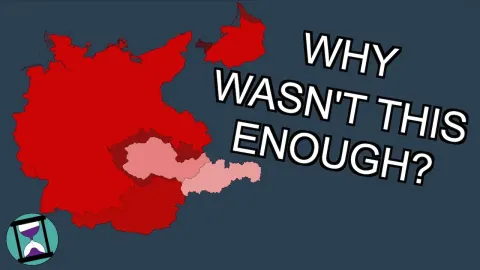
in Germany. Hitler's repudiation of the Versailles peace treaty and reassertion of German military power and prestige has won him enormous popularity. But some at the top of Germany's military and diplomatic corps are worried by the pace of events. They include War Minister Von Bloomberg, head of the army general von Frri and Foreign Minister Von Noirat. All have raised concerns that Hitler's plans for territorial expansion risk another war with Britain and France. A war Germany is not ready to fight. Hitler now gets rid of them all. Von Nodat is replaced with the more hawkish Yim von Ribbentrop, the former ambassador to Britain and a loyal Nazi.
Von Blumbberg and von Frri are both linked to sex scandals, real and invented, and forced to resign. The new commanderin-chief of Germany's armed forces, the Vermacht, will be Adolf Hitler. The Furer then turns his attention to Austria, the land of his birth that he believes to be an integral part of the greater German nation. In February, he demands that Austrian Chancellor Kurt Shushnik put leading Nazis in charge of his police force and economy. Under extraordinary pressure from his much larger neighbor, Shushnik announces a referendum. Austrians will decide for themselves whether they want to become part of Germany, a union known as Anlus.
Hitler is furious. He expects any referendum to be raped. He orders German military units to the border and demands Shushnik's resignation. On the 11th of March, Shushnik resigns. German units roll into Austria the next day anyway on the pretext of restoring law and order. Austrian units are ordered not to resist by the new chancellor Arur Zeisinffort, leader of the Austrian Nazi party. The question of Anelus has bitterly divided Austria. Many passionately support it and turn out in their thousands to welcome German troops.
Hitler arrives later that day, stopping briefly in his hometown before making a triumphal entry into Vienna on the 14th of March. Later, a thoroughly rigged Austrian referendum returns a result of 99.7% approval for Anelus. Away from the celebrations, the Nazis begin rounding up political opponents, including ex-chancellor Shushnik, who spend the next seven years in a concentration camp. Vianese Jews are targeted and beaten by Austrian Nazis, aided by the German invaders. Several are murdered. Others are made to scrub anti-Nazi slogans off the street in front of jeering crowds.
Britain protests impotently, as does France, though in the midst of the crisis, distracted by the fall of yet another government. The only power that might have meaningfully intervened is Italy. It was Mussolini, after all, who'd prevented Hitler's attempted annexation in 1934. But the two dictators are now firm allies as both continue to build their new empires. By May 1938, the United States is sufficiently alarmed by Japan's attack on China and the threat of war in Europe to begin rearming. That month, Congress passes the Second Vincent Act to increase the strength of the US Navy by 20%.
Hitler meanwhile turns to his next target as outlined in the Hospak memorandum of 1937, Czecha Slovakia. More than 3 million ethnic Germans live in areas of the country they call the Sudetan land. Many want union with Germany. Hitler intends to launch a short war to bring these Sudetan Germans within the Reich while also blooding his new military and destroying Czechoslovakia which he regards as a fake nation created by the Versailles treaty. In theory, France and the Soviet Union have pledged to defend Czechoslovakia from attack. Britain's position is more vague. The country is still woefully unprepared for conflict and its public will not stomach war with Germany over a pro-German region of Czechoslovakia.
Instead, Prime Minister Neville Chamberlain hopes stern warnings and the threat of intervention will be enough to deter Hitler from attack. In May, there are reports of a German military buildup on the Czech frontier. The rumors are false, but trigger a major war scare across Europe. Civilians in cities expect to be bombed within hours of war being declared. Military experts have predicted as much. Many will soon be issued masks in case poison gas is used. The crisis rolls on that summer as the German military prepares for Case Green.
An attack on Czechoslovakia scheduled for early October. Hitler has already guessed that Britain and France will not intervene to save the checks. Just in case, he gives orders to strengthen Germany's western frontier defenses, the Vestval, and to speed up yubot and battleship production. But several German generals remain deeply alarmed by Hitler's plan. They warn Hitler that if the French do intervene, Germany's western defenses will be overrun in weeks. General Beck, chief of the general staff, resigns.
He will later become a leading plotter against Hitler. by September. German forces really are mobilizing on the Czech border. In speeches, Hitler falsely accuses the checks of abusing and terrorizing Sudetan Germans. An intolerable outrage that he will end. Edart Benesh, president of Czechoslovakia, pleads for British, French, and Soviet security guarantees. The checks are massively outnumbered by the Germans, but have strong defenses in the West and will fight if they are supported by their allies. Instead, Britain and France ignore Soviet offers of cooperation and tell Benesh he must make major concessions to Hitler to save Europe from war. But there is no concession Benesh can make that will pacify Hitler or the Sudatan Germans who stoke the crisis on
his behalf. With Hitler apparently intent on war, Neville Chamberlain takes an unprecedented step. Sidelining the French, he flies to Germany himself to meet Hitler at his Bavarian mountaintop retreat, the Burkhoff. He is determined to resolve the Sudetan land questioned peacefully and prevented spiraling into a European war. An outcome dreaded by most in Britain, France, and Germany. Fraught negotiations culminate 2 weeks later in a conference in Munich. Britain, France, Germany, and Italy are represented. Czechoslovakia and the Soviet Union are not.
Ultimately, Hitler is compelled to back down from his threat of military action. The final agreement seeds the Sudetan land to Germany with Hitler declaring he has no further demands on Czech territory. In the following weeks, both Hungary and Poland take advantage of Czechoslovakia's woes to enforce their own claims. Poland occupies Transla with its large Polish population, while Hungary reclaims former territory in southern Slovakia. Chamberlain and French Prime Minister Deladier are welcomed home as heroes. the men who have saved Europe from war. But their policy of appeasement is based on a fatal misreading of Hitler's character and intentions.
They hope he will honor the commitments he has made at Munich. They believe he can be contained and deterred by their own rearmament plans which now gather pace. But in truth, Hitler is infuriated to have been deprived of his little war in Czechoslovakia. And next time, assured of the weakness of Britain and France, he will insist on a military outcome. For opponents of fascism everywhere, the Munich Agreement is a bitter blow. The disappointment is particularly severe among Republican forces in Spain, who struggle in the civil war against Franco's nationalists.
1938 sees bloody fighting at Terowell. Then a nationalist offensive through Aragon that reaches the sea, cutting Republican Spain in two. The Republicans launch a desperate counterattack across the Ebro River, but their armies are decimated in the heaviest fighting of the war. That November in Paris, a German diplomat is murdered by a Jewish teenager. Two nights later in Germany, the Nazis respond by instigating a nationwide pogram. Jews, their businesses, synagogues, and even cemeteries are targeted.
The amount of broken glass spawns the name crystal. Hundreds of Jews are killed. Around 30,000 Jewish men are arrested and held in concentration camps for several weeks. The violence and vandalism is widely reported by foreign journalists. Worldwide, Nazi barbarism is denounced and the US recalls its ambassador. In East Asia, Japan's invasion of China continues despite abortive peace talks instigated by the German ambassador. In March, the Japanese Parliament passes a state general mobilization law, giving the government almost total control of the economy, industry, and media to meet the needs of war. That spring, there is heavy fighting around Shujo as the Japanese try to link
up their gains and seize control of the vital North South Railway. The fighting is ferocious with around 1 million soldiers involved. In April, the Chinese win their first major victory over the Japanese at Tay Jang. It is a major morale boost, but heavy losses and the threat of encirclement force the Chinese to withdraw south. The next battle will be fought for Wuhan. To slow the Japanese advance, Chinese leader Chiang Kaishek makes an astonishingly ruthless decision. He gives the order to open the dikes to deliberately flood the Yellow River basin. The civilian population receives no warning. As a direct consequence, an estimated 900,000 Chinese peasants lose their lives by drowning, starvation, or disease.
4 million become refugees. It is the most destructive man-made disaster in history. Nor does it save Wuhan. For more than 4 months, the biggest, bloodiest battle of the SinoJapanese War rages. Nearly 1.3 million troops are sucked into the fighting. The Chinese have superior numbers, but the Japanese have better training and more modern weaponry, including poison gas. The losses on both sides from combat and sickness are vast and difficult to establish. In October, the Japanese land at Canton and take the city against light resistance.
This move severs the route by which approximately 80% of foreign supplies reach nationalist China and its armed forces. It also undercuts the strategic value of Wuhan, which finally falls to the Japanese later that month. But the stubborn Chinese defense buys time for Chang to withdraw his surviving forces west towards his new capital, Chongqing. Here they are protected by mountain ranges and the vastness of the Chinese interior. Japan now occupies China's greatest cities and controls an estimated 87% of the country's productive capacity. But its conquests have come at a huge price in men and resources and there is no sign of an imminent Chinese surrender.
The Imperial Japanese Army is alarmed to find itself facing a military stalemate in a vast country attacked by nationalist and communist guerrillas and facing enormous logistical problems. They are desperate to find some means to end the war because to the north they fear they will soon have to face a much more dangerous adversary, the Soviet Union. Border tensions have been escalating for years. That summer, fighting erupts at Lake Hassan, leaving hundreds dead on both sides. In 1939, it will be fullcale war.
The next episode of our World War II series is going to be our most detailed and comprehensive yet. We're covering the slide to war in Europe, the unexpected bombshell of the Nazi Soviet pact, the quagmire of Japan's invasion of China, and the devastating conquest of Poland. To watch this episode right now and watch every new episode first, head over to Prestige streaming service, Nebula. Nebula is the video platform built and curated by creators like us. Featuring original, funny, fascinating, and insightful content, all made by talented humans. It's packed with videos about history, engineering, tech, and current affairs, and a growing number of Nebula originals, which you can't see
anywhere else. One new edition for history fans. History's most daring raids. An exclusive Nebula Plus series by the excellent Realtime History. The first episodes explore a daring P rescue by US Rangers in World War II, the Saigon Embassy raid during the Vietnam War, and the bold amphibious operation by German forces in World War I. A yearly subscription to Nebula normally costs $60, but our link gets you 50% off, $30 when paid upfront. That works out at just $2.50 per month for yearround entertainment, plus first access to all our new videos. All Nebula subscribers get a monthly guest pass to share with a friend, allowing access to Nebula for a full week. No card details required, no restriction on what they
can watch. So now subscribers can share their favorite videos with their favorite people. Thanks to all our existing Nebula subscribers. And for everyone else watching, we hope to see you there soon. 1938's Munich Agreement remains one of history's most controversial treaties. Some argue it brought the allies crucial breathing space to rearm and that their civilian populations did not yet support war. Others that it sold out the checks and missed a crucial opportunity to stand up to Hitler. Have your say in the comments below and be sure to join us for the next episode as the countdown to war in Europe begins. Big thanks to our series consultant, World War II
historian, Professor Richard Overy. Remember, you can get early access to this and all our videos at Patreon. Big thanks to all those already supporting the channel, from builders such as Cody Anderson, Griffin Smith, and Vine Nionan to citizens like Anton JM Lunan, Maxim and Terry, and heroes like Matt K.