3:36


NASA's Kepler Space Telescope takes the search above Earth's atmosphere into space. until it arrives on a stable orbit around the Sun. Where it looks out with a fixed and clear gaze to a single patch of sky in the constellations of Cygnus, Lyra, and Draco. What was special finally was the lid opens up and we see the nighttime sky. What we see is the sky is covered with star. Every detector is working. Exposing 42 incredibly sensitive light sensors to the light of 150,000 stars. Kepler begins its search for Earth-like worlds.
The problem with finding exoplanets is they just don't shine at all and they're around really bright stars. That makes them virtually impossible to image. So, astronomers came up with a different method and that's called the transit method. Kepler uses the transit method for discovering planets around other stars, and it's really simple. A star is bright, and if a planet is orbiting it, if the planet passes in front of the face of the star, the planet blocks some of that light, and the star temporarily appears dimmer. So, if we were to bring that down to Earth, imagine this lighthouse is your star. It's your source of light. If a moth flies in front of that light, even though to your
naked eye the light looks the same, it actually has become a little bit dimmer because the light has been blocked by the moth. That's the transit method. At the time, the largest camera ever launched into space, Kepler is able to look for smaller, more Earth-like worlds. Those too small to be easily found using terrestrial telescopes. Soon, it starts to spot planets. The amount of dimming and the time between each dimming event gave us clues to a planet's size and its distance from its star. And with every world it finds, astronomers hold their breath, hoping for a rocky planet that might in some way remind them of Earth.
Orbiting a star similar to our own. At first glance, a planet that resembles ours. So, when we started finding these rocky planets like Kepler-36b that were getting closer to Earth mass, it was just the greatest feeling. Weighing in at around four times the mass of our own planet, we'd found one of the first rocky worlds that could have an atmosphere. A so-called super-Earth.
What's so cool about Kepler is that it tells us so much more than just the planets exist. We get their sizes, we get their orbital characteristics, we can get their masses, and so what we're learning is not just that the planets are there, but what these planets are like. To find out how our solar system got here, scientists have been tracing the history of another unusual group of stars. They loop around our galactic disk in a spectacular trail called the Sagittarius Stream. So, the Sagittarius Stream is really interesting because it might actually help us understand where we came from.
It is what's known as a tidal stream, which is a stream of stars that have been stretched across the night sky due to the gravity of the Milky Way. The Sagittarius Stream is so big, it goes all the way up and even all the way down, so we can just carry the Milky Way from the handle. It's really, really large stream. The trail of stars we see today is named after the galaxy that they used to belong to, Sagittarius dwarf. The Sagittarius galaxy was discovered by a student and myself in the '90s.
Most of the Sagittarius galaxy is actually spread out into two streams, one in front and out the back like giant comet tails wrapping around the entire sky, going out for maybe 100,000 light-years away. We could see these, but it wasn't possible to understand how they got there. Now with Gaia, we have motions of these stars, so we can see what direction they're moving in, which ones are going fast, which ones are going slow. For the first time ever, it's been possible to say, "Ah, this is what happened." The Sagittarius stream is essentially the tidal debris that has been left over when a dwarf galaxy, the Sagittarius dwarf, actually plunged into the Milky Way.
By studying the stream of stars, scientists have uncovered the story of a much more recent galactic collision. When the Sagittarius galaxy orbited into the Milky Way, it came foolishly rather far in. As it dives towards the Milky Way, the dwarf galaxy begins to have its stars pulled off. When it goes through the disk, it punches a hole in the disk, and the stars get put in particular patterns. And it's got stretched into these two great long streams. The much smaller galaxy encroaches upon the Milky Way, just like Gaia and Selene did, but the timing is intriguing. Because this collision happens just before the birth of our own solar system.
One of the most important consequences of galaxy mergers, like the destruction of the Sagittarius dwarf galaxy by the Milky Way, is a new fresh injection of gas into the galaxy, right? And it is gas, particularly cold gas, that is the fuel from which all stars are born. For star formation to occur, basically the colder the better. The most important gas that the collisions bring is made of one of the oldest and most ubiquitous elements in the universe. So, what I'm listening to here is the lifeblood of our galaxy. Hydrogen. We can detect it with our radio telescopes, like in this case, pointing right at the Milky Way. Hydrogen is the most common element in the universe, and it's in our own galaxy.
We don't see gas with our eyes, and therefore we're not used to the idea of there being plenty of gas in the Milky Way. But, if you use a radio telescope, you can see it. You can look at the radiation coming from that gas, and that's exactly what we're doing right now. This gas is connected to stars deeply. It's what stars form from. If this gas wasn't there, stars would never have formed. Black holes are where two of our greatest theories collide and clash. So, you've got these two primal forces in the universe, gravity, which we all understand and feel with our bones, and then you've got quantum mechanics, which
governs the theory of the ultra small, how atoms and nuclei come together. The black hole is where gravity and quantum mechanics finally meet. When we try to take the mathematics of the very large and try to combine that with the mathematics of the very small, instead of matching, they get into a fight. And so, we don't have a consistent way to describe both. We can begin to probe this deep mystery by investigating the heart of Sagittarius A* Scientists have studied dozens of stars in its orbit.
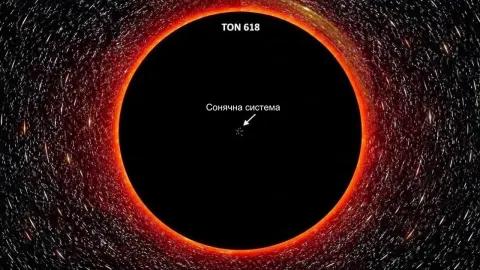
Some passing just a few billion miles from the event horizon. A hair's width on galactic scales. And these flybys could have catastrophic consequences. Because some of these stars likely have planets in orbit. Planets that may stray too close, moths to a flame. Pulled from their parent stars towards the abyss. So, imagine you're some alien civilization looking up at your lovely home star S2 in the sky, and one day the thing starts wandering closer and closer to what we call the tidal disruption radius of Sagittarius A* this 4 million solar mass black hole. If you fell into a black hole, you'd pass the event horizon, and actually, bizarrely, you'd see nothing.
There's no physical barrier. There's no big line in space saying point of no return. You would just drift very casually, gently across the event horizon. If we could stand on such a planet and look outwards, You'd see a distorted universe. And in fact, you see it distorted in both time and space. You'd see it playing out at an amazingly fast speed. The rest of time would play out unbelievably fast in front of your eyes. But eventually, tidal and gravitational forces become too strong, stretching space and everything in it. Your feet be pulled more strongly by gravity than your head, so you'll be stretched out into a giant string, and eventually you'd be one long string one atom thick.
We call this spaghettification. Boulders become rocks. Rocks become sand, whose very atoms are then pulled apart. Gravity and the quantum world collide. Ahead, the heart of the black hole, the singularity, where all journeys in terminate. Our idea of a singularity is that everything is compressed beyond what it can be until it's nothing, but yet still exists. That is Wow. To understand black holes, we have to start at the beginning, at the moment of birth. Black holes that are a few times the mass of the sun probably formed from giant stars that were maybe about 20 to 30 times the mass of the sun.
Enormous stars burning bright blue with intense heat. But the brightest stars are the shortest lived. A star's a big ball of gas, right? There's outward gravity pushing in, right? The thing wants to collapse in on itself under its own self-gravity, but the fusion that's happening within the star's core liberates so much light that the outward radiation pressure prevents the collapse of that star. But eventually that gives up. A star like that can burn through its nuclear fuel in just a few million years. And when its power source runs out, it collapses under its own gravitational pull.
There's so much material that's collapsing during their final few moments that they create this massive dense ball of neutrons that continues to collapse. A star 20 times the mass of our sun or larger This transformation does not await all stars. Smaller, less massive stars like our sun eventually become burnt out dwarfs when their fusion stops. Slowly fading cinders. But it's possible that almost all the massive stars that dominated the early universe formed black holes when they died. Because black holes are simply what happens when enough matter is crushed into a small enough volume, dramatically
warping the space around it. A river is a great analogy for the area right around a black hole. Here I am far upstream and the water is fairly placid. It's not moving too fast. If I were to get into the water here and swim across, I'd be able to do that very easily. In the same way, if you are far away from a black hole, you'll be able to get around with just a normal spacecraft without too much trouble and simple propulsion. But, the closer you get to the black hole, the stranger things become. The collapsed massive star crushes down so small and so dense, it ceases to have a physical surface at all. Becoming an infinitely small point in space exerting a profound effect on the space-time around it. As the water gets closer to the
waterfall, the speed of the water increases. If I were to jump into the water right here, the speed of the current would be so intense that I wouldn't be able to swim against it. And I would be gradually pulled closer to the edge of the waterfall till I reach a point of no return. And that's the same around a black hole. Just outside the black hole, the fabric of space itself actually stretches inward towards the center. Not even stars, planets, people, even light cannot escape the pull of a black hole. It's like a waterfall in the fabric of the universe.
The black hole's gravitational reach is not infinite. People have this idea that black holes suck in the sense that they suck everything into them. But, that's not true. Black holes can only eat things that are within a certain distance away from them. If you're further away, then the black hole has no way of eating you. But, once in its grasp, you are lost forever. And this is the key to their mystery. The black hole's interior is hidden from view, cut off from the rest of the universe by a boundary in space. The event horizon.
Beyond this point, there is no escape. There are up to 400 billion stars in our galaxy. And there are 2 trillion galaxies in our universe. An era of light in the universe. Stars have always been important to us. They have helped us navigate the land and the seas for millennia. If you just think back at the countless sonnets and poems and songs, there is always some kind of celestial connection. One of the reasons why looking up into the stars is so significant is because we realize that others are doing the same exact thing. And so, in a very real way, we feel connected to people both past and present. From our fleeting human perspective, the
stars seem everlasting. But, seen across the age of the universe, the picture changes. And as they go, they once again change the character of the universe. Their cores, where fusion once raged, cool. And eventually, solidify. Locking precious elements away beneath the surface. And starving the universe of the material needed to make new stars and planets. The chance that a star is going to be born nowadays is much lower than it was billions of years in the past. Just as there was a very first star in the universe, there will come a time when the era of stars will come to an end.
The age of stars is not as enduring as it might seem. I have here a timeline of the universe, but I'm here at the start when the universe formed 13.8 billion years ago during the Big Bang. Now, it took a while for the first stars to form, in fact, a few hundred million years. Let's call that 400 million years. So, on my scale, stars start to form here. And those stars carried on forming, and then we reached this point here 4 billion years since the Big Bang, and a time when the most stars are forming in the universe. Our sun, though, didn't form until 9 billion years had passed, and that's my marker here. And then, we move forward again, and we get to
this point here, which is the present day, 13.8 billion years since the formation of the universe. Now, our sun won't live forever, and in fact, it will start to die and end its life in around 5 billion years time. But, the sun will be outlived by the least massive stars in the universe. They have lifetimes of a few hundred billion years, and that's about 200 m on my scale. But, even when those stars die, that doesn't mark the end of the universe. The universe could live forever, with the timeline stretching far off into the distance. And that means that the age of starlight that I've mapped out here is like the blink of an eye to the universe is the age of darkness that goes on and on.
Stars won't suddenly disappear, of course. They'll be here for hundreds of billions, perhaps even trillions of years to come. But slowly, over time the universe will become darker emptier. It's only in the last century, really the blink of an eye for humanity, that we've actually been able to send messages and probes beyond the Earth. And as of yet, we're still waiting for a response. What we're hearing is just silence. But with millions of potentially habitable worlds in the Milky Way why is no one calling to us? In 2020, scientists make an unsettling find.
A planet almost the size of Earth floating freely through the galaxy all alone. Did it form there by itself, or has it been thrown out of another planetary system? A planet that shows us that the galaxy is more chaotic and perhaps more hostile than we thought. As you look out through the galaxy, there are many cases where planets would experience much more violent histories, and life might not be able to survive more than a billion years. The rogue planet may be a refugee telling us about systems far more chaotic than our own. Because not stars exist alone.
Some have company. Orbiting one another in a careful dance. So when we look up at the night sky and we see single points of light which we assume are stars, often what's actually there are two stars orbiting each other. But they are so close together that they appear as one. We're finding that these binary and multiple star systems are actually amongst the most common types in the universe. Sometimes planets orbit both of these stars together and other times a planet will orbit one of the two stars but not the other star. ushered in by not one star but two.
Perhaps the rogue world began its life in a binary system like this. On a planet that's orbiting two stars, there would always be two shadows and you would see two sunsets. I like to say that science fiction got somethings right. What does that feel like? The heat of two suns. Is that a nice heat or is that too much? There's so many questions around binary star systems. For a time, the planet may enjoy a stable period in the habitable zone of one of these stars. The moment there's more than two bodies involved in a gravitational dance, things get complicated really fast. Because each body gravitationally affects every other body.
On Earth, the most obvious manifestation of gravity from a body that's not Earth is the tides. The moon affects our What can happen in these binary systems is that this strong gravity between these two stars can shift orbits drastically. There's a very thin line between stability and instability. And when instability kicks in, it goes from a stable system to a chaotic system. And at that point, anything could happen. We now stand on the threshold of being able to survive a close encounter with a new heat-resistant probe that's giving us an up-close look at our sun for the first time.
Status check. Go, Delta. Go, PSP. Minus 15. Launch night, I was sick to my stomach. 5 Lift off of the mighty Delta IV Heavy rocket with NASA's Parker Solar Probe. There we go. The Delta IV Heavy is a very slow rocket compared to the other launches I've seen. So, I just saw fireballs and was very, very frightened for a while. 25 seconds into flight. It is quite scary to think about all that power in the rocket underneath that, you know, relatively small spacecraft sitting on top.
Fuel pressures continue to look good on all three boosters. Then realizing that this was all okay as it slowly made its way up into the sky. Now 50 seconds into flight. And we have jettisoned both strap-on boosters. Parker is just an exquisite mission. It will be the closest that our species has thus far come to literally touching the sun itself. The Parker Solar Probe is traveling to a place that has been completely unexplored up close. NASA's Parker Solar Probe a daring mission to shed light on the mysteries of our closest star.
This is a journey into Neverland, you might say. During its 7-year mission, the Parker Solar Probe will attempt a series of dives towards the surface of the Sun. Its goal is to understand how the Sun sheds its energy. Orbiting a total of 24 times. So close, it will enter the Sun's atmosphere. Braving temperatures no spacecraft has ever endured. And traveling faster than any other human-made object has before. The mission is still in its early days. But in the coming years, the Parker Solar Probe will help us unlock not only
the secrets of our own Sun, but all stars. Including those that hold the key to the Sun's origins. And our own. We can look at the processes, look at what's inside the Sun, and understand how it had to become that. What were the generations of stars before that? What was its ancestry? We know the universe is expanding. And thanks to Hubble, we have evidence that this expansion is accelerating over time. So, if you know the universe is expanding, you can just do a thought experiment and turn time backward and know that the universe was smaller in the past. We can wind back the clock through thousands of billions of yesterdays. And finally, we can cross the cosmic dark ages to pinpoint the moment the universe began.
A moment we know happened 13.8 billion years ago. The moment when our universe burst into existence. Yet, it wasn't anything like an explosion. This is the initial state of the universe which was very hot and very dense. Everything, the whole universe was held together in a very tiny region of space. So, everywhere in the universe is almost like being inside of a star. All the matter that has ever been produced came from that moment in time. These conditions are unbelievably extreme and they no longer exist in today's universe.
It almost seems miraculous, if not ridiculous, that we could study the origin of the universe, right? People say to me all the time, how could you know? No one was there. For decades, the Big Bang has been science's best estimation of how the universe began. And in 2009, a mission is launched to try to get a better understanding of this time in our universe. The European Space Agency's Planck telescope is designed to look for the remains of the Big Bang. Not starlight this time, but a different type of light. The afterglow of the Big Bang. If we do find it, then that means we can measure the actual conditions of the moment of creation. That's nuts, right?
Planck will measure this ancient light with more precision than ever before. The moment of the launch is where everything is at risk. And not just the launch, there's a whole bunch of stages. There was palpable excitement because we knew that this was an amazing shot we had at understanding our universe better.