26:58



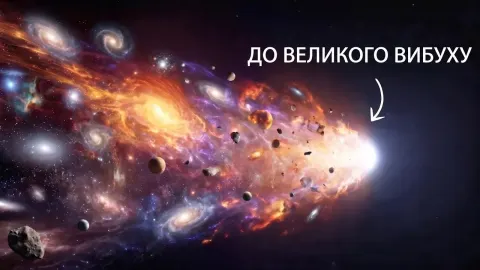
Our universe is home to a mind-boggling array of mysterious objects. Stars so magnetic that they rip apart atoms. Planets where diamonds fall as rain into oceans of liquid hydrogen. Threads of dark matter billions of light-years long that weave the entire universe into a vast cosmic web. Astronomers have unlocked many of the secrets of these weird cosmic creations. But one theoretical object in the vastness of our cosmos confounds the greatest minds in science. It's called the white hole. A white hole is a super powerful stream of energy that pours from an intensely bright point in space.
It emits radiation so powerful that nothing can venture near. A white hole certainly has to be one of the most mysterious objects of the universe could possibly conjure up. But you wouldn't want to get too close. I think if one went off anywhere near in our galaxy and it was pointed at us, you wouldn't even know it was coming. The Earth would be fried by the light coming out in an instant. No astronomer has ever seen a white hole. A clue lies inside the brilliant mind of the world's most famous physicist. Einstein is truly a cultural icon. If somebody said the word genius to you, one of the first things you might think
of is the face of Albert Einstein, his crazy hair and all that. But all of that overshadows just what a profound effect he had on modern science. Over a century ago, Einstein comes up with a theory that changes everything we know about the universe. Einstein's general theory of relativity tells us that the universe is not as it seems. It puts limits on what we can do in space and time, how fast we can travel. It basically affects everything we understand about the universe itself. Einstein's theory stretches space, literally, and predicts the existence of one of the strangest objects in the universe.
General relativity combines space and time into space-time, the fabric of the cosmos, which is flexible. Extremely heavy objects can actually warp space-time to create gravity wells around them. The more massive the object, the bigger and deeper the gravity well. But the theory predicts one object that could stretch space-time to its limit. A point so dense that nothing escapes its thrall. The name for this bottomless gravity well is a black hole. It is an object that transforms physicists' ideas of what's possible in the universe.
Einstein's theory also predicts another mind-bending object. The equations of general relativity allow us to push the limits of the universe as far as we can. What if there's something that's like the opposite of a black hole, a white hole? Well, the mathematics of general relativity allow for that as well. Einstein's equations make it possible for white holes to exist. How would they work? Clues to how they might operate could lie in the extreme physics of their theoretical opposite.
A black hole. In the 100 years that follow Einstein's theory, definitive proof of a black hole's existence, a photograph, eludes astronomers. Up until now, really what we've had is indirect evidence. Wouldn't it be amazing to actually see the black heart of it itself? How can astronomers see a black hole to take a picture of it? Fortunately, Einstein's theories predict that black holes and white holes both share a common feature.
Out of these complex theories come these mathematical predictions that sound like science fiction, but in reality, they give us actual things to search for in the universe. One of those science fiction sounding ideas is something called the event horizon. This purely mathematical boundary that is the prediction from the theory. And yet, this is an actual physical surface that we can search for. The event horizon of a black hole is the invisible boundary beyond which nothing, not even light, can escape. In theory, it should leave a mark that astronomers can see. As matter falls into a black hole, it gets superheated. And when it gets
superheated, it glows and it gives off light. So, we can find them. If this direct evidence for the existence of black holes is out there in space, then it is possible to unlock what makes black holes tick and use this information to unravel how white holes work. Photographing a black hole is a huge challenge. The strength of a black hole doesn't come from its size, it comes from its density. You actually want to compress as much matter as possible into a very, very small volume of space. And what happens is that makes black holes very small, and that makes them hard to see. And in fact, even the biggest black holes, if you want to see them, you're going to need a telescope the size of the Earth. In 2017,
eight radio telescopes across the globe joined forces to take a first picture. From Arizona to Hawaii to Europe even the South Pole all aim at the exact same spot. The heart of a galaxy 55 million light-years away. This is the picture that the telescope captures. The first-ever photograph of a black hole. This image just makes my jaw drop. It's not some myth, it's not some story. It's real data. Now that we have this image, that's it.
How can you be a black hole denier? That would be as crazy as saying the Earth is flat. The image proves that black holes exist. It also reveals how the event horizon of a black hole works. And this is the first step to unlocking how a white hole operates. That circle is actually from a disc of material swirling around the black hole. Any light inside of that region circles around the black hole a few times and then falls in. So, it actually can't escape to reach our telescope and it looks dark.
The photograph shows that the event horizon really is the point of no return for both energy and matter. What does reverse engineering the event horizon of a black hole tell us about how their theoretical opposite, a white hole, works? And could an unexplained burst of energy lead astronomers to the first-ever sighting of a white hole?