14:38
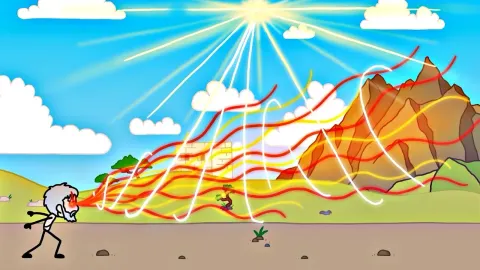


There may be a black hole orbiting our sun right now. No, of course not gigantic. This thing weighs about five earths, but it's no bigger than a regular grapefruit. It sounds like a cheap Netflix sci-fi plot, but it's a real hypothesis from real physicists, because at the very edge of the solar system, far beyond Neptune, really strange things are happening. The movement of dozens of ice worlds in that zone looks as if some invisible force has forced their orbits to line up in one direction. It is possible that there, in complete darkness, there is a massive cosmic body that is influencing them with its gravity. The elusive ninth planet. But here's the thing. We live in an era when telescopes are photographing galaxies at the very
edge of the universe. However, for over 10 years now, we have been unable to find an entire planet right under our noses. Telescopes see nothing but complete emptiness. But to understand what a black hole is all about, let's first remember why scientists needed a ninth planet. For years, many astronomers have been extremely skeptical about the search for new planets in the solar system. It seemed that the topic was dead, but in 2003, an icy object with an extremely atypical trajectory was found beyond Neptune. It was discovered by Mike Brown of Caltech. The same guy whose discoveries later deprived
Pluto of planet status. He even created a Twitter account with the nickname Plutokiller to annoy everyone. Level 80 troll. While combing the far reaches of the solar system, Brown and his team spotted an icy object they named Sedna. Its size did not stand out in any way, being even half the size of Pluto. However, the real anomalies were revealed after astronomers calculated its orbital path. So that you understand the scale. The Earth is located at a distance of one astronomical unit from the Sun. Now it doesn't even matter how many millions of kilometers it is. Let's just take this distance as a basis. The most distant planet, Neptune, is at 30. And immediately behind it, from 30 to 50 units, the
Kuiper belt begins. A giant space junkyard of hundreds of thousands of ice blocks. That's where Pluto lives. In this remote region, Neptune acts as a kind of bouncer. If a small rock comes too close, the gravitational pull of the giant pushes it much further into outer space by the force of momentum. But there is one but. According to the laws of physics, this stone should always return to where it received the push, straight into Neptune's arms. And the paradox is that Sedna doesn't fit him at all. At its closest point, it passes at 76 astronomical units. That's two and a half times farther than Neptune. Since their paths do not intersect there, the giant's gravity is physically unable to rewrite its route so strongly. And at its farthest point, it flies almost
1,000 units away. It takes it over 11,000 years to orbit the Sun. So last time Sedna was this close to us, people on Earth were still poking mammoths with sharp sticks and were just beginning to master agriculture. The question is, what the hell is she doing there? What has such a crazy gravity that it can rip its orbit away from Neptune's influence? If Sedna were the only such object, we would think of it as a random star that had passed by billions of years ago, hit this rock, and disappeared into the darkness. But astronomers kept digging and soon found about five more objects with strange orbits. And when a total of six extremely distant pieces of ice had been collected, Mike Brown and his colleague
Konstantin Batygin took up the task in 2016. Under normal conditions, the elongated orbits of these objects would point chaotically in different directions, like the hands of dozens of clocks that no one had thought to synchronize. But instead, all six orbits were looking more or less in the same direction, and what's more, these orbits had a suspiciously similar inclination. Batygin and Brown calculated how likely such a random coincidence was and got about 0.007% - about one chance in 14,000. If you had beaten the casino with that probability,
security guards, serious security guards, would have already come to your table and politely invited you to talk somewhere in a closed office. Oops. Back then, scientists loaded the entire solar system into a simulation and began to test what exactly could be keeping these worlds on such a short leash. In their simulations, everything came down to one thing. There lurks a massive, invisible object whose elongated orbit is turned in the opposite direction. Like a devoted interstellar shepherd, he uses his gravity to herd this flock and keep it from scattering. According to the latest
calculations from 2025, this object weighs about 4.4 Earth masses, and its average distance from the Sun is about 290 astronomical units. In addition, shortly after the publication of these calculations in 2018, a new ice world was officially discovered, nicknamed Goblin. It flies away from the Sun at a crazy 2,000 astronomical units and crawls in orbit for 40,000 years. And imagine, his trajectory aligned perfectly with this theory. As astronomers continued to explore the simulations, they uncovered two more obscure cases that had puzzled people for decades. Firstly, in space there is such a thing as the ice-skating mechanism. This is when a distant, massive planet gravitationally pulls a smaller object sideways for millions of years,
and its elongated orbit gradually flips over. As a result, the gravity of the ninth planet twists the orbit of some icy bodies so much that they begin to fly perpendicular to everything else at an angle of 90° or in the opposite direction altogether. Astronomers dug into the archives. And what do you think? Five such objects had already been discovered, and no one had any idea what had thrown them into these orbits. Secondly, Batygin presented another strong argument. If Planet Nine really exists, it must be playing a kind of gravitational game with Neptune right now, snatching icy rocks from deep space and hurling them into the solar system.
Remember, without a shepherd, Neptune would have thrown away all this garbage a long time ago. But with the ninth planet, everything falls into place. This theory simply perfectly explains where all these icy rocks come from and why this cosmic conveyor belt has not stopped yet. Provided that this anomaly really exists, it is most likely a frozen super-Earth or mini-Neptune. According to one version, it's just an icy planet without a home, which Jupiter and Saturn pushed out into the cold at the dawn of our solar system. So, it's a completely logical question. If this math is so reliable, why haven't we
been able to point a telescope at it and photograph this giant for 10 years? And when astronomers tried to do this, they hit a dead end. Batygin himself pointed out the first problem. The calculations only give us a rough outline of the orbit, but they don't give us any clue as to where exactly in that orbit the planet is right now. We see gravity clearly in the broken trajectories of the stones. But finding the exact point on an orbit several thousand years long is simply impossible. The second problem is that planets do not shine on their own in the optical spectrum. They only reflect sunlight. For us to see it, light has to travel billions of kilometers there, reflect off the ice, and travel back. Due to this double route, the planet's brightness
drops in proportion to the fourth power of the distance. Light is no help to us here. Double the distance and the planet becomes 16 times darker. Move Neptune 600 astronomical units and it will become 160,000 times dimmer than it is now. And our probable planet is much smaller than it. Plus, we don't even have the slightest idea how much light its atmosphere actually reflects. Try to see this speck of dust against the dense background of the Milky Way. While Batygin and Brown spent years beating out time on the best telescopes, other astronomers began to doubt the whole idea. The main blow was struck by Samantha Lawler and
her OSOS team. They abandoned that idea. What if the ninth planet does not exist and the orderliness of these orbits is only a consequence of observational error? Skeptics argue this way. Telescopes don't see the whole sky at once. They look at narrow areas at certain times of the year when there is no glare. So they're saying you find objects with orbits in one direction simply because that's the only direction you shine your flashlight in. It's like going into a dog park with a questionnaire and asking, "Do you have a dog?" To interview 20 people and make the brilliant conclusion that 100% of the city's residents have dogs.
When Lawler's team analyzed their independent data, strictly accounting for blind spots. It turned out that their findings fit perfectly into a completely random distribution of orbits. But the planet's supporters snapped. Okay, you can write off the orbits as an error, but how do you explain the perpendicular orbits and the influence of icy objects? Mathematics stubbornly shows that there must be something out there in the darkness weighing about five Earths. The only problem is that by the mid-2020s, telescopes had combed the sky and crossed out 78% of the possible hiding places from Batygin's model, without finding anything. So scientists are stuck. The mathematical model requires an object, but the photographs
show empty space. But back in 2019, a completely different idea was proposed. That's when Jakob Scholz and James Unwin released an article with an incredibly simple question. Why did we decide that something weighing five Earths had to be a planet? What if there's a tiny black hole spinning there instead? And this crazy idea didn't come out of nowhere Polish astronomers from the OGLI project were trying to find dark matter, or hidden objects, in our galaxy. To do this, they looked for gravitational microlensing. This is when an invisible object passes directly between us and the star, focusing its light like a magnifying glass, and the telescope sees the flash. So, the Poles caught six such short flashes. Based on estimates and assumptions
about their speed, light could be distorted by invisible individual bodies weighing from 0.5 to 20 Earth masses. People usually think that these are just planets wandering freely in space. But Scholz and Unwin thought, wait a minute, what if these are primordial black holes? Ordinary black holes are born from dead stars. Therefore, it is generally believed that they cannot weigh much less than a few suns. But immediately after the big bang, space was so dense that, according to speculation, random clumps of matter could have collapsed into black holes without any intermediate stages.
We, by the way, talked in detail about these primordial black holes in one of our old videos. These relic holes could have formed in almost any size. Many actually think they are that elusive and infamous dark matter. Now imagine a black hole weighing five Earths. Its event horizon would shrink to a sphere with a diameter of just 9 cm. That is, it is literally the size of a grapefruit. And you know, this version really explains a good half of all that cosmic weirdness. From a gravitational perspective, this grapefruit is no different from an icy super-Earth. It will also knock orbits into a heap and hurl comets.
But it is completely invisible to telescopes Someone should mention Hawking. But shouldn't it evaporate and glow? In theory, yes, but a black hole with a mass of five Earths has such incredibly low intrinsic radiation that it remains completely dark and invisible to our instruments. Plus, according to some calculations, the chances of the sun capturing such a hole turned out to be almost on par with the chances of catching a wandering planet. So should we start saying goodbye? The short answer is no. We have nothing to worry about. At a distance, its gravity is no different from that of a regular planet. And to get your spaghetti stretched out, you'll have to personally travel to the edge of the solar system and fly up close to that
grapefruit before you even risk poking your nose past the point of no return. But then how to prove that it is really there? Seeing it with a telescope is practically impossible. So Avi Loeb and Amir Siraj came up with a different approach. Wait until something hits her. There are tons of ice debris flying through there all the time. When a random comet flies too close, gravity tears it apart, and the material heats up to millions of degrees, briefly flashing a bright light. In short, we need to capture the most distant cosmic flare in the solar system. And for this we need a camera that
regularly photographs huge swaths of the sky and instantly notices any brief changes. It is for this reason that a telescope was built in Chile, which officially began operating in June 2026. Yes, right now the Vera Rubin Observatory has temporarily suspended its operations. But once observations resume, the largest digital camera in history will get to work. This is a 3200 megapixel setup sitting over there on the peak of Cerro Pachon. But its main advantage is speed. This massive telescope photographs the available southern sky about once every three nights. Scientists are essentially putting the entire sky on a ten-year cosmic timelapse. And now it will be extremely difficult for any object to slip by unnoticed. As
Mike Brown said, if you gave me a bag of money to build the perfect instrument for Planet Nine, I would build the Rubin Observatory. New observations could push this investigation in one of four directions. First, the telescope can find new icy worlds with orbits pointed in random directions. This would mean that the skeptics were right, and we have once again accepted the error in observations of the planet. Second, a faint creeping dot may appear in the pictures. School textbooks will have to be completely rewritten, and our solar system will officially receive a type of planet that is
considered one of the most common in the universe. Third. If the orbits are indeed aligned, but the anomaly cannot be explained by a hidden object or observational error, physicists will have to check whether our description of gravity needs a few tweaks. And finally, the camera can catch the same flashes of light coming from an area where no object is visible. If it is confirmed that a primordial black hole is orbiting in our backyard, it would be a monumental scientific breakthrough. The nearest known black hole is currently 1,500 light-years away, but this one is literally on our doorstep. So what do you think is ultimately hiding there? An ice giant or a black
hole the size of a grapefruit? Or are astronomers just fooling themselves? Leave your options in the comments, like and subscribe so you don't miss the finale of this incredible saga. Thank you for watching, thank you for commenting, and see you soon.