59:27




If I put up this microwave right here, I'd face a fine of about $18,000. I'm standing in a place where microwaves, cell phone service, Wi-Fi, and even electric cars are banned. All because of that, all that mess so that maybe someday that thing can catch a glimpse of extraterrestrial life. Despite all this effort, despite isolating hundreds of thousands of people, today the National Radio Quiet Zone is in danger. I had been dying to know why someone would choose to live here and how life is without the burden of these infinite waves. So last week I literally went off the grid visiting some of the people who chose to live in the NRQZ. And what I discovered is that our best chance to ever find out if we're alone in the
universe might just disappear. So let's get sci-fi for a sec. Imagine that the aliens actually sent us a message from space. Where would we listen? Where would we catch this message? You've probably seen this one in the movies. This is the Very Large Array, not to be confused with the Very Large Telescope or the Extremely Large Telescope, cuz you know, astronomers aren't great at naming things. But the point is, that's not the observatory that would catch this message. There's a much more powerful one. That's where we're headed. But for that one to work, we need silence. So, this is Chicago downtown. I'm not exactly sure what this means cuz this is for like a video that we're going to shoot in a few weeks. But
yeah, here's the measurement. This thing is an EMF radiation detector. It basically shows how strong electromagnetic waves are flying around me. I've been traveling with this thing to a fair amount of places and just testing out how noisy they are. Here at the airport, it's been oscillating between, you know, five uh sometimes all the way up to 11 in cities supposedly. This should probably not be going over 10 microwatts per square centimeter. Maybe that measurement I took earlier was skewed because I put the thing too close to the camera. But either way, this is way too loud. If you want to listen to what's out there, we need quiet. So, imagine this megaphone didn't emit
sound waves, but instead electromagnetic waves, and then I turn it on. Hello. Okay, so let's say I set the wavelength coming out of this megaphone to about 12 cm. That's like 5 in for you Americans. If I do that, what would be coming out of this megaphone is basically microwaves. The same ones as in your microwave. If you've ever noticed that food gets hot in some spots and not others, especially cuz we took out the spinning dish thing. But the microwave does is it emits microwaves and it heats water molecules in the peaks of those waves. Now, because the microwaves are 12 cm wide, right? The frequency is 12 cm, then the parts where this chocolate gets really hot are exactly 12 cm apart. Basically, we're measuring the wavelength of the microwave using
this thing. Now, if instead of that I set this to a much smaller wavelength, say 500 nanometers, you'd actually be able to see that stream of electromagnetic waves cuz that 500 nm is the wavelength of blue light. So, what does that have to do with not having Wi-Fi around here? When we think of a telescope, we always imagine kind of seeing and that would be visible light through an eyepiece. If we want to look at space through a telescope, we still need to reduce the noise, right? We need dark. We need the noise from the sun from all this visible light coming from the sun to be quiet so we can see stuff in space. It's kind of the same idea here. This is a telescope for radio waves. It doesn't matter if it's light or dark cuz that's not the
type of wave that this telescope focuses on. What it needs is quiet. It needs silence from other electromagnetic waves and those would be the ones that our devices emit. In other words, what that thing does is it sees or maybe it hears waves that are not part of the visible spectrum. electromagnetic waves that are not visible light. So that tower can detect waves from a range of 3 m on the broader end of the spectrum. That's about 0.1 or2 GHz all the way down to 2.5 mm wavelength. That's around 115 GHz. The problem is that those are the exact same wavelengths that we use for FM and AM radio. Same wavelengths that we use for cell phone towers and for Wi-Fi. And since the National Radio
Quiet Zone was created in 1958, things have gotten noisier. Not too different from the noise that you get when you try to expand your team. But G2I, our sponsor for today's video, can help with that cuz hiring engineers for your company is hard and it's timeconuming and it's expensive. But G2I connects you with prevetted contract or full-time engineers. So you can skip that boring part and get straight to speaking to the quality candidates. Every engineer that you are matched with in G2I has at the very least 5 years of experience across different tech stacks. You'll also get a recorded technical interview that shows exactly where each candidate excels and where they can improve. Now, these guys
have worked with Meta, with Microsoft, Ninja, One Shop Monkey, hundreds of other startups to fill up their talent gaps, cutting their hiring time by over 60%. They have been a partner of ours for months, and they're offering you guys a $1,500 credit on your first invoice if you mention Slight Bean when you book your first call. Links to G2I are in the description, or you can just snatch this QR code. And of course, thanks to the team at G2I for supporting our channel. Now, believe it or not, this thing has not gone above one since we've been in this field. Now, in the original rules that set up the quiet zone, it basically shut down all AM and FM radio stations and TV broadcast towers. And that made a lot of
sense in the '60s cuz those were the loudest things that you could have. But the world has changed. 42% of people 16 years or older use a pay telephone at least once a month. So, we've been driving south from Pittsburgh and we drove by a couple of small towns. The signal along the way, the phone signal has been a little choppy, but we just ran into this ski town called Snowshoe and everything seems pretty normal to me. No restrictions. Oh, there you go. We got full on Wi-Fi. So much for uh radio quiet. We're definitely inside the NRQZ. We're like 10 miles in one direction to the actual radio tower. Radio works. We have cell phone signal. We have a bunch of Wi-Fi networks in the village over
there. What's up with that? I don't know. I guess we'll see. We'll see when we get closer. The original quiet zone is about 13,000 square miles, but there are now dozens of cities inside this area. Harrisburg and Stockton have almost 100,000 inhabitants combined. We're staying at this Airbnb that's what, like 5 miles out from the observatory. And the first thing that we noticed when we came in is that there's a microwave there and there's Wi-Fi. And the Airbnb is actually just next door to the probably the only bar nearby. It's called the hot spot. Nice place, but what's that about? Is this so much for radio quiet? So, I've been reading a bit on the law that created the quiet
zone. It's a federal law that allows the scientists to basically control some stuff. For example, broadcast emitters, they have to run at reduced power or for example, they can force cell phone companies to put towers in the valleys between the Appalachian mountains instead of at the hills so that the signal doesn't leak all the way to the radar. Now, it says here though that within the 10 mile radius of the radar, that's where they have more control. That's where they can put more strict guidelines. Now, this Airbnb is like 5 miles out from the observatory, and still we have a microwave and Wi-Fi. So, what's up with that? Have they just given up? So, there's there's this quote that convinced me to come here. It said that
the Greenbank Observatory is so sensitive it could detect an iPhone on airplane mode in Saturn, which is crazy. Like that has to be alien message ready. But if that's true, then my phone, our cameras, my like everything that we have here must be deafening to this observatory. Like I don't get that connection. So phones have Bluetooth, right? that operates on a 2.5 gigahertz band about 12 centimeters, not too different from the microwave. So, could this radar detect it from here 100 miles away? If you do the math, which I'm not going to bore you with, the electromagnetic waves coming out of my phone would be deafening to this radar.
It would saturate the entire 2.5 GHz band and it would block any signal coming from space from being ever detected here. The reason that doesn't exactly happen is because of the curvature of the Earth, because of mountains and fields and trees between here and the radar. What? What if I get closer? Why would anybody want to come live down here? Right. So, we kind of expected this. Uh there's a guided tour. They're going to let us in, but there's no cameras, no mics, nothing digital, no phones, nothing allowed, and no exceptions for YouTube. But luckily, we came prepared.
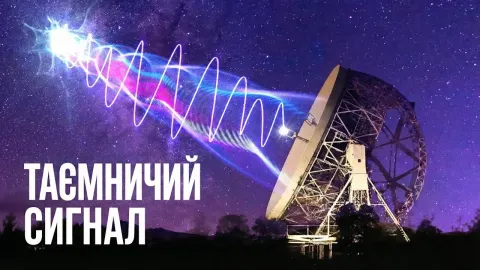
What makes the Greenbank Observatory so sensitive is a mix of engineering feats. The size of the plate determines how big of a wave it can catch. This one is 110 m wide and it can detect waves of up to 3 m wide. The reason why it looks like it needs some anti-aliasing is because it's made up of 2,000 plus panels that constantly tweak the shape to stay accurate as it tilts and sags. And without that, we wouldn't be able to catch smaller signals above 4 GHz. Now, the fact that it's tiltable is a feat in and of itself. It weighs 17 million lb. Also, traditional radio telescopes have the feed horn in the middle, but that can block or affect some of the signals. So, in this one, it's on the side. The
receivers, the parts that actually collect the signal, operate at about 20° Kelvin or minus 253 degrees C. But of course, the biggest trick is everything that goes into isolating this thing. No gasoline cars allowed in here because the spark plugs create noise. People comply here not because there's a law that will find them, but because they're overall okay with helping out. And they're some of them are here for that very reason. The interference protection group, a small patrol that tries to mitigate interference, is mostly there to catch accidental devices, not intentional disruptions.
We have a monitoring uh station down on site and then we'll jump in the truck and we have direction finding equipment in the truck. We just basically have to look at it with the receiver of the spectrum analyzer and just drive around and watch the signal peak or fall away. For example, one of the scientists told us that when the Dollar Tree, which is really the only store in the entire town, when it opened, like the theft detection things on at the entrance were causing interference with the telescope. And the scientists went and negotiated with Dollar Tree to replace them with ones that wouldn't cause that much interference. They also painted the entire building with this black like
metallized paint that works a little bit as a Faradai cage and isolates the noise that the lights in the Dollar Tree were creating. But all of this work is in danger and it's kind of the internet's fault. Jenna Baxter, this teenager that the New York Times interviewed a few years ago, she told her story of how she grew up without a cell phone, planning stuff with her friends over landlines, but also without internet bullying, without social media in the palm of her hand. And despite being next to the telescope, well, this town is a town. It has a church and a dollar general oil and a bank. Now, we stayed next to the local bar, the only bar for miles. Now, the crowd was this mix of scientists
that worked at the observatory, people from other rural towns, people who grew up in rural America that didn't mind moving to this other rural town and that enjoy this quiet lifestyle. Now, Ron, the owner, bought the place last year, and him and his wife worked two shifts at the local bank as a school driver and man the bar at night to pay it off before their kids go to college. Greenbank kind of became this haven for people who look for quiet. Maybe that quiet is sound waves. Maybe that quiet is electromagnetic waves.
I am not crazy. But for the kids growing up here, their Greenbank school is the only choice. And for years, the 200 or so students in Greenbank School have been lagging. They couldn't use computers for digital textbooks because we're in this Wi-Fi ban zone. And this lack of access to the modern world started to take a toll, a negative toll in their development. So after years of negotiation, the school was finally allowed to install Wi-Fi. But it wasn't just because of the kids. For years, the premise of the NRQZ was town collaboration. But as more people came to live in the National Radio Quiet Zone, it almost became uninforceable.
The reason why the school was eventually allowed to use Wi-Fi was that the 2.5 GHz band was so saturated, it was almost deemed, you know, useless for observations. Too many things run on that band. And there's no escaping the noise. Also, after pressure from local communities, Starlink, Elon's satellite internet company, enables service for most of the quiet zone. And while there's no signal here in Greenbank, there's no invisible wall stopping those signals from the satellites from causing interference here. And that is just one example. As we implement more satellites, more power lines, the amount of radio interference that makes it to the NRQZ just keeps increasing. Now,
don't get me wrong, like this really is just a price of progress and losing some sensitivity in the 2.5 GHz spectrum is really a small price to pay in exchange for kids doing a lot better in school. But the reason I felt this story was important, it's not because the telescope is now useless. It's because the circumstances, the political circumstances, the scientific funding that was necessary to create this radio quiet zone, they're unlikely to ever repeat themselves again. When the quiet zone was created, there were no radio waves and they were kept out of this area for 50 years. If you wanted to build a new radio quiet zone today, you need to kick people out or convince people to not use technology and that's
a much harder task. But listening to aliens is not the only purpose of this observatory. This site discovered proper oxide, the first complex molecule found in interstellar space. They also found the fastest spinning neutron star and have contributed tons to our understanding of gravitational wave. Working with radio waves also has one huge advantage over working with visible light. Actually, the VT and Atakama has a terrible limitation because it works with visible light. I traveled there last month to find out what that was. Should check out that video. Catch you on the next one.