6:25



All right, let's jump right into this explainer. From Manhattan real estate to reality TV all the way to two non-consecutive terms in the White House, Donald Trump's life is basically a story of unprecedented political shifts, highly polarizing policies, and well, a constantly evolving public image. Today, we're unpacking the data, the historical records, and the literal timeline of events to neutrally understand this deeply complex biography. To make sense of over seven decades of history, we're going to logically structure our breakdown into five distinct eras. Building the Trump brand, the first presidency, legal battles and comeback, the second presidency, and finally, rhetoric and public image. So, let's kick things off with section one, building the Trump
brand from real estate to reality TV. Now, long before politics, Donald Trump was born into a wealthy New York family. And get this, he was actually a millionaire by age 8 in today's dollars. After graduating from Wharton back in 1968, he took over his father's business in 1971. Flash forward to 1980, and he's grabbing headlines by transforming a derelict hotel into the gleaming Grand Hyatt. It wasn't always a smooth climb, though. Between 1991 and 2009, his casino and hotel businesses filed for bankruptcy six times. But his billionaire persona, it remained bulletproof. And that image really cemented itself in 2004 when The Apprentice turned him into a nationwide reality TV star. 4,000. That is a
staggering number. Records indicate that by 2018, he and his businesses had been involved in over 4,000 state and federal legal actions. We're talking everything from real estate disputes to the Trump University lawsuits. This immense history of litigation really foreshadowed the highly combative style he'd eventually bring to Washington. So, that brings us to a really fascinating pivot point. How exactly did a businessman with absolutely zero government or military experience capture the Oval Office? Well, in 2016, he leveraged his massive fame, an estimated $2 billion in free media coverage, and a populist Make America Greet Again platform to completely shock the political establishment. Moving
right along to section two, the First Presidency, 2017 to 2021. The pure data comparing his three unprecedented presidential campaigns reveals a completely unique electoral pattern. In 2016, he became only the fifth person elected president despite losing the popular vote. Then in 2020, he lost both the popular and electoral vote to Joe Biden. But as the data clearly shows, he pulled off an extraordinary comeback in 2024, winning both the electoral college and the popular vote against Kla Harris. So what actually happened during that first administration? The source material highlights it was defined by sweeping executive actions and an America first agenda. Domestically, he signed the massive tax cuts and jobs act, appointed three conservative
Supreme Court justices, and ramped up border enforcement. And on the global stage, he completely disrupted the status quo. He strained European alliances, withdrew from the Paris climate agreement, and kicked off a major trade war with China. The end of his first term is really overshadowed by two massive events. The CO9 pandemic and the 2020 election. While he did sign the historic CARES Act stimulus, his messaging often clashed with health officials. And then following his 2020 loss, he made unprecedented baseless claims of massive election fraud. His repeated efforts to overturn those results ultimately culminated in the January 6th attack on the capital which led to a historic second impeachment.
That launches us straight into section 3 legal battles and comeback 2021 to 2025. 34. In May 2024, Donald Trump made history again, but this time by becoming the first US president convicted of a felony. A New York jury found him guilty on 34 counts of falsifying business records related to the 2016 election. Now, even though he ultimately faced no penalty following his re-election, it undeniably marked a watershed legal moment. And the legal peril really didn't stop there. He was found liable in New York civil cases for sexual abuse, defamation, and business fraud. All while facing massive federal indictments for retaining classified documents, and election obstruction. But
against all odds, he pressed forward. After federal cases were dismissed due to his impending presidency, he launched the truth social platform in 2022, consolidated his grip on the Republican party with his Agenda 47 platform, and incredibly survive two assassination attempts during a highly volatile 2024 campaign. All of this raises a crucial question for historians, right? After securing this absolutely historic political comeback, did his approach to governance change? Did the second term look like the first? The short answer from the records is absolutely not. Which brings us to section four, the second presidency, 2025 to present.
Entering office in 2025 as the oldest person to assume the presidency, his second term operated with noticeably fewer guard rails. The contrast is huge. While his first term focused on traditional conservative goals like tax cuts and NAFTA renegotiation, his second term immediately and aggressively targeted the federal bureaucracy itself. We're talking mass terminations of federal employees, implementing great depression level global tariffs in 2026 and pushing through the sweeping one big beautiful bill act which made his previous tax cuts permanent while deeply cutting social safety nets. And the friction was pretty much immediate over 550. That's how many lawsuits were filed
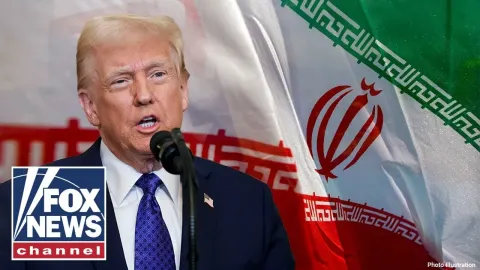
nationwide by mid January 2026 alone, just challenging the legality of his rapid executive orders. Legal experts watched closely as the administration frequently asserted a constitutional right to completely bypass federal law, triggering some truly unprecedented clashes with the judiciary. This era also saw a massive escalation in hard power. Back in early 2025, we saw hardline domestic deportations, utilizing the centuries old Alien Enemies Act alongside those federal layoffs. By 2026, foreign policy shifted dramatically. US forces actually captured the Venezuelan president in a January military raid. And then by February, Trump authorized joint US-Israeli strikes on Iran. This sparked a brief but really intense war that
ended in a tense military stalemate. Finally, we must objectively examine the overarching themes in section 5, rhetoric and public image, defining Trumpism. So, what actually is Trumpism? At its core, it's a reshaping of the Republican party identity fueled by right-wing populism, America first nationalism, and a fiercely combative relationship with the traditional press, whom he often labeled the enemy of the people. He extensively utilized social media to bypass the media entirely and speak directly to his base. Now, fact checkers do note this era was marked by an unprecedented volume of documented false or misleading statements.
Additionally, legal experts have pointed out accusations of his secondterm weaponization of the Justice Department against political opponents. Now, despite all this polarization, he obviously maintains an intensely loyal populist base that engineered his incredible return to power. However, it's vital to note that academic and historical assessments of his first term, places like C-SPAN and the American Political Science Association tell a different story. They routinely placed him near the very bottom of presidential rankings due to low marks in administrative skills and moral authority. So, as his second term unfolds in 2026, bringing sweeping bureaucratic changes, global trade wars, and shifting international alliances, we're left to ask a really profound
question. How will this deeply polarizing, normattering figure ultimately be judged by the long arc of history? When the dust finally settles on these five eras of influence, what will the history book say is the true legacy of Donald