29:08
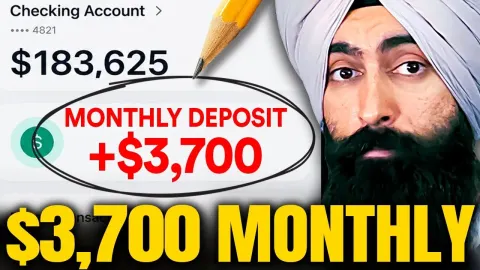


app. It took about 3 weeks. Now he brings in an average of $2-3,000 per day. This is Rusty. A few months ago, he had never built an iOS app in his life. Until I decided to create something to solve a very simple problem. In its first month, the app earned only $66. But 6 months later, he earned $41,000 in one month. But here's the thing. The app he created is insanely simple. I literally haven't written a single line of code or text on the internet. The reason you want to watch this episode is to find out how he designed it.
No, he didn't post it on TikTok or show any paid ads. I asked Rusty to come on the channel and look into this. And in this episode, we'll dive into a simple app he built that made $41,000 in one month, how he competes with really big competitors in a very tight space, and \{quote\} an outdated growth strategy that's working really well for him in 2026. Okay, guys. This is something you can't miss. I'm Pat Walls. And I'm Gus. And this is Starter Story. Okay, Rusty. I'm glad to welcome you here on the channel. Welcome to Starter Story. Tell me a little about who you are, what you've created, and what your story is. Well, I'm Rusty Turiak. I created Voltaire, an iPhone app that encrypts storage and allows people to store encrypted files and photos. This is my
first iOS app, mostly thanks to Coding Agents. It took about 3 weeks. The first month he earned $66. I have a couple of downloads. Now he brings in an average of about $2-3,000 per day. Wow. Rusty, that's great. Off camera, before they said you started doing it in March, so it's only about 6 months, which makes it even more amazing. But let's talk about Voltaire. Can you just explain what this app is, who your users are? Well, it's very simple. It's very, very similar to Dropbox with one caveat that it's essentially encrypted.
It is encrypted on the device. No servers, no shared keys. I don't have access to it, nor does Apple or anyone else. So there 's really no way to restore anything. The app is free. In fact, I was going to make it completely free, and then literally the day before that I decided that maybe because of some of the advanced features, if users started sending me support requests, I just did n't want to be bothered so much. So I literally just put in a few dollars and we'll see. Honestly, most of my purchases are for a lifetime. I would say a good 60% at the moment. They also account for the majority of the income, I think over 80%. And then I just passed the 60,000 download mark in total. And one very difference between this app and
others is that many trendy apps focus on converting you immediately. For example, at Cal AI, if they don't convert you immediately, you never get paid. I have the opposite. For example, I have the lowest conversion on the first day and the highest conversion on the 60th day. In short, what I like about Rusty's story is that his application is insanely simple. One of the reasons it works is because it's just a proven category. People want to download this app and pay for it. An app like this and a founder like Rusty are proof that you don't need a completely new or complex idea to win. That's why we've created a real database of simple app ideas like this one that are currently making a ton of money. Every idea in this database has real
revenue figures. These are real apps with real pricing models and growth tactics that you can familiarize yourself with. Just follow the first link in the description if you want to download this database 100% free. Start browsing, maybe get an idea, and start building. Okay, back to the episode. This is truly impressive. I mean, especially for a program that, you know, can potentially be used for free. This is really good. And finally, could you just open up the analytics, the revenue dashboards, just show the audience, you know, this is the real thing. Yes, this is App Store analytics. As you can see, my MRR is quite low because most people choose lifetime plans. So daily uploads, as I said, currently depend on the day. So, here's the thing. And this huge
surge. Yeah, I have no idea. This source is Apple Search. However, surprisingly, this does not correlate with income. See? Daily income now hovers around $2,000. It grows slowly. This is what we talked about. As you can see, my paid downloads are only 5.47% on the first day, but on the 35th day, they actually increase. A weekly subscription costs $1.99, an annual subscription costs $19.99, and a lifetime subscription costs $39.99. So, Rusty, these numbers are just crazy. Like this growth channel that works for you. It grows very well, very linearly. You have an amazing download conversion rate. You earn over 40,000 a month. Soon it will be a million dollar a year business. Congratulations on providing a lot of value to people, which we'll
talk about later. But before we do that, I want to know about your experience, because I know you've been involved in startups before. This isn't your first business you've started, but you've done completely different things. So how did you get to this point where you have this amazing app that you built for $ 2,000 a day? Well, my path is quite winding. I grew up in Slovakia in a tiny village with a population of 700 people. After graduating, I moved to Boston to work for a security company that was acquired by Google. And so I worked at Google. I worked on a part of Gmail where I was a member of the Gmail team and then went off and founded a few startups. The first one started mostly in safety, because that was my experience. Then I
moved into entertainment. I created a company. The company was acquired by Amazon, and they use some of its technology to this day. My last large-scale venture-funded project was Pics, which was something of a bold copyright service for entertainment, mostly focused on music. And then we sold it last year. This is great. So, this naturally leads to how you find this idea? How to create an encryption application? You know, for example, if you're dealing with cryptocurrency, a lot of people keep their wallet keys in all sorts of places, and it's really hard to have them somewhere near the device but still have them at hand. That was my solution for this.
Especially photos of ID cards, birth certificates. And, as I said, I didn't plan on making it a paid service. I didn't even know if anyone So I expressed my opinion that I would have it, and it would be there. Yes. Well, let's talk a little more about this growth. We've talked about this before, but you don't spend money on advertising, you don't pay people to create content for the app. You just thrive on SEO, and you know, if you go online now, everyone says SEO is dead. You need to do something different. But it's clearly working for you, and it's progressing very well. So, can you tell me a little more about that? For example, what was your approach to this?
Most programs in this field have been around for 15 years or more. They have millions of users, many downloads. So Apple prioritizes them, and I won't have any chance of achieving that. But they completely ignore it because, you know, they don't need it. They may have money and they just don't care. And so my approach was this: What if I tried to collect every keyword that essentially points to the same thing as an app store, but on the web. So my first step in this direction was a basic marketing site that outlines all the features and then creates a series of guides like how to save photos on iPhone? And when I say "I", I literally haven't written a single line of code or text on the internet. Everything is done by one of the coders. Over
time, it seems like you get a lot of authority, and with it comes a lot of traffic, and then I focus on conversion. So I tell coders to make sure that the call-to- action structure essentially asks the person somewhere in the article people usually end up. I want them to be able to go through the app. And so I have about 10% conversions from the Internet, and at the moment the Internet makes up the majority of traffic. Oho. So, you have a whole content marketing and conversion team working for you, but no real team. You just have some agent working for you who is constantly improving your SEO.
Tell me more about how you set up something like this. For example, what tools do you use? This is, to be honest, a basic cloud or Codex. I wrote a library called Gum. These are simply open source command line tools with MCP on top of all Google services, including Google Search and Google Keyword Planner. So what he does is he runs Keyword Planner every morning, looks at all the traffic, identifies keywords that are showing up but aren't actually driving traffic to the site. So, as you can see, your site has been shown 16,000 times for this keyword, but no clicks because you're probably number 50. And so,
then it takes that and optimizes it creates this guide, and then the is essentially published. Google takes about 3-4 days to register and I optimize a lot of internal links. So internal links from existing traffic point to new guides, and that's how Google essentially prioritizes, and then you can see the correlation between that essentially increased traffic and then the traffic that it converts into dollars. And, essentially, publish one article a day, and that's it. Google likes not so much content, but high- quality content. I make sure that the content is not just a vomit of words. I think you mentioned one thing that I really liked, which is that you don't actually post that much. Sometimes you hear people automate their SEO
, it's just a bunch of artificial intelligence. They publish 1,000 articles a day, but you actually mentioned that you only publish one article a day, and maybe you think Google really likes that. And I think I want to bring you back to the channel, maybe in 6 months, and see what kind of revenue you have, because I think this focus is on providing valuable content to a very niche audience. Maybe they care a lot about security, they care a lot about this very niche thing that you have. I think it will actually benefit you even more because you will start getting on the lists for LL.M.
The more traffic you get, the more Google loves you, the more Gemini loves you, the more AEO search reviews love you, and all that attention drives to your app. So I'm curious to see where you'll be in 6 months, especially since it's already growing so quickly. Rusty, you mentioned that you have a lightweight technology stack. A lot of this is profit. So, what tools do you regularly use to run this business? Well, I mean, the app is Swift with UI Kit. There is nothing more. It uses many of iCloud's features, but everything is native to the app. I use Codex and Claude extensively, and I also have local models that I use for myself, but I would say that at
this point 99% of the things left to do are to get Claude to wake up every morning and run the guide, and that's it. For measurements I use Posthog. It is free. So, one of the nice things about this is that I don't have a shortage of traffic or users because they don't measure anything. These days, you can run things for free. You know, it's like there's nothing to break, which is very good. As long as Apple works, the app works.
Okay, Rusty, real quick. We talked about what your app does. It's encrypting your photos, but I'd just like to see it. Can you show me the app you built that made over $40,000 last month? How does the app work? What is he doing? Can you show us a little bit? Yes, this is a great person who creates a template. Any template opens the repository. So there are about 52 billion potential storages, and then they just add files to it. So what's interesting is that there's no way to know how much data or what's in there . And so a very interesting story actually accumulated. So, on Friday, I got a call from an FBI agent. They caught someone they thought was using the app, opened the vault to record some sensitive information, and that's why they believe that
person did it. And they want my help, but there's no way to figure it out. The app is built in such a way that I can't tell if this person even had anything. The agent was very upset about this, but that's exactly what the app does. This is great. I mean, literally the point is to encrypt it. That's why people use it, because no FBI agent can call the founder of the app and get information. So that's super cool. The last question we ask all the founders who are on Starter Story, and I know you've built a bunch of great startups, and you're obviously doing great. What advice would you give to someone watching this?
Maybe they're about to start their first company or they're about to launch an app, for example, you've even created a utility app. What would you advise them? I mean, go ahead. This is the hardest part, isn't it? I have at least two dozen finished projects, but they're gone. And as long as they are not there, they do not exist. And then, honestly, people think too much about how everything should be done. None of this came from years of experience, because my background is in B2B and entrepreneurship. So I did n't really know anything about it. So, if I can learn, then anyone can. And so, if you have an open
mind and know how to take a step forward and be a little better every day than you were yesterday. And that's all I care about. Thanks, Rusty, for coming. Super cool app. Thank you for sharing it so openly and all your SEO experiments and everything else. Super cool. Thank you for coming. Yes. Yes, thank you for inviting me. Good. Gus, co-host and producer of Starter Story, what do you think of Rusty and his app? When I first talked to him, I knew it was going to be awesome. He reminded me. Remember that guy we interviewed a while back? He is from Australia. He had something like. His name was Mike Gill. Yes. He liked seven SaaS. I think the similarity between them, obviously, aside from their behavior, was that I feel like they really have this
simple, but not easy, but simple approach. I really liked everything he said, you know, all the guys from the apps that we invite are working on TikTok and going viral, and it all obviously works. We have many examples. But I thought it was cool that he just said, "I write one article a day. I'm trying to outdo the competition, and that's my strategy." Yes, that's my first thought, yes. The atmosphere is like there is no nonsense. This is like, I don't know, a guy who's. I'm not sure how old he is, but let's say he's in his 40s. There's a difference between a guy in his 40s and a kid in his 20s. You know, he doesn't come here to
talk about the latest best growth hack. You have to do this, you have to do that. It's more like putting one foot in front of the other. I think there's a lot to learn from this interview, just by watching how someone like him behaves, which is a little different from the typical interviews we do. Yes. I agree. So, what do you think about this whole SEO strategy that he's doing, and I think you even said in an interview that everyone says SEO is dead or something, you know. What do you think? I still believe SEO is dead, whatever you call it. But the reason I think it works for him is because it's super-super competitive. It's like a very specific app that does a very specific thing.
He's not going to get a million visitors to his website every day. And I think he probably gets a lot more traffic from referrals, word of mouth, and law degrees than he already knows, because he's letting us know that you can't track those things, because he doesn't want to add analytics to it because it's focused on privacy. Yes, it all started with SEO. It writing content, but it will actually Yes. Another thing I like about his app is that it is so simple. You're watching a demo, you're literally encrypting some files. There are not a thousand functions. They make them easy to market.
We have a bunch of other examples like this, real simple apps that are making money right now. We put them all into a database of all the people we interviewed and researched and found a bunch of cool simple apps that are making money right now. Check it out in the description right here. It's all free. I hope you like it. Thank you for watching. See you next time. Peace.