17:31



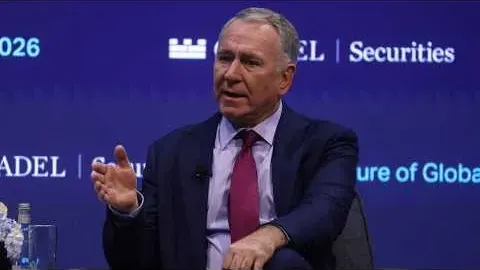
Fed's next interest rate decision a week away, the market expects the committee to keep them unchanged, but as we saw at the end of today's session, rates remain sensitive to geopolitical risks. So, what is the best strategy for the Fed right now? With us is David Zervos, former chief market strategist at Jefferies and now an advisor in the Office of the Secretary of the Treasury. Nice to see you, David. Glad to be here, Mike. You know, last week I said that the Treasury bond market is behaving like a stock bottoming on bad news. In other words, core CPI and PPI came in slightly higher than expected, but yields declined. And, in fact, expectations
for Fed action this month have hardly changed. So I'm curious what you think about the relationship between the current inflation rate, Kevin Varsh's statements about plans to reduce inflation, and market expectations. I think the price dynamics were extremely interesting to watch. We had strong retail sales, strong industrial production figures, and oil prices, especially long-term, seem to have reached new highs. It's a small, I wouldn't call it a big increase, but core inflation in the CPI was certainly higher than we would have liked. And we are now 20 basis points below the peak yields that were recorded in the first week of October. So, I think this says a lot about the positioning of market participants. This
says a lot about what drives the Treasury bond market, and it's not traditional factors at all. So I think we're getting to a point where maybe the Treasury market has we'll be arguing in the coming months about where this energy movement will end. And when this is over, and hopefully when these conflicts, maybe both, reach their peak, we will be able to talk about much lower profitability. I do n't know when we last spoke on the air. Of course, you spoke to our network recently, but a lot has changed. Do you think inflation has become more stable than you thought even a month or two ago? I think, Melissa, this is a story about energy carriers. You can trace it all back to the energy factor. And you can even, you know, take another chart of energy and 10-
year bonds, you can stack them on top of each other. And the whole story since February 27 is that we shocked energy prices by raising them by almost 80% for WTI. Because of this, we changed the path of rates from a 50 basis points decrease to a 50 basis points increase. And the most important takeaway from this, from these two very negative factors for the markets, is that everything has turned out to be incredibly resilient. I mean, we're at an all-time high right now. Again, I think this year we'll have.we've already had 60.no. Uh, I do n't think 60. I think something like 30 new highs. 60 new highs since Trump won the presidential election.
Yes, 30 new highs for sure. This is spreading. I mean, as we saw in the last PPI report, transportation costs increased by about 3.4%. So, we see this spreading. So at what point do you say, "You know what? This is an energy shock, yes, but it's going to affect what the Fed does. It's certainly going to affect what companies do, because there's a limit to what they're going to. Margins could be at risk next year." I guess I'm just an optimist, which is typical of me; I'm an optimistic person, and, you know, when this conflict is over, the energy story will go down, and we'll be talking about oil at $60 again, like we were at the beginning of the year, and then
all these discussions will disappear. Everything will disappear. Maybe that's too optimistic. And people will have to replenish supplies. And, you know, the movement of oil prices in futures contracts makes me think that it's a slightly riskier proposition. But the core CPI, all of these core measures, except for the core PCE, which is still hovering around three, are mostly in the low twos. So, I mean, the core CPI just jumped to 2.6, was 2.4, but, you know, all these numbers are there. They are showing a downward trend and have been doing so for over a year or two. And all of this probably happens with second- order effects.
Oil