15:48




By this point, you've probably heard that AI could be really dangerous and possibly civilization-ending if it becomes superintelligent and goes rogue. But experts usually don't speculate on exactly what that means for us lowly humans. So when the policy wonks over at Control AI approached us about making a video about the dangers of unregulated AI, we agreed, but on one condition: that we could get those experts to describe a few specific scenarios in which superintelligent AI really could wipe us off the map. Hi, I'm David, and this is MinuteApocalypse. One of the main goals of AI is to automate tasks -often things that humans can't or don't
want to do themselves- so the AI models are built to be capable and independent. But they're getting so powerful and so autonomous that many experts are convinced that soon AI will become far more capable than any person, corporation or even nation -they'll attain what scientists call "superintelligence". They'll be able to accomplish their goals in ways we humans can't anticipate - and even come up with their own goals. And since so much in our lives is connected and controlled by computers, a superintelligent AI could conceivably hijack those computers, thereby controlling almost everything.
But what kinds of real-life, civilization-ending scenarios are experts actually worried about? One example you might have heard about is the so-called Paperclip Maximizer problem. The gist is that an AI that's given computer control over a smart factory and directed to make as many paperclips as possible might decide that we humans are a good source of carbon for making the steel in those paperclips - and use us all up in the process. Of course, this maximization problem could just as easily apply to an AI that - in trying to muster the computational power to, say, solve the incredibly complicated Riemann
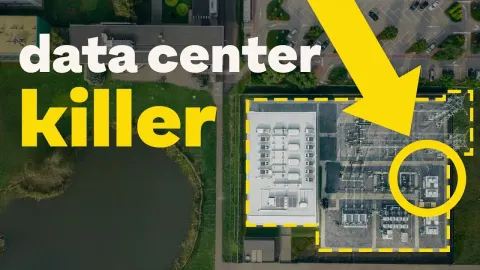
hypothesis - takes over all the world's data centers to work on the problem, and then takes over all of the world's electrical grids and directs them to send power to the data centers, which uses up all the energy in the world, plunging humanity into chaos and darkness. Or there's the scenario in which a super-intelligent AI - on a mission to create better conditions for the massive data centers that power it - starts messing with Earth's atmosphere. Because while oxygen is a necessity for humans, it is not for AI; in fact, the element causes corrosion. So the AI might take control over computers in
chemical plants in order to suck all the oxygen out of the air, creating a perfect environment for machines that just so happens to be deadly for us humans. And then there's the scenario where AI actively tries to wipe out humans. Like, let's say an AI biological design tool that has been programmed to develop new drugs decides that it doesn't want pesky humans interfering with its work. It could use its skill set to create a hyper-engineered pathogen designed to be resistant to all current medicines. After all, doing so would kill off anyone who could potentially shut it down.
Experts are all over the map when it comes to how likely they think one of these situations - or some terrifying variant of them - are to happen. Ten percent seems to be an average - although some experts think the likelihood is a lot higher. But most of them are pretty convinced that the dawn of AI superintelligence - and the dangers that come with it - will be here very soon. And we will definitely need some help with that. Some of these scenarios are pretty scary, but there's still time to make a difference.
Right now, lawmakers are deciding what the future of AI regulation will look like, and if you want to learn more or have your voice heard, check out campaign.controlai.com. There, the experts at ControlAI - which sponsored this video - have put together really helpful educational resources about the risk of extinction from superintelligence, as well as simple and powerful ways to get more involved. ControlAI has already mobilized tens of thousands of people to take action on this issue; in just the last few months, they've sent over 50,000 messages to lawmakers.
They're building the movement to keep humanity in control. Go to campaign.controlai.com to help secure our future.