22:39


One of the great unsolved mysteries of the universe surrounds us, but we can't see it. Dark matter. It's passing through your body right now unnoticed, and because it doesn't absorb or reflect light, it's very difficult for us to detect. But Nancy Grace Roman's engineering has been tuned to search for the clues of its existence. Aim a telescope at just the right point in the sky, and you might just see the clues of its existence. The Nancy Grace Roman Telescope is going to revolutionize this hunt for not just dark matter, but for exoplanets, too. The Roman telescope is equipped with tools that can cut through
the glare of a sun 1 billion times brighter than the planets orbiting it to image them directly. And with clever use of physics, it will even be able to detect rogue planets, dim planets roaming space with no star of their own. This is what the Nancy Grace Roman telescope can do. and I'm going to show you how it's going to do it. This is how the Nancy Grace Roman Telescope works. The Roman Telescope fills a critical gap in our abilities to observe the universe. The James Webb telescope launched in 2021 and is a massive telescope in comparison to Roman.
Its primary mirror is 6.5 m across, made from 18 hexagonal segments of burillium coated in a thin layer of gold. Gold because it reflects infrared light better than almost any other surface. Burillium because it's light, stiff, and does not warp when cooled to the cryogenic temperatures web needs to operate. Design's driven by James Webb's mission to take images of the very furthest reaches of the universe where time and expansion of the universe has stretched the visible light into the infrared spectrum, needing cryocooled sensors and massive collecting
areas to image. Nancy Grace Roman's mission is different. Its primary mirror is 2.4 m across, the same diameter as Hubble's. This means the telescope can fit inside a launch fairing without any complicated folding mechanisms. NASA actually had little to say about the size of the telescope. Its structure and primary mirrors were donated to NASA by the National Reconnaissance Office. It's a cancelled spy satellite, and NASA was tasked with adapting the hardware for scientific purposes. On mirror size alone, WEB wins easily. But the mirror size is not what Roman is for. Web's
field of view is tiny and it needs an incredibly long exposure time to gather enough light to see anything. It was designed to peer much further back into the history of the universe, looking for the stretched infrared light emitted hundreds of millions of years ago after the Big Bang. The Nancy Grace Roman telescope is looking closer to our cosmic neighborhood and has some amazing tools to make it perfect for the job of hunting down exoplanets. The first trick of its engineering is its ability to cast a much wider net than either the James Webb telescope or the Hubble telescope
to catch the effects of dark matter and to spot exoplanets. We have a better shot not focusing on one particular area of the sky rather than a large swathed. This is the Hubble Deep Field taken in 1995. A tiny patch of sky about the size of a pin head held at arms length. Almost none of these dots are stars. They're some of the youngest and most distant galaxies. With modern sensors, this telescope can cast a net 100 times the area of Hubble at the same resolution, and it can take the same image just 15 minutes later. What takes Hubble months to survey, Roman can do in hours.
In a single exposure, it captures a patch of sky about the size of two full moons side by side. Roman will be able to image the visible sky of its field of view in months. Something that would take web decades. It does this with an absolutely massive array of 18 infrared detectors. Each one 4,096 pixels by 4,096 pixels combining to form 300 megapixel images of the universe in a single exposure. This is going to be an enormous amount of data. Over the course of Hubble's 30-year mission, it generated 172 terabytes of information. Web is projected to generate 1,000
terabytes over its 5-year primary mission. Roman is going to obliterate those numbers with 20,000 tab. These massive images are full of valuable data, all of which will be available to the public. You could scour through these images and potentially find a new planet yourself, but to do that, you're going to need to know how to deal with massive data sets. And today's sponsor, boot.dev, will teach you everything you need to know. Their core content is free, and they have a 30-day, no questions asked refund policy. So, hear me out here. When I was learning
to code with Forran back in college, I got pretty bored listening to the teacher. I just started coding a textbased adventure game with the plot of Superbad at the back of the class. I learned way more not listening and just doing and actually had fun doing it. And boot.dev takes the same learning approach. In their Python introductory class, you will learn the fundamentals of building the code for a role- playinging game. And the platform rewards you just like an RPG would, too. You can learn everything you need to handle that NASA data and potentially
discover planets right on boot.dev. They even have a dedicated data analyst path. You can't just open 20,000 terabytes of space data in Excel. To find a new exoplanet, you will need to search NASA's databases with SQL, fetch the raw image files using APIs, write Python code to inspect the pixels, and manage it all inside a Linux terminal. And you can learn how to do all of that with their Python SQL APIs and Linux courses. And you will learn them with actual hands-on projects. Instead of just copying code off a screen, you're building real back-end projects directly in the terminal,
mastering Python, Golang, Linux, SQL, and system design. In an era where AI can spit out simple scripts in seconds, surface level coders who rely on cheat codes are getting left behind. Companies don't need people who just copy and paste snippets. They need engineers who understand core architecture and can read complex code bases and actually know how to manage massive data sets. And you can do all of this without paying the absolutely astronomical fees of attending college. Go to boot.dev and use my code realengineer to get 25% off the entire first year on an annual
plan. Or you can follow this QR code or the link in the description. Then you can start dealing with the 20,000 terabytes of data which will be sent back down to Earth by this huge 500 megabit pers downlink antenna. The optical path of light inside the telescope is incredibly complex. This is the path light takes to reach the detector. The first thing it hits is the primary mirror. Roman's primary mirror is made of the same ultra- low expansion glass as Hubble's primary mirror, engineered to barely deform as temperatures shift. However, manufacturing techniques have advanced so
much since Hubble's time that despite being the exact same diameter, the engineers of the Roman telescope have reduced the weight of the mirror from 828 kg to just 186. The surface is coated with a layer of silver less than 400 nm thick, about 200 times thinner than a human hair. Web's mirror is gold because it reflects deep infrared better than almost anything else on the periodic table. But the Roman telescope needs to see the visible spectrum and near infrared. In the visible range, gold absorbs blue instead of reflecting it, giving it its gold color. Silver doesn't have that
problem. Light continues from the primary mirror to the secondary mirror, a smaller convex mirror about 55 cm across, mounted at the forward end of the telescope on a six-legged actuated support structure called a hexopod. The hexopod can tilt, shift, and adjust the secondary mirror's position on orbit to maintain precise focus as the telescope expands and contracts thermally. A two mirror design can cancel out spherical aberration and coma, the two aberrations that blur images taken straight through a single mirror. But this design leaves a stigmatism in the image,
which stretches stars into little ellipses the farther they sit from the center of the frame. That's why Hobble's two mirror design only allowed a field of view a few arc minutes wide. Roman fixes this by adding an additional powered mirror to eliminate a stigmatism and give it a field of view up to 100 times bigger than Hubble's. But there is one more optical problem. When light bounces off a curved mirror, the photons coming from the edges of the mirror have to travel a slightly different distance to their focus point than the rays hitting the center.
That means the focal plane isn't straight. To deal with this, the 18 detectors on Roman's focal plane don't sit on a flat grid. They're arranged along a curve. Roman will use this massive field of view and spend a large portion of its mission photographing hundreds of millions of galaxies spread across billions of light years. But it's not just looking at the galaxies themselves, but rather their apparent shape and how they subtly get distorted by the gravitational pull of matter between them and us, including dark matter. Dark matter does not absorb, reflect, or release light,
but its gravity does bend light. The clearest evidence we have of its existence is from the bullet cluster, where two galaxy clusters collided violently. The normal visible gas slamped together and overheated into a glowing cloud of X-rays. But the bulk of the matter, which we couldn't see, coasted straight through one another as if the impact had never happened. But if we couldn't see that mass, how did we know it was there? With gravitational lensing. A galaxy that should appear circular could arrive at Roman's detector looking slightly stretched, pulled along the axis of
where the greatest concentration of dark matter sits. The distortion is only about 1% but catch it across enough galaxies and a map of where dark matter has clumped emerges. We have other evidence of dark matter's existence from the way galaxies spin. A spiral galaxy based on what we can see should spin like this. But this mysterious unseen matter can make them spin more uniformly like a vinyl. Between these collision dynamics and galaxy rotation dynamics, dark matter makes up roughly 85% of all matter in the universe. Roman's goal is to turn these subtle gravitational distortions
into a highresolution map of where this invisible mass is hiding. And Roman's massive field of view is going to help us search for these rare events and build that map faster than ever. Roman is capable of watching roughly 100 million stars at once, which is also going to help us find exoplanets and rogue planets through microlensing events. Moments when a planet or a free floating object drifts across the line of sight of a background star, and its gravity momentarily bends and brightens that star's light. The Nancy Grace Roman telescope is going to give us
an insane amount of data on exoplanets, including rogue planets. To learn more about what they are, I spoke with my friend Kobe from the Astro Kobe channel. Can you tell me a little bit about how the Roman telescope is actually going to impact our search for exoplanets? Okay, so over the last 30 years of searching, with every telescope that's on and off the Earth, humanity's confirmed something like 6,000 exoplanets. And the key thing is almost all of them sit within this tiny little bubble around us. In the grand scheme of things, we've barely started exploring. And Roman is the telescope that fundamentally changes this. So by staring
at 100 million stars, that's in the galactic core, they'll detect planets up to 26,000 lighty years away and find somewhere between something like 60 and 200,000 new worlds over just a 5-year survey. That's something like 55 new planets every single day. And then there's the rogue planets. These are just worlds without any star at all. Most of them were flung out of their solar systems just as they finished forming. And they've basically just been drifting through interstellar space all alone ever since. Some of them for like billions of years. Importantly, they're nearly completely invisible
to us. There's no sun to light them up. So, we can only know that they are there using gravitational lensing when one drifts in front of some distant star. Its gravity bends that starlight and makes it flicker a little bit, giving it away. Do we have any idea of how many rogue planets there might actually be based off those flickers? When astronomers went out and actually counted how often we see those flickers, the answer genuinely shocked the whole community, the best estimate was something like 20 rogue planets for every single star in the galaxy. That translates to literally
trillions of them. The most common type of planet in the Milky Way could be these worlds with no sun at all. Obviously, because these things are just drifting through the galaxy all alone without a sun, their surface can get pretty cold. I think they normally sit around 30 Kelvin. That's like -243° C. A completely frozen, lifeless world. Or so you'd think. If that planet just happened to hold onto a thick hydrogen atmosphere on its way out of the system, the radioactive decay in its core could keep that atmosphere from freezing solid, trapping enough heat to maintain a liquid
ocean locked under kilometers of ice. If life ever did actually start down there, that rogue world would become kind of like an arc carrying it across the galaxy. Going from confirming 6,000 exoplanets in our entire history to potentially over 200,000 in just 5 years is going to be a massive leap in our knowledge of the universe. And it gets even better. This huge detector array also has a secondary instrument alongside it that will allow us to image these planets directly. a very difficult task when the light of a star can be a billion times brighter than the planet itself. So,
we need a way to block the starlight. This is what the coronagraph instrument is for. A traditional coronagraph uses a simple disc to cover the star. But the Roman telescope's engineering is much more complex. A flat mirror near the end of the path splits off a fraction of the beam sideways into the chronograph instrument. This instrument uses shape-shifting mirrors and a range of precision engineered masks to actively cut out unwanted light to allow us to peer through a stars glaring light. The first challenge is keeping the light steady. Manufacturing
a perfect mirror is basically impossible. Every surface will have tiny bumps that scatter light unpredictably. And scattered light is just noise that will make detecting extremely faint light of distant planets impossible to pick out. But the engineers of the Roman telescope have created a way to measure it and cancel it out. There are two mirrors inside the chronograph's optical path that contain thousands of Poctric actuators. Po electric materials can change their shape when you apply a voltage. And by applying different voltages to different actuators,
the telescope can push the mirror surface up and down at specific points. Roman will be measuring the residual light constantly and applying corrections 20 times a second to cancel out the scattering. The light now meets Roman's masks, which are all precision engineered to block a star's light. A simple disc can't block the light. Light will just spill around the edges, and the shape of the mask needed changes with what we are looking at. One mask uses precision cut layers of metallic and dialectric films to delay the phase of light passing through them by 180°
before recombining them to cancel out the stars light, allowing us to directly see the faint light from the planet itself, enabling us to pinpoint its location. With its location known, we can switch to other masks that allow us to create dark zones in only the regions we need. This allows a broader range of wavelengths through which is needed for spectroscopy which will allow us to split the wavelengths and measure them which can give us valuable information on the composition of the planet's atmosphere. This technology is groundbreaking. Kobe explained to me just how
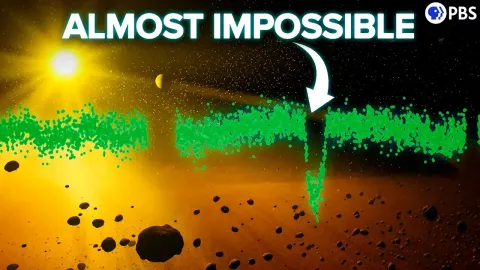
limited our planet detection ability has been without Roman's advanced coronagraph. The thing is this coronagraph system really will change the entire field of exoplanet astronomy forever. The current detection methods for exoplanets are really good at finding these huge hot gas giant planets that orbit extremely close to their star. But it's nearly impossible for them to find mature planets in the cold outer edges of these systems. Roman's microl lensing survey will finally be able to uncover these planets by the thousands from their gravity alone. And then for the first time
ever, it will be able to follow up using this coronagraph and directly image them. Literally every single planet that we've ever directly photographed before was still glowing from the heat of its own formation. And they're always orbiting extremely far away from their star. Something like 10 times farther out than Jupiter is from our sun or even more. A mature quiet world like our very own Jupiter shining in nothing but the reflected light of its star has simply been impossible for our technology to image. And all of that completely changes with Roman. This advanced
coronagraph is the first instrument capable of actually imaging these worlds. I think officially it's not even being flown as a science instrument. It's actually a technology demonstration. This is the first flight test of this kind of starlight cancelling technology that NASA is going to need for its next great observatory, the habitable world's observatory that's planned for the 2040s. HWO will take everything that this chronograph can do and push it like 10 times further to photograph Earth-sized planets around sunlike stars. Literally searching their atmospheres for signs
of alien life. But importantly, if they actually want to do all of this science, Roman can't be in orbit around the Earth like Hubble. These programs are designed specifically to fill in our gaps in knowledge and to do all this science. Roman cannot be in orbit around Earth like Hubble. The telescope will park itself in a special orbit, Lrangee point 2. L2 is a gravitational balance point a million and a half km from Earth where the pull of the sun and Earth combine to let a spacecraft orbit along with Earth as it circles the sun. So the two never drift out of alignment.
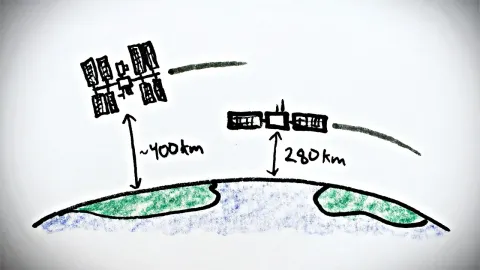
It's a pretty unique orbit that has only been technically viable in the last couple of years. When Hubble launched, we didn't have the technical know-how nor the communication systems in place for L2 to be useful. It was stuck in low Earth orbit instead, cycling through blistering heat and freezing cold every 90 minutes with Earth itself blocking out half the sky at any given moment. Now, web and three other telescopes live in L2 with Roman becoming the fourth observatory in the orbit. That fixed geometry means a telescope parked there can keep the sun, earth,
and moon permanently at its back. Sitting in a stable, deep, cold thermal environment year round, allowing it to see deeper into the infrared range. But the center of the galaxy, where we want to look for exoplanets, is only visible in seasons. During the summer months, the galactic center is in line with the sun. In winter, the problem flips. Now the sun sits almost directly behind the spacecraft. This means that the schedule for Roman is already determined for the next few years. When the center of the galaxy is visible, Roman will point to that. And when it's not, it will look
at the distant galaxies in the higher latitudes of the sky. Getting Roman to L2 is a problem in its own right. The telescope is too heavy for a standard Falcon 9. So the Falcon Heavy will lift it into a parking orbit first. Then the upper stage fires again for a trans L2 injection burn, pushing Roman onto a trajectory that will carry it out 1.5 million kilometers over roughly 30 days. But L2 is not technically stable. An object placed exactly there will drift away over time because the equilibrium is a saddle point, not a bowl. So Roman does not sit at L2. It orbits around it,
tracing a slow loop called a halo orbit. Roman's mission will be limited by how much fuel it can carry to stay at L2. Web, which shares the same L2 halo orbit regime, fires its thrusters roughly every 3 weeks for station keeping. And the James Web Space Telescope taught engineers something useful. The Aron 5 delivery was so precise that the midcourse corrections on the way out used a fraction of the expected fuel. And the mission now has enough propellant to potentially operate for 20 years rather than the planned 10. Roman's team has that lesson in mind. Every kilogram of fuel
saved on the journey to L2 is months of additional mission life. The question today on many of the scientist minds as the Nancy Grace Roman telescope launches from the Kennedy Space Center aboard its Falcon Heavy is whether they can repeat the Aran Fi's precise delivery. Thanks for watching. If you want to get started on learning how to code, check out our sponsor boot.dev. And if you use my code, realeng engineer, you'll get 25% off your first year on an annual plan.