19:44


When you're a business owner interested in expanding to new markets, there's a lot to consider and countless questions to answer before making the call. The most important one being, are you ready? That's where Chat GPT comes in. Give it a goal, add your files, and ask Chat to help you map out different scenarios for the future of your business. So, when growth is on the table, you've got an expansion plan ready to implement. Get started at chachypt.com. If you listen to financial news, you know a lot of time is spent thinking about what's next, the next opportunity, the next investment, the next move. But sometimes what matters most is being ready for what you never saw coming. For more than 75 years, Cincinnati Insurance
has worked with independent agents to help protect businesses, homes, valuables, and more. Because planning for the future isn't only about knowing what's next. It's about making sure you're ready for what you can't predict. Let Cincinnati Insurance make your bad day better. Find an independent agent at cinfin.com. The world of business is constantly evolving and Comcast business keeps you totally in step with secure AI backed networking in more than 100 countries. They're powering over 90% of the Fortune 500 and millions of small businesses. That's a lot of muscle. And behind it all, thousands of experts answering your call at 2:00 a.m. like it's 200 p.m. One partner powering how business gets done
for companies around the globe. When you add it all up, no one does business like Comcast business. Bloomberg Audio Studios, podcasts, radio, news, Bloomberg Money. This is the Bloomberg Money podcast. I'm Tom Keane with Scarlett Fu. Join us each week for a smart look at the forces shaping your financial life on personal finance, on retirement, and wealth management. We will explore how people are earning, investing, and building wealth. We are live Fridays at noon Eastern on Bloomberg Television. Subscribe to the podcast wherever you listen. And as always, on the Bloomberg Terminal and the Bloomberg Business App.
Good everyone. Bloomberg Money, personal finance, retirement, wealth management. Also, it's a wellness show now after surviving this week. We all survived it. We're going to be talking wellness today. I know I have whiplash though from the market action from actually the election results were not whiplashy. They were pretty straightforward, but the markets have been all over the place. Pro tip, I came in this morning and had forgotten it was jobs day. I know it was like on the back burner. That's how bad a blur it is. Great set of conversations today. I mean, to get things uh going here. We welcome all of
you. A lot going on today. Kate Moore will be with us, chief investment officer. It's city wealth. A lot and a surprise with a paragraph on gold. That's a must know for personal finance. Yeah, especially how it fits in with your bond exposure, too. All right. We also have Anamaria Lousardi of the Stanford Institute for Economic Policy and Research. As one of the most cited authors in financial literacy, she co-authored the TIA financial literacy annual report. She invented the modern financial literacy. Looking forward to that.
A Bloomer Money Conversation today. Thrilled, honored to have with us Kaylee Lines. 242 hours non-stop of TV coverage this week. Uh with us, of course, Balance. Matthew has the month off. Kaylee Lines is driving uh the ship. Nikki Waller with us on personal finance, a great essay out of the United Kingdom in the last 24 hours here on where we are with our personal finance and this election in his jobs day. He spoke to the White House. Michael McKe is with us as well. I have never seen Dr. Hasset that happy. It was a happy report, wasn't it?
You've never seen him that happy? I mean, basically he's always smiling even when the news is bad. But today they had good news to talk about because job creation was fairly strong and we did see a slight rise in compensation. So the administration can be happy about that and maybe down the road it will pay off for them. Why are we so miserable about our personal finance? Because we are still at a point where we're falling behind inflation on our earnings. Uh we depending on how you measure it, average hourly earnings are up by 3.1% and on a rolling 3-month basis somewhere between 3.1 3.9%. But then uh you look at inflation CPI is 3.7%. So people are feeling like they're they continue to fall behind and it's that feeling that drove
Democrats to sweep Congress. You were covering this all night Tuesday, Kaylee. Um the Democrats won big but not big enough to override any vetos uh from President Trump. And that pretty much what he said he's going to do. Yeah. He suggested he could be Mr. Veto, which is going to be a challenge for Democrats who of course won victories on Tuesday by campaigning on affordability and trying to address some of the very cost and price challenges that Mike was speaking to as we continually see uh wages not keeping pace with inflation. Now Kevin Hasset told Mike earlier that the White House doesn't see the need to make any material economic policy changes even after the midterm results.
But Democrats are going to try to force that to the extent they can. Every Democrat I've spoken with leading up to the election and afterwards have said the three things they want to target are healthc care subsidies, restoring those Obamacare subsidies, bringing back the tariffs, and also reigning back the war with Iran, potentially holding defense appropriations hostage. To do that, we're going to talk to Brook Southern about Maine and her Kansas as well. The distance from the Mississippi Delta up to another world, Jackson, Mississippi. It's the longest 100 miles in America and they were riveted to it this weekend, aren't we?
Yeah. I mean, it is still a race that is too close to call. The Democrat is Scott Colom uh is ahead of the incumbent Republican senator in Mississippi, Cindy Hidesmith by about 1,900 votes. And Mississippi is the one state in the union that at least at the federal and senate level does not have an automatic recount law. So there might be little legal recourse for Senator Hidesmith if she wants to pursue a recount if indeed he does come out the victor. Of course, if he wins in Mississippi and Mary Potollah comes out victorious in Alaska, where she is currently winning, we're looking at a Senate majority of 56 seats. It's important not just for the next two years, but the cycles to come,
especially if we're looking at a new South that actually has some Democratic viability, is proven by what's happening in Mississippi, but also what we saw happen in South Carolina, Georgia, and of course, Joe Matthew keep up with her. I know. I don't get it. Well, I mean, that's why she's Kelly lines. So Nikki Waller, let's bring you into the conversation because as Democrats sweep to power, they feel they have a mandate that they need to fulfill. But what does the midterms actually mean for your money? How much change can they actually affect? Not as much as they want to affect is probably the quick answer. I think we are tracking a lot of tax provisions and seeing what temporary measures from the
big beautiful bill might be able to be extended like the overtime and tax on tips measures that have proven pretty popular. Um a lot of other pieces of the big beautiful bill are going to be harder to shake. Um we are going to be looking to them to deal with social security because the social security cliff is coming to us in about three and a half years give or take. So the guys who are just elected are going to be the ones who need to confront that. Right. Right. And the debate is going to be is it going to be cutting Americans benefits or raising revenue in other ways perhaps on we have a jewel in London John Steic and he writes this thing called money distilled and it's just like incredibly
abrupt personal finance like you know it's just like this is the way it is save money what does John Steppic say about this uh moment for America well you know John is writing a lot about what the midterms mean for global investors and then also if you saw what he put out this morning um looking at the AI swerve that we're talking about in markets today. Um you know first of all this comes back to some of the basic wisdom that we have in money which is um to know what's in your portfolio. We talked a couple weeks here about concentration risk and the fact that even if we think we have diversified portfolios, we are heavy into a lot of tech stocks. And if you look at your 401k, that will be the Here's mental John Steffic, Scarlet. If
you'd bought the S&P since World War II, 20 midterm elections, you made money every time. So, you have to stay in. You don't move out. You don't panic. You stay committed. I was in cash already and I'm staying in cash. All right. So, you're committed to cash. I mean, people's feelings on their personal finance, their outlook depend a lot on whether they're employed, Mike. And I want to go back to the jobs report for a moment because even though it was a big win, 165,000 jobs added in the month of October. Growth has been very uneven monthtomonth. It wasn't that long ago, July, that the economy lost 10,000 jobs.
Well, we're seeing those numbers all get revised up. And at this point, it's uh looking like a strengthening economy. And today's number was surprisingly strong because the labor force has been shrinking and the administration's immigration policies have been a big reason for that. And with this labor force shrinking, you need fewer people getting jobs, which is why we've seen them well below 100,000. So to have something that's sort of three times what's expected, it uh it does suggest the economy is picking up steam. Now, does that end up being something the Fed or Congress has to worry about? No. It's gonna be interesting because you were just talking about uh what Congress can
do. Uh they can't do a lot to bring down gasoline prices. They could do a temporary suspension of the tax, but they are going to have a shot to uh with the uh the one big beautiful bill provisions on Medicaid and snap the child food benefits. And they're really determined to do something about that. So that could add a little bit more stimulus to the economy next year. quickly here. I spent the whole week trying to build I was David Gur or Joe Matthew or Kaylee Lines. So I got to ask a Kayla lines question to Kaylee Lines. What I learned is not only the shifting population state to state but for example in your Virginia the shifting populations within a state. What do you envision for 2030 after the census? Well, this is really
important because the electoral college map is going to get very difficult for Democrats after the census, at least with the political status quo prior to Tuesday in that so much of the population center has moved south to states that historically, at least in recent history, have been red. So the ability to see Democratic victories statewide in states like Texas or in South Carolina is crucial to Democrats as they look to presidential cycles ahead when they are going to need to be able to compete in those centers where there are uh now higher populations and where states could be getting more electoral college votes as they try to get to 270. It's less of an issue for 2828, but after that census it's going to be a much bigger deal.
You think about all the Northeast kids who now go to college in South Carolina. If they go and they stay there, the politics changes as well. Did you know Phoebe from Annapolis is going to Wake Forest within her family? There's like eight generations back to when the young Gley got off the Mayflower or whatever. And she's going to Wake Forest. This southern migration is an outrage. They're giving up on the northern schools. Well, they would say the northern school is cold and no one wants to be there in January or February.
We'll have to see. Oh, Mike McKe and I will stay up. Nikki Waller, thank you so much. On short notice and thank you, John Steek with money distilled. Michael McKe as always, seven days a week. Can you get on the golf stream and go home? I hope so. I have a toddler waiting for me. Congratulations. See you all in New York. Great week of uh election uh coverage. What a joy and perfectly timed Kate Moore of Croup will join us. I can't imagine what she's going to publish for Monday. I we're looking forward to what she has to say about stocks and gold in particular. This is Bloomberg Money. Well, you can certainly ask her about Teton High School.
You're listening to Bloomberg Money. Stay with us with more to come after this. With Jachi BT, you can do more than get answers. You can get things done. When you're running a business and looking to expand, you need a clear view of the landscape before making any decisions. Chat GPT can help you prepare. Connect your Google Drive, point to relevant files and reports, and ask Chat to research competitors, industry forecasts, and market signals. It can turn the findings into a strategic deck in your team's template that you can review before presenting to your leadership team. Growing a business is ambitious and ChachiBT can help you do it with confidence. Get started at chachebt.com.
The world of business is constantly evolving every day. New challenges, new opportunities, new ways of working. Comcast business keeps you totally in step with secure AI backed networking built to power the way modern business gets things done today in more than 100 countries around the world. That's some serious muscle. And get this, Comcast business powers over 90% of the Fortune 500 and millions of small businesses. Behind it all, network engineers, cyber security specialists, support teams, thousands of experts answering your call at 2 a.m. Like it's 200 p.m. Always on, always ready. That's a lot of coffee.
One partner powering how business gets done for companies of every size all around the globe. When you add it all up, no one does business like Comcast business. Bloomberg money. And we say good news to you. Retirement, wealth management, personal finance, election withdrawal. I know. What are we going to do next week? You know, there's always going to be some data point. I think inflation numbers are infl Are they coming out next week?
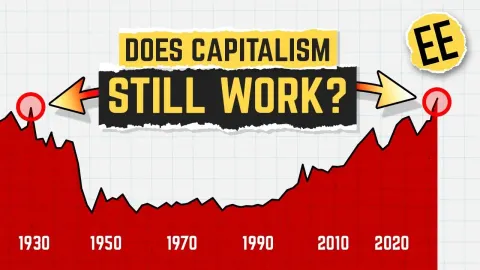
We'll have to see on that as well. A good conversation now with Kate Moore of City Wealth. Her prodigious abilities to synthesize everything together is perfect on a Friday after the cacophony of the week as well. I want to talk to you about the short- termism which you fight every day at Croup. You fight it every single day and yet we're all caught up in the narrative. Bring up the chart if you would, Luigi. The control room is a little short staffed today, folks. They had a party last night. So, we'll see if we can get the right chart up here. It's the chart of the week. And there it is. It's the Ibitson from Yale, except not S&P. It's the Dow with the depression. It's log Dow and up away.
Do we care about politics when we look at a chart like that? I mean, I think we have to care about politics for a number of reasons, but you know, one of the things that's been frustrating for me over the course of this week is how much people are trying to project future policy into 2027. First of all, we don't know. And by the way, I know you guys were just talking about politics and demographics and everything, but you know, the Democratic Party and the Republican party are not monoliths. There are major factions within each and everyone's going to have to figure out how to work together. We honestly don't know what policy is going to look like over the next two years.
Uh, and people are just projecting their biggest fears around change into the market. So, what I saw over the last couple days was incredibly technical and not fundamentally driven. So the conventional wisdom is political gridlock is good for markets, but I feel like we are more politically divisive than we've ever been, at least in modern times. So government shutdowns, uh, debt ceiling showdowns, they're kind of a normal thing now, and the markets tend to recover from that. Do we just assume that they'll continue to recover because over the last 5 to 10 years, they have?
Well, I think we're reaching some critical levels. I mean, this is one of the things we're really focused on, um, is what happens to deficits, you know, not just in the next two years, let's call it in the next four to 6 years. You know, it's my strongly held conviction that deficits are going up under a Republican or Democratic administration cuz everyone's spending. It's spending or, you know, cutting taxes. There's very little stomach and desire, frankly, to do something to be kind of deficit positive. Um, so that we have to bake into the background. I think that's an assumption we can all
have. But in terms of anything that changes in terms of, you know, technology or data center um development, I think we're guessing at that point. And a gridlocked Congress um and a gridlocked Congress that has to find some ways to agree in order to position itself each of these individuals for 2028 um could actually be growth positive. Okay, I want to do this quickly here. This is a paragraph sentence from Kate Moore and all of Croup here. just jumped right out of the screen uh before the election, during the election, and here it is right now. And it's just simply on gold. We remain underweight duration. That's bond talk for time. And we hold gold is a partial duration replacement. And then you bring up the chart of gold.
This goes back before Nixon and $35 an ounce. Kate Moore nailed this uh in our academics years ago. And it's just a gold and all the people saying gold doesn't matter. You know what? You've been wrong for 40 years. Again, you go long gold. I go long gold. We stay long gold. And frankly, we got a lot of push back on it as gold was squishy at points last year. Excuse me. That's jargon. That's CFA level four. Squishy. That's Friday CFA level four jargon. You know, this after a really long week. Um, and people said to us, you know, it's not a yielding asset, an environment of rising yields. Like, what are you going
to do with that? And I say, well, look, I'm looking at the entire opportunity set, every asset we could potentially put in a multi-asset portfolio, and I can't get comfortable with adding duration to portfolios. We've been underweight for a long time and the duration of my time at city. And we really wanted to think about how do we balance out some of our equity risk? What be might be a less correlated asset? And we found that gold was a, you know, as we tested it was performing a lot of those qualities. So, does gold replace bonds completely or does it just replace some of your bonded exped? Yeah, we have, of course, we still own fixed income and multiasset portfolios, but we're shorter duration and we're continuing to stick to that.
Um, and our expectation is that yields are going to rise. Like, we saw a lot of that bond volatility in the last couple days, but the fiscal side I was just mentioning combined with what we think is going to be, and of course, some of the data this morning on the labor market supported this, incredibly strong economic growth going into 2027 should all be a good backdrop for higher real yields and at the very least a support at these levels. Can I just do an audible, please? Drew's watching. We're up to 42 viewers. It's really good. Drew, thank you for watching. Drew sends in a blistering note that says they're going to UVA because they want to go to UVA. You went south for school, right?
Went south for my undergrad. I did. Okay. Why is the South different now? Everybody wants to go. Um, uh, Phoebe is going to Wake Forest and on. Why is this? Hey, look, my niece and nephew, who are seniors in high school right now, are both like very, very, very focused on a bunch of the southern schools, as are a lot of their peers. Um, I think the weather helps to be honest with you, but I would also suggest some of these big universities are more appealing to a lot of students. Like you're getting lots of different schools, lots of different kind of academic challenges, and you know, they want that breadth instead of sometimes the sort of more narrow certitude of the northern schools. all of them except Cornell.
Does it change what we think the economies in the south are going to look like in 5 to 10 15 years? Well, it's a question of whether or not people stay in, you know, after their undergrad or whether or not they go back to like major northern cities. I mean, that will be a it's more affordable in the south certainly compared to the Northeast. Yeah, it's a little bit different. I was like kind of forced to wear a dress to my first football game in Virginia, which was extremely unsettling for me. That's a first for Bloomberg money is all I can say. Kate, I'm fascinated then what Croup sees about population change within our personal finance, the rebuilding of the new south. I mean, we're going in a different direction
here. Yeah, we are going in a different direction, but I'm going to step back to a bigger demographic thing that I'm very focused on, which is that, you know, with changes in immigration, which we don't expect to be reversed anytime soon, with declining populations across a lot of the developing world, you know, governments and companies are going to need to think about how do we get the workers that we need in order to produce or to serve, whether or not we're talking about goods or services. This is one of the reasons why, you know, in addition to the technology that's come out, we've been pounding the table on physical AI. To be fair, something I've been fixated on was this idea that, you
know, at this time last year, we had just over 400,000 unfilled manufacturing jobs, and it's 25% higher uh here in 2026. This is without a massive expansion in manufacturing capacity um in the US, but something people expect to be larger going forward. People don't want to do these manufacturing jobs. the younger generations want to be, you know, influencers or be outside or whatever the heck it is. And so demographics and worker preference are going to drive a different layer of investment as well. Yeah, it has a huge implication on how you think about how the economy is going to go grow moving forward. Kate, you were just telling us how you would recommend gold in not in place of bonds, but in addition to bonds, maybe replacing some of the bonds.
Subbing some of the duration. Subbing. Okay. Is that what you do for your personal portfolio? So, I will be honest with you. I don't own any bonds in my personal portfolio. Yeah. Um, but I do own gold as a balance to my very strong growth tilted equity portfolio. Um, look, I'm in a place at this point in my life where I'm continuing to look for capital appreciation and I'm also a professional investor. I'm comfortable with volatility. If we have draw downs, it doesn't keep me up at night because I really believe in the compounding possibilities and the kind of the future for the growth equities I own.
Okay. road stocks and some gold. How is the gold? How do you express that? Well, gold I own in an ETF form. So, no physical gold for you? I Well, except for jewelry, no. Um, but I own the ETF form and then across the growth stocks, you know, I own a global diversified set of stocks and a couple very specific strategies. As you can imagine, in my job and in my previous job, I was quite restricted on trading and stuff myself. So, in some cases, I have to use someone else's strategy in order to express my view. But fortunately enough, these are people I've known in the business for a long time and I have faith in.
I want to have you back into, let's say, January just to talk about a single statement. I don't own bonds. I just think that's a profound statement on Bloomberg Money. All right, we have a lot to look forward to then when we have Kate Moore back in 2027. Thank you so much for joining us today. Thanks for having me. Don't forget to check out the Bloomberg Money newsletter for the latest stories about your money. Bloomberg money here on personal finance on retirement and on wealth manage as well. Markets lifting today. I guess that means Monday we're
going to go down. Yeah, probably look. It's been a big back and forth. Well, this is Bloomberg Money and we are of course your new destination for personal finance. It's a crossplatform effort that extends beyond your television including our new digital hub at bloomberg.com/money. And Tom, this week one story that really caught our eye and is so super relevant is all about how affordability was a major topic in this year's election cycle. And we saw that on election night with the blue wave. People across the political spectrum are hungry for a different kind of politics. Tonight's results are a wake-up call for corporate special interests and billionaires who have been rigging the economy. For the cowards in Congress who
have enabled healthc care cuts, tariffs, and war. I will work with anyone to provide relief for the people of Michigan, including President Trump and the federal government. My name is Rahman Muhammed. We all know that my name and my faith aren't the reason you can't afford your gas. This is all about the economy. It's about making sure that people who work a full-time job can feed their family. It's about addressing health care. They're putting people first so that you can make a living. You can afford your healthcare. It's a vote for affordability. It's a vote to make sure that if I'm a farmer in Iowa or Kansas that I can make a living. Tariffs have
been a killer. We are going to drive down costs for the people of this state. We are going to lower insurance premiums for the people of this state. We are going to make housing more affordable for the people of this state. We're going to fight hard to make sure that we can ensure that every single American can afford to go see a doctor when they need one. Bloomberg News Boston Bureau Chief Brook Sutherland was out in the field on election night in Maine and she's here with us in New York. I counted one Republican in all those uh sound bites and it's from Florida. Susan Maine. Uh
you were covering that race out in Maine. Did she talk about affordability on the campaign trail? She did and I mean it was an interesting sort of microcosm of this debate in terms of who is to blame for these affordability challenges because Susan Collins opponent was Troy Jackson who spent a long time in the main state legislature. Collins unsuccessfully tried to make the case that the cost of living was really a state issue. That is not a message that really resonated with Maine voters as we saw Jackson ultimately proving victorious in Maine. Those heating oil costs were very top of mind. It's starting to get cold in Maine, especially at night. And those heating oil costs are hitting a record
and I think Jackson successfully tied that to the war in Iran. And of course, you are from Kansas originally. Tom was all jazzed to talk to you about what's happening in Kansas cuz we didn't think that we would or not we the Democrats would get something other than Republican. No. And I, you know, I think that was a bit of a surprise just in terms of how close that race was. There was obviously a lot of attention on it in the final stretch, but I think what's interesting there is that Adam Hamilton is not your traditional Republic uh Democrat, excuse me. He was actually a Republican up until February. And so he was very much running as a moderate and he tapped into that angst over rising prices, over tariffs, over lowering the tariffs on beef imports.
We lost a punch line here. You grew up your great-grandparents live next to Annie M and the Wizard of Oz. So I get it. Okay. Kansas is different. When the president is gone, what will all those disaffected Kansas do? I mean, I think it's going to be really interesting to see if this trend continues. I don't think you can come in there with, you know, a far-left type of Democrat. But remember that Kansas has had a Democratic governor for two terms. And so this is a bit more of a purple state than people gave it credit for. But I do think there is a lot of angst about this particular moment, especially from that farming community. Um, immigration is another topic that did
not actually play that well with the farmers because they were having a hard time getting workers. Immigration rates, especially high-profile ones, were keeping people at home. And so I do think this was a unique moment for Kansas, but I also think there's a lot of themes here that might continue, especially if we do see Adam Hamilton following through on some of the topics that he talked about, fighting corruption, making lives better for people in Kansas. He's also talked a lot about bringing down the national debt. So I think these are messages that can continue to work in Kansas. All right, good stuff. Brooke, thank you so much. Brook Sutherland is our Bloomberg Boston bureau chief. She was out reporting in Portland, Maine. She's
going to head back to Boston where it's cold and she's got to pay for her heating oil. On Monday, we'll stop talking about politics. Tim O'Brien won't. He's senior executive editor Bloomberg opinion which barely describes his holistic view of our political economy. His work on President Trump is just flatout uh definitive as well. I want to talk to you about the first caucuses. Help me here. There's centrist Democrats, there's liberal Democrats. They have two separate caucuses. There's some overlay. What's the body language going to be like in those first 100 and 200 people caucuses? Well, I mean, I hope the body language is that they want to work together to find common solutions to the
problems Americans are experiencing that got them elected and that they don't mistake, you know, phenomenal wind in their sales, which they got from this election. It's a historic election. Uh it is a mandate for change. But the you know the voters have really big blocks of voters have moved between the parties. Yeah. With great rapidity and in huge numbers for a number of cycles. You know I don't think that I don't think the Democrats should take Latino voters as a permanent member of their coalition. Younger voters. We could go on down the line. So the way you keep voters in your tent is you solve problems for them. And clearly
affordability is the major piece of furniture. wrap in your world and your expertise on it into the nation's confidence in our personal finance. There's a huge body of Americans, you know, we're doing a fancy show here talking duration on gold with Kate Moore. A huge body of Americans, Tim, don't have that personal finance dream anymore. Well, and they don't, you know, not enough of them have exposure to markets and exposure to the upside that comes with equity investing, the way to create wealth. most people's personal wealth is still tied up in homes. Um, but to
expand that, I think they need to have faith in the idea that things aren't constantly volatile, whether it's the macro economy or the markets themselves. And I think, um, they need to have faith in institutions. They need to have the kind of wages that generate excess money to save for goals, including retirement. And I think they need to believe that the political system is supporting them in that way. You mentioned how um it's hard for the Democrats who just want to do very much on affordability within two years. If President Trump works with them, then it might be more possible and he did give at least initial indication that he's prepared to work with Democrats. Do you believe that?
We'll see. Scarlet, you know, he's not somebody when he's cornered who wants to come out and hold hands with people. He tends to lash back. I do think there's things that I think there'd be bipartisan support out of the gates regardless of Trump to address tariffs and the war in Iran and if that war got wound down and if I think a lot of the frantic and irrational parts of the tariff policies got wound down you would get a pretty quick and early macroeconomic bump from that. The larger things that I think have to be pursued are how to deliver health care to average voters, affordable, reliable health care, uh, better wages and opportunities. You, more than anyone I
know is definitive on the president of the United States. It was a book any number of good years ago where Tim O'Brien looked into a younger Donald Trump. Uh, this vignette is just great from a recent O'Brien essay. He once dismissed the idea of seeing a therapist when I inquired as we drove to his New Jersey golf course. I have found I am not a disbeliever in it. And then of course he switches as Trump can do and says he's really got uh some problem with the debate and the stability of it as all. You more than anyone is going to help us get to Donald Trump 80 81 82 and beyond. How significantly do you see him changing from the time you did your iconic book?
Well, I mean, he's clearly older. Uh, he became president. Um, uh, I think he forgot the lessons of the 2024 campaign in which, you know, you can argue that Joe Biden lost reelection when inflation started soaring, you know, in 2022 or so. Um, and I think one of the things that kept President Trump aloft was he was a lot of average people's idea of what you would do if you won the lottery, how you would live your life, what you would do with your money. Aspirational. And obviously it's part of personal finance is about that. Nice tie in there, right? He can come back.
It's very much about that. And I think he was doing all these things that lost sight of that. He said he wasn't going to go to war. He went to war. He said he would make the economy stronger. He pursued inflationary policies. No one felt their wallet was stronger right before this election and he paid the price of that. We also know that for the last two years of his term, he's going to be in legacy building mode. He wants to leave something behind that will endure. Is there any common ground between him and the Democrats that he's capable of collaborating on that fits in with his worldview? That's such a good question. You know, because Carla, what I think he sees as his legacy is the triumphal arch and um
a big ballroom in the White House and real estate essentially real estate with his name on it and his legacy the voters want is a better and more affordable America. You are professional at hurting cats. This morning you heard a David Ducker with a brilliant Bloomberg opinion essay and talks about the senator from New York pulling his 20th century and dragging the Democrats into the 21st century as well. Talk about the Schumer Jeff shift that has to happen. Well, remember I mean both of those men got a lot of heat that you know the Democrats were unpopular. They weren't putting candidates in place who could
get elected. And now we learn through reality that they actually helped engineer a an historic win. And I think they were smart about finding moderates in states where the voters wanted a moderate Democrat. Uh progressives in state like Michigan where they where they were very happy to have a progressive Democrat. And then I think the challenge as David points out now is they let sort of a thousand flowers bloom. But now they're going to have to actually make sure they can keep growing that mandate. And that's going to come down to really some hardnosed politicking to get you know policy out the door.
Okay. So hurting cats in a big way. In other words, Tim, thank you so much. Scarlet Tim, we have to dismiss Tim O'Brien because we have breaking news. We do have breaking news. He is our senior executive editor here at Bloomberg Opinion. All right, breaking news is that Microsoft is winding down its deal with Oracle to rent AI cloud capacity. We've seen Oracle shares turn red. They're now down more than 3%. And this goes back to that idea that um what we're seeing with the AI trade perhaps slowing down. Some people might even say collapsing. It's coming to fruition as we see a lot of uh higher cost embedded
in the AI buildout. And there's now question marks over whether that will proceed as planned. I just can't emphasize enough how this will play out to me within the bond market. Oracle bonds, coreweave bonds, and the credit default swaps that people buy to ensure against those defaults, potential defaults. Coming up, the state of financial literacy in America. We're going to dig into that and how it could change in the coming years with Anna Maria Lousardi. She is Stanford Institute for Economic Policy and Research senior fellow. This is Bloomberg Money. You're listening to Bloomberg Money. Stay with us with more to come after this. With Jachi BT, you can do more than get answers. You can get things done. When
you're running a business and looking to expand, you need a clear view of the landscape before making any decisions. ChachiPT can help you prepare. Connect your Google Drive, point to relevant files and reports, and ask chat to research competitors, industry forecasts, and market signals. It can turn the findings into a strategic deck in your team's template that you can review before presenting to your leadership team. Growing a business is ambitious and ChachiBT can help you do it with confidence. Get started at chachept.com. The world of business is constantly evolving every day. New challenges, new opportunities, new ways of working.
Comcast business keeps you totally in step with secure AI backed networking built to power the way modern business gets things done today in more than 100 countries around the world. That's some serious muscle. And get this, Comcast business powers over 90% of the Fortune 500 and millions of small businesses. Behind it all, network engineers, cyber security specialists, support teams, thousands of experts answering your call at 2 a.m. like it's 200 PM. Always on, always ready. That's a lot of coffee. One partner powering how business gets done for companies of every size all around the globe. When you add it all up, no one does business like Comcast business. delivered money and we say good
afternoon to you on retirement, on personal finance, on wealth management. We're promising next week we'll try to get back on track. I know. Well, it was a big week and we're still digesting all of it. Stock market is as well because we've come back from yesterday's big losses, but we faded some of those gains. Uh the S&P 500 up only half of 1%, the NASDAQ component index gaining more than 1%. Although we did get news just now about uh Microsoft winding down an Oracle deal to rent AI cloud capacity. So Oracle has turned negative and the VIX has eased off from 28 to 25 more. It's not back to all come on a
western front but it's you know 28 to 25 helps us out. That's a cross asset right now that we want to do here at Bloomberg and of course yields flat after some real dynamics off that killer jobs report. I do want to note this. Thank you for putting this up, Luigi. Stronger dollar and I'm watching Japanese yen, which is not cooperating. Strong yen. That's inside baseball here, but that's okay. You know, we'll have to see uh on that. I want to do a preface here because John Schovin is one of my heroes out at Stanford years ago. The Stanford Institute for Economic Policy, John Taylor, who helped me get this act started, said, "Tom, you really got to
come out." And there was John Chovin and Michael Bosin and other brilliances leading the way. And they began a cottage industry litally scarlet out of one course economics 43 on financial literacy. And they found a young professor on the east coast and said you are the chosen to drive it forward. And we're so pleased to welcome her. She is Anna Maria Lousardi, senior fellow at the Stanford Institute for Economic Policy. Tom talks about um a class on financial literacy in college. We're now starting to see high schools offer that as well. The College Board is now offering a AP business with personal finance course and exam. Do you think this is something that will move the
needle that will help Americans get more financially literate, maybe even investment literate? Absolutely. I think it's first of all necessary. We need to start as soon as possible and we need to have it in every state not just the 30 state that have mandated financial education in high school. Young people face a very different world. we need to start investing as soon as possible and so I think this is a very important uh you know movement and I hope the direction goes forward to have many more courses and you were just telling me that there's a difference between financial literacy and investment literacy and there was a study that recently found that people who have some investment literacy that can actually be more dangerous than having no investment
literacy because that encourages risk- takingaking tell me a little bit more about that. Yeah, it's the study we did recently with the FINRA uh investor uh survey. Um and what we found is first of all financial literacy is really the knowledge of all the basic concepts you know not just investment. So for example knowing interest compounding knowing inflations and so on and then we actually look at more of the knowledge that's related to investing and what we do find indeed is that you know the people we are in the middle of that you know investment and financial literacy often cannot uh detect the scam the bedrock they cannot detect a scam they get they fall victim to oh yeah I sent a nasty letter to a
major provider the other day I couldn't tell if it was them or a scam. That's how pervasive it is. There's a built-in optimism to the Stanford experiment, the academics that go back decades and decades. At Bloomberg, we fought the gloom as well. Matt Winkler, the founder of Bloomberg News, John Miklthweight, our editor and chief. Now, every day we try to fight the gloom. How does the media gloom color our financial literacy? Well, it's yeah, I think we need to be optimistic uh that we know we are going to fight this low level of financial literacy and I think the initiative that you're doing here and providing news that's important um for also helping uh
the population become more financially literacy is important and this is I think how we are fighting the gloom. The statistics are gloomy uh you know we are not going in the wrong direction. stock market is not I mean basically people are underinvested in equities because they're worried and I would suggest it's fed by so much of the financial media. Well the tension is what the media is addicted to is what people are taught in journalism school to focus on. But there is also one thing we find which is that risk and risk diversification is the topic that people know the least. So in order to actually get less gloomy and also to have more people investor, we also really need to
invest in financial literacy not just in school but also in other places. What about the other places? Do they include Reddit and Tik Tok? They feature influencers offering advice on things from budgeting to credit score hacks to options trading and this has made financial literacy very accessible particularly to Gen Z. Do they teach you diversification for instance? I mean how would you grade them? I am skeptical I have to say because there is such a variety of quality and I think you know we need to be careful about quality I mean some of these topic are very complex you know that's why we teach it in Stanford you know and we have a PhDs economist which teach this topic right these are not you know the
fact that you won't simplify a concept doesn't mean that the con the concept is simple so we need quality and I think actually schools are better suited to teach this perhaps than social media. One of the great things I see which you've alluded to both of you is that we failed coming out of ARISA 74. We're all late. Oh, 42 I think I'll start. I think investment illiteracy means you don't know what is looked at the fossils and said we have to do better. What do our grandchildren what are they going to do with this disastrous American retirement system?
I hope that we are going to better prepare them uh for this and I think you know starting in school and as soon as possible I think is going to be helpful. I also think this movement of investing very early on when people are born or you know starting investing like Trump accounts even the Trump accounts you know we need people to be exposed to that knowledge and also I think this idea that the money is going to be invested in stock index fund with at very low cost I think is going to be a good financial education experiment but also we need to use time uh young people have a great resource. They are all rich in time and
we need to use them in their favor. They're rich in time. What do they know? What do they understand about personal responsibility for their own retirement that their parents, the baby boomers, don't need to worry about? I mean, as a Gen Xer, I'm pretty much convinced that social security will be insolvent by the time I retire and I'm going to have to rely on my 401k and whatever else I happen to own. I actually don't think that social security is going to go away. It's going to be an important institution, but it will have to be scaled back. And so we need to make sure that young people are better prepared for the future. Um and
and that prepare you know and we need to start as soon as possible as I've mentioned. So I think we need to make sure that they are aware that many more decision and many much more of their financial security depends on themselves. I'm depressed. Scarlet's a Gen Xer and I'm not really you're Gen X in spirit. Okay. Professor, this is just so important. What is the international model that you would say is the best Bloomberg money model? Is it Australia? Is it the Netherlands? What's the nation that gets this right? Good question. I have my I have a favorite nation to suggest which is Finland. And the reason I like Finland is they are very bold in their objective. What they
said they came to financial literacy relatively later than other countries. And so I'm glad you have mentioned New Zealand and Australia which have started looking at financial literacy earlier on. But now Finan said by 2030 we want to be the most financially literate country in the world. I love that challenge and I love that ambitious ambition and I think we should all strive to do better in financial literacy. It's so important. It equip us, you know, with the skill we need. So they're putting the resources behind that intention. Really, really interesting. Thank you so much for joining us today.
Thank you so much for having me. All right, Anna Maria Lousardi of Stanford. Coming up on Bloomberg Money, somehow, believe it or not, it is only early November. Yeah, but holiday shopping is upon us. It's been that case since September. According to Costco, and we know who goes to Costco. We do know who goes to Costco. Next, Bloomberg Money's Costco correspondent. Lisa Matteo will be joining us next. This is homework money. Thank you. That was wonderful. So interesting. Just stay for a second.
Bloomberg money. Good uh good afternoon everybody. I'm too upset. I was walking down Lexington Avenue today. The Christmas creep is out there with Bloomberg this weekend. Lisa Matteo. She was praying for July decorations. Why do we have this idiotic Christmas creep? I know it is. I was so in Costco. They were out, the decorations were out in like August, September. Like, it's crazy. But the Christmas music was playing this weekend. So, the question is, is it the smart money move to start buying now? Should you start buying your Christmas presents? I kind of trust Costco in all things.
I know. And there's some good If you start now, you can save money, right? Because you're saving money because you're giving yourself enough time to do these things. Um, you're giving yourself enough time returns. Um, but the bad side is that you can overspend, too. So, there's kind of two sides to it. You got to find some place that takes returns. That's the key part. But that takes time and money as well. So Lisa Mattail, thank you so much. Make sure to watch Bloomberg this weekend with Lisa every Saturday and Sunday starting at 7:00 a.m. Eastern time. That's all for Bloomberg Money. Have a great weekend. This is the Bloomberg Money podcast, bringing you a smart look at the forces shaping your financial life. I'm Tom
Keane with Scarlett Fu. You can watch a show live on Bloomberg TV every Friday at noon Wall Street time. Subscribe to the podcast on Apple, Spotify, or wherever you listen. And as always, on the Bloomberg terminal and the Bloomberg business app, wise is the smart way to manage the currencies you need around the globe. When you send money abroad using your bank, you could get hit with hidden fees and exchange rate markups. There's a better way. Try Wise. Wise uses the exchange rate you'd usually find on Google with no unwelcome surprises. Plus, most transfers happen in under 20 seconds, which means your money arrives in less time than you've been listening to me. It's simple and free to sign up
when you download the Wise app. Be smart. Get Wise. T's and C's apply. This podcast is brought to you by Navy Federal Credit Union. Their flagship premier card gives you four times points on all travel. Earn on flights, hotels, ride shares, and more. Plus, the flagship premier card doesn't require you to use any booking portals and has no rewards limits. It's all the travel, none of the baggage. Visit navyfederal.org/ flagship premere to find out more. Navy Federal is insured by NCUA. Terms and conditions apply for rewards. If you listen to financial news, you know a lot of time is spent thinking about what's next, the next opportunity, the next investment. the next move. But sometimes what matters most is being
ready for what you never saw coming. For more than 75 years, Cincinnati Insurance has worked with independent agents to help protect businesses, homes, valuables, and more. Because planning for the future isn't only about knowing what's next. It's about making sure you're ready for what you can't predict. Let Cincinnati Insurance make your bad day better. Find an independent agent at cinfin.com.