8:14




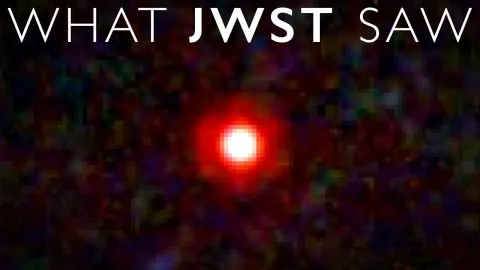
today we're talking about El Gordo which is the fat one uh which is a massive merging Galaxy cluster in the distant Universe the reason I chose this was that recently there was an image released from James web Space Telescope predictably showing spectacular views of this massive Galaxy cluster in particular gravitational lensing what we're seeing is a massive collection of galaxies all in the same region of Sky that's why they're a Galaxy cluster they're gravitationally bound to each other but the incredible amount of mass that's there through their galaxies as well as the dark matter that makes up most of the mass that we can't see here produces these spectacular gravitationally lensed
features so these are optical illusions caused by the bending of light coming from distant galaxies and that light's being distorted as it passes through the mass of that cluster and we see these great big stretched out images of what are in reality quite normal probably galaxies so what we can see here are two examples of this in play this thin one is called La Flaka the flat one and this beautiful thing is El anuo which is the fish hook both names in spanish so I could talk about all of that but actually I want to talk about why this cluster is important to cosmology in and of itself self so these are really recent observations but this cluster was discovered over a decade ago and even
then it was an object of interest and the reason it was interesting is it had the potential to break cosmology it sounds very dramatic but when you think about the philosophy of science we often talk about Paradigm shifts where we work with a theory until observations come that falsify it and then we have to look for an alternative and so for us right now we have this sort of concordance cosmology where the Lambda cold Dart matter Universe seems to explain what we see in the universe very well not everybody agrees with it and there are problems with it but it explains most observations in cosmology to a surprisingly good degree but when you find an object like this which is really big and formed really early in the
universe relatively speaking it causes problems because it appeared at first glance like it might be too big too early in the universe to be explained by our cosmological framework and if that was the case it had the potential to falsify that theory and make us reexamine what we were looking at in terms of explaining How the Universe was formed why can't you have something that big early in the universe so the way we think the structure in the Universe forms is through a hierarchical process so the early Universe was very hot and smooth it arose out of the Big Bang as it expanded things cooled down but there were tiny little fluctuations in density and once you run that forward for
billions and billions of years and you let gravity do its thing those tiny little over densities get magnified as they pull more material in so the universe the structure in the universe we think is largely made up of smaller units of Dart matter called Halos merging together to form bigger and bigger things and material collapsing in various directions and draining onto these nodes so the problem is that takes time you have to let gravity do its work you have to let these over densities um become bigger and to find something when we look back in the distant Universe we're looking back in time because of the finite speed of light it means we see something that early on in the universe it only had 7 billion years or so to get as big as it
was that causes a problem for how we think all of this framework works and what's special about El Gordo as well is that it's a merging cluster as I just said larger structures form from the mergers of smaller structures but in this case this is the merger of two really big things this is a different View which shows multiple views of the cluster all together so you see the galaxies in the background in pink you see where the hot gas is and this is revealed from the Chandra x-ray telescope and this gas is sticky so if there's a collision well the galaxies can go through each other and out the side the gas tends to stick and then the blue shows where we think the mass is and this comes from gravitational
lensing a technique that we can use to actually reveal where most of the mass mostly dark matter we think is in this structure and so this is a beautiful example of a massive merging cluster but again something like that should be very rare you shouldn't be able to find many of these both because of the mass because of the Velocity with which they're colliding and also because these things don't last very long observationally speaking you only get to see them in this state for about a billion years or so um so you know any random snapshot shouldn't find a lot of them so it's a special object it's a rare object it's a massive object and it Formed really early on this makes it worthy of further investigation and so
over the last decade lots of people have looked at this and made independent measures estimates of the mass using different techniques all of them coming up with masses roughly within maybe a factor of two all of which showing that that it's massive but it's just on the borderline of being a problem this is the original paper so the title is the atakama cosmology telescope act clj 4915 that's its official name elgordo is much catchier a massive merging cluster at red shift87 and I just want to take a moment here because we talk about papers you know a lot and they usually have just a name attached to them and that's just Anonymous scientists but this person fipe manento he's my friend and well at the time he was at
ruers University in New Jersey we had been office mates when we were PhD students he was my academic big brother he was the person on the ne desk over that I said Felipe why doesn't my code work fipe what does this mean um because you know if these videos give us a chance to do anything it's to underline The Human Side of Science and science doesn't get done without all of those people giving you support and answering your questions even if they're not working directly with you so it was lovely to see I give a shout out to uh Felipe for leading this work and if I scroll down through the discovery paper we get to a figure that illustrates what I was saying which is this one here this
is trying to illustrate whether or not this is a problem how rare and how unlikely this cluster is to form where it did in the cosmological model we think we live in and so this goes out in time so you can see at higher red shifts in the distant Universe hadn't had enough time to make a cluster so these curves are all quite low as time goes on it gets more and more likely that we find one of these things so this measures the mass that it could be these three lines give an illustration of How likely it would be depending on how much of the sky you look at if you look at the full Sky you would expect to find an object like this but if you only look at a small patch of sky like in a survey you might not have the same chance
in fact you'd have a much lower chance and this single data point shows where in red shift and in Mass our object is and it's got an error bar error bars are really important particularly for something like this and you can see for the survey involved this solid line here it does sit right on the border so it might be a problem but it could be explained by normal formation scenarios if it had been significantly Above This solid line it would have been a very big question like why would we see that in such a in such a small patch of Sky if it had been way above this dashed Line Game would have been over we shouldn't have seen it anywhere but it's pretty much on the line it is pretty
much on the line so that's why I want to talk about the importance of this error bar because before we throw out our entire scientific framework we've got to have pretty solid evidence and these measurements are hard you measuring the mass of something in the very distant Universe can't pick it up and put it on a scale you have to use indirect means to do this all of those come with uncertainties all of those come with assumptions about where the two clusters are on the plane of the sky if they're colliding this way or that way about how far out you measure them they don't have an edge um you have to fit models you have to extrapolate every single Choice brings with it some measure of uncertainty so
that error bar is as important as the point that it goes around and that error bar is large enough that it means we're not necessarily definitively breaking the cosm ological model Professor gray is based at the University of Nottingham check out the video description for more information about studying astronomy there I'll also include links to some of my other channels including periodic videos for chemistry and number file for mathematics nine that is the first run of a seven digits that go up obviously we're missing one two and three it would be nicer with them