22:27



I went to the United Kingdom March in September to make a video about flags, but was struck by the prominence of Christianity amongst the nationalism on display. After the success of the September event, its organizer Tommy Robinson announced a festive follow-up, aiming to put his version of Christianity directly into the spotlight. Why is it important that you came down here today? Christianity. Simple as that? Foundation stone of our country. Christianity's been outcasted. Our leaders have forgot about I reject Islam.
I reject false gods. We do not want Islam. Early last year, the Bible Society published their Quiet Revival report, making bold claims about growing church attendance, reversing decades of decline in the UK. But in March, YouGov withdrew their research for the survey, citing flawed data. So, does this Christian revival even exist? And if so, to what extent is it being driven by the far right? A few years ago, I had a cardiac arrest and I died. I was clinically dead for 15 minutes. Pastor Chris Wickland was one of the speakers at Tommy Robinson's Christmas event. I died on a Friday and I came out of my coma on a Sunday.
Completely well, completely healed. Much of the recent focus on a Christian renaissance has centered on churches like his, rather than the mainstream Church of England. I was dragged to church when I was a child, not too far from here. And it was a C of E church, very traditional. It was boring, but it was kind of inoffensive, I suppose, and quite safe. me. Today's Pentecostal service promises to be a livelier and more provocative affair that is unafraid to link faith to national identity. As a nation, and it's statistically white people doing this, as a nation, we are slowly but surely committing ethnocide because one in three children are being terminated in the womb. One in three.
This is literal social demise of the Western white person. This is not racism. This is about race and God's heart. Is it you on YouTube faith? Yeah. So, um about 7 months in. Okay. So, it's a quite revivalist year, right? I'm part of that. This is a sort of conservative church. It's It's It's about conservative values, conservative Christian values. Is that something that resonates with you? I just follow Jesus. I don't follow a left or a right, a green or a labor. I follow Jesus. So, wherever that leads me, that is where my heart is. When we came here, we didn't think we'd
like believe in God. So, why did you come? Uh because of the country, the you know, it's just things going on in the country. Desperation, really, I suppose. People are suffering. There's There's a reason to protest every weekend. And we thought it was just us. It sounds like there's just a general sense of things in every direction you look. A lot I think a lot of people since COVID felt empty and like something spiritually shifted and something felt wrong and like we were being lied to and I don't know. All of a sudden it felt like this sort of thing didn't seem crazy. And we met a bunch of Christians through the protest that happened in the
country. So, they said, "Oh, you should come to this church." So, we came here. And then, yeah, we just heard the worship and saw people like praising God and stuff. The belief that new recruits already have is striking. I want to understand why this church is such a strong People's identity it is really the big thing at the moment. So, whether it's gender politics, all these things, it's all about identity. And what we're finding is a lot of people they're like, "What is my national identity?" And so, part of that national identity is their spiritual identity, which is found in Christianity. Cuz my job, at the end of
the day, it you know, you get a window salesman, you know, his job is to like sell windows. My job is to sell Christianity and stuff. Modern-day ideology says, "There must be reparations, mate." So, we see this at the moment with the Church of England that they need to pay millions of pounds for what happened in the slave trade. But, the problem is you see, every culture is guilty of slavery. You see, that's why Jesus came to die on the cross. You see, he paid reparation. You see, every one of There's a real division in the church movement at the moment between people like yourself and more traditional, shall I say, you know, Church of England Christianity. Well, the irony is that I'm I'm actually
not appealing for a new brand of Christianity. I'm appealing to the old brand of Christianity. So, what we're seeing today, and probably in the last 60 years, is a much softer, watered-down, politicized version of Christianity, which, forgive me for saying this, we tend to see more coming from like the Church of England and the Methodists. And a lot of people are turned off by that cuz that's not the brand of Christianity that they see in the Bible. Wickland's approach is certainly finding an audience, in sharp contrast to the established pattern of decline seen in church attendance across the UK.
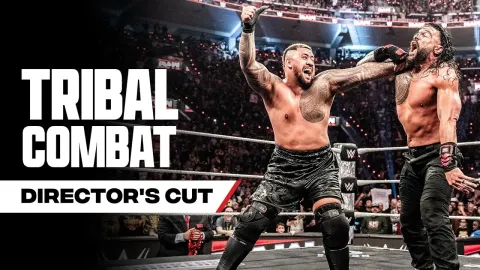
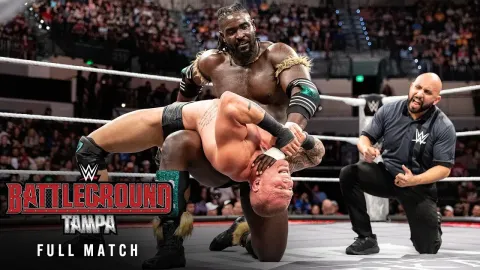
I've come to Bradford to visit a C3 Church that is taking a very different approach to marketing faith. Situated in a former nightclub, The Fountains Church has an innovative program of worship that includes the telling of Bible stories through the medium of pro wrestling. There's a lot of people out there who view church as really stuffy and boring. Yeah. But if I don't want to go to church, why am I going to go to church and learn about God? Cuz I don't want to go there, it's boring. I can go watch a cool wrestling match
and also learn a bit about God. The audience here appear enthralled by their evening's entertainment. But I can't help wondering if a healthy CFE would feel the need to put on events like this. Are we ready, Bradford? Yeah! All right, ladies and gentlemen, your next What does the quiet revival mean to you? Is it real? Is it happening? Yeah, I mean, it is happening. I would say that it's happening very quietly and very gently. A lot of the emphasis around this quiet revival has been put on Christian nationalism and that somehow this revival was kind of bypassing the Church of England a little bit.
I would disagree with that. I think the I think actually the quiet revival had started before this rise of Christian nationalism. I think that's come along much more on the back of that than you know, being something that led it. We're not kind of dealing with people who are de-churched. We're dealing with people who have absolutely no experience of church. But the Christian nationalists would argue that is exactly the problem. Yeah, there's there has been a loss in terms of, you know, the Chris Christian heritage that had been passed from parent to child. From my own and my colleagues' perspective, actually we're all seeing people walking into our church doors.
Those for us are not the Christian nationals. They are people who are just genuinely interested. My view is that Jesus was a Jewish rabbi. He spent time in exile. So, you know, he was not a racist. I find it quite difficult to kind of draw together how you end up with, you know, the kind of real Christian nationalism stuff when, you know, that is so clear in the Bible. This book is the reason we are in such a mess. Show some respect. Tommy Robinson, the man spearheading the Christian nationalist movement in the UK, has made a career out of criticizing Islam.
You go and find Muslims and non-Muslims. Go on. We're in the town center. Go and find me any Muslim with a non-Muslim. You won't find it. You just won't find it. Unless they're selling them heroin, selling them drugs, or raping them, you will not find it. I want to know how Robinson's inflammatory rhetoric can be compatible with the Christian church here. Do you renounce the devil and all the spiritual forces of wickedness that rebel against God? I renounce him. Wonderful. Do you renounce the sin? I've come to Suffolk to meet Kayode Dewa, a missionary bishop and YouTube personality, who rose to prominence through speaking at events organized by Robinson. NOW, I DON'T KNOW IF YOU WATCHED what happened in Paris last
night. But, I was sick to the pit of my stomach when I watched those garlic-swilling, cheese-eating surrender monkeys AND THE MOCKERY THEY MADE OF THE CHRIST THAT I SERVE. TODAY, Dewa has traveled from Wales to perform river baptisms for his online followers. Unfortunately, after a pitch inspection, the river is deemed unfit for play. Did you check the tide? Yeah, we did. Oh. It seems that we got it wrong. Like the C of E, Dewa is an Anglican. But, the tone of his preaching couldn't be more different. If we repent and renew, then Britain may yet be great again.
His booming oratory has quickly made him a darling of the right-wing media, and he claims to have a growing congregation online. Unfortunately, several of today's followers, perhaps put off by our camera, have not made it to the hastily rearranged baptisms a little further along the coast. How do you feel? Amazing. Yeah. It's going to do that, that cold water. Yeah, that's right. In the name of the Father, and of the Son, and of the Holy Spirit. Uh would you call yourself a Christian nationalist? No, not at all. I am a
Christian, and I am a nationalist because I'm proud of my country. And I don't believe that I would consider myself a Christian nationalist, although a lot of people label me as such. understand that label? Do you understand the implications? yeah, but I'm not advocating for a theocratic leadership here in the United Kingdom. And that is where I separate myself from this moniker of Christian nationalism. I feel the Christian faith in this country is being deliberately eroded. I feel that our Christian institutions, our laws, our morals as a society and as a culture are being deliberately twisted away from the very foundations upon which our British identity is built, and I try to bring those things
back to the attention of the public in the only way that I know how. If you stand for your faith, if you stand FOR YOUR FAMILY, IF YOU STAND FOR YOUR FREEDOM, LIFT YOUR VOICE AND SHOUT! YOU'VE GOT A FAIR DEAL OF prominence over the past year, particularly, and a lot of that is tied into your appearances alongside Tommy Robinson. Do you see eye to eye with Tommy Robinson? Do you think that your values and his values match up? Th- There's a misconception about Tommy. Is there? There is, yeah. When you actually sit and talk to him, you'll find that in engaging him in political discourse, his politics is rather centrist. Tommy is
a man that is on a journey um has made a public proclamation of his faith. It would do him a lot of favors if he showed some contrition around some of his actions though and cuz the person that you're explaining to me isn't someone that you see in his videos and his output. He's The whole point of what we do as clergy is to bring change to people's life and I can't change your life till I change the way that you think. Robinson regularly frames his worldview around his experiences growing up in multicultural Luton. When you're at risk, when you realize your culture identity is at risk, you look and search for a belonging and a belief and people are finding Christianity.
But it's hard not to see his new-found faith as an extension of his anti-Muslim rhetoric. I've come to Luton to meet a white working-class skinhead with a flesh tunnel and tattoos, but he's also a Church of England vicar. Good to meet you. Rather than railing against Christianity's minority status here, Father Luke Larner has embraced the area's diversity hosting multi-faith community events. So for me, this is just a natural outworking of our Christian faith. It's good neighborliness, building peace. Blessed are the peacemakers. We live in a town that has been extremely divided at times and kind of is we're feeling that again a little bit at the moment. So we're trying to make peace and build
understanding in our local community. For us is community is everything. Health begins not in hospitals, it's in the community. Hence why this space was crucial for us to open. I always thought that Luton thrived on the fact that we were so diverse and a lot of my upbringing I learned about different cultures and different nationalities. As people and as cultures we have to meet other cultures find out what we've got in And it's about, you know, having that hand of friendship rather than thinking, "Sorry, not on my street. Not in my backyard." Do you feel that the rise of Christian nationalism is in part because of some of the failings within the Church of England? You know, we look at the dwindling numbers.
Yeah, that'd be a factor. The famous saying is the problem with the church is that it's answering questions that nobody's asking. Um and I think we need to start listening to the kinds of questions people have got. I think if there is this kind of spiritual vacuum that people are seeking into, I think we ought to be spending time with people in our communities listening to them, listening to things they care about. And if what they believe is that Islam is the problem, how do you counter those sorts of narratives? So, I often talk a lot about solidarity.
Um and solidarity is a form of love. Within Christian nationalism, you've got a kind of twisted form of solidarity and a twisted idea of justice. It's a solidarity of like people who look like me. Literally. Very literally. I could increase the attendance at this church by breaking the rules if I wanted to, right? I could do things that might tap into some of this awakening among disaffected white working class lads, which is probably there. You know, and I could probably um sell a good story of that being a retired bricklayer and working class myself, right? But, I'm not going to do that cuz that's not what I'm in the
business of. I am just really, really strongly against the idea of packaging Christianity as a product. There's an old phrase, you know, we're just beggars trying to help other beggars in search of bread, and I kind of feel that way about it. The Bible Society has announced a new study on church attendance later this year. So, for the moment, the notion of a quiet revival in the UK is purely anecdotal. Whatever the truth, the turbulence of recent years has clearly created a yearning for comfort and meaning. The question is how Christianity is evolving to meet that need.