7:05



Why is the Google Pixel growing, while everyone else is dying? Besides Apple, all other Android brands are losing users… except Google. And the Google Pixel has been growing a lot too. But it gets even weirder. Global smartphone shipments are also forecast to fall 12.9% in 2026. The biggest decline in a decade. Android shipments are expected to drop 15%. But not Google Pixel. It's projected to grow 19%. Something big is happening. The entire smartphone industry is changing, and the one winning seems to be the Google Pixel.
Things have changed a lot. Back in 2015, Google didn't even make smartphones. But around that time, two people at Google sat down for a meeting that would change everything. And since then, the Pixel has slowly been taking ground. Since its launch in 2016 and 2023, Google shipped 37 million Pixel phones. And that momentum's only continuing. 25% growth in 2025. 13% projected growth for the Pixel in 2026. Then, that projection jumped to 18.9%. But this gets even stranger when we take a step back. In 2018, global smartphone sales peaked at 1.55 billion.
Then began to decline. After a brief rebound, things are looking rough. Shipments are declining 12.9% in 2026. That's an unbelievable drop. Plus, any rebounding growth afterwards is pretty small. But strangely enough, the ones struggling the most are cheap Android. The smaller brands. [Nabila Popal, Senior Research Director, IDC]: "We expect consolidation as smaller players exit, and low-end vendors face sharp shipment declines amid supply constraints and lower demand at higher price points."
[Nabila Popal, Senior Research Director, IDC]: "Although shipments will witness a record drop, smartphone ASP [average selling price] is projected to rise 14% to a record $523 this year." Analysts say cheap, sub-$100 smartphones might become *"permanently uneconomical."* Not "unviable until things blow over." Permanently. Between 2016 and 2025, the number of smartphone owners increased by around 96%. But that's slowing down. A lot. 81.6% of the US population has a smartphone.
You'd think the US, with its strong buying power, but also being mostly saturated, would mean it's time for phones with lower prices and strong value to be doing well globally. In countries that don't have the same level of smartphone penetration. To catch first-time smartphone buyers in markets with less purchasing power. This is what many brands have been trying to do. But that's not what's happening. Global, overall smartphone shipments are shrinking. But premium smartphone sales - those costing over $600 - are broadly growing. And the one growing the fastest is Google. 105% year over year. Doubling in sales.
Google climbed to 4th place in the US, overtaking TCL, which shrunk by 23%. It's also taken 10% market share in Japan, which is one of the most iPhone-saturated markets. So is it just cheap brands shrinking and premium growing? Well, this is true, but the story seems to be more complicated. Google passed Samsung in Japan to take the #2 spot in early 2026. And that was in large part thanks to the Pixel 9a, a phone at $499 and much cheaper than the 9. Morgan Stanley reported that "Apple's net switching rate improved to 11%, a 5-year high. All other major smartphone brands, with the exception of Google, exhibit negative net switching rates."
All these brands are now experiencing negative switching rates, except Apple, and of course, Google. [Ben Schoon, 9to5Google]: "In other words, outside of customers upgrading within their respective ecosystems, Google Pixel and the iPhone are the only brands gaining new users." Android shipments are expected to drop 15%, with many people switching to iPhone. But the Pixel is the exception. The phone market as a whole is shrinking, Androids are shrinking - what is Google doing differently? And what's causing cheaper phones to die? To find out, we need to go back to 2016, when Google made a decision that would change everything.
Despite how advanced technology is, we still plan, write, and communicate the same way as decades ago: Typing. Manually typing, everything. But we all know that speaking is way faster. It's easier to reply to messages, write mental notes, and plan things without losing your train of thought. But… we still type, even though all our devices have microphones, ready to go. So, why not speak everything instead? With Wispr Flow. Wispr Flow is voice-to-text that actually works. Use it in every app, on every device. Just hold down the hotkey, and Wispr Flow will transcribe your voice into any app: Gmail, Discord, Notion, Claude, iMessage. No setup or integrations.
But Wispr Flow isn't just any diction app. Other apps still have one big problem: You say mistakes, and built-in dictation will capture your mistakes. If you say the wrong day, or the "ums" and "uhs" while you find your thoughts. And you have to go manually fix them anyway… so it's not that much faster. Wispr Flow will automatically clean up your mistakes mid-sentence. Including "ums", or if you need to correct a mistake. For this email, if I say "Hey Mary, we might need to um… push the video back a bit. 17th might be too tight, wait no it was 18th. Editing team needs some time to um, fix a few things. Can we ask if the uh… 24th is ok? Best, Hari"
It puts in this, all fixed up, even the correct date! It's… honestly really cool. And, it still sounds like me, not Gmail's corporate language, or like an AI. Wispr Flow, helps me figure out what I'm trying to say, fixes my mistakes in real time, and get tasks, messages, and notes done faster. Wispr Flow is available on Mac, Windows, iPhone, and Android. Download Wispr Flow using the link below and use promo code 'LOGICALLY' for an extra month of Wispr Flow Pro today.
Thank you to Wispr Flow for sponsoring this video. In 2016, Google CEO Sundar Pichai and hardware chief Rick Osterloh formed a plan. Currently, the Pixel was using the Qualcomm Snapdragon, like most other Androids. But it seemed like Google wasn't really pushing this thing. It almost seemed like a prototype. That's because Google wanted the Pixel using its very own SoC chip - the Google Tensor. But this would take time. A long time.
[Sundar Pichai]: "Part of the reason that I think the team has been more modest in their approach with Pixel over the past 18 months or so is because they've been waiting for Tensor." A lot of Androids feel like a different wrapper around the same thing. Just a different camera, price, aesthetic. Things that can be easily copied. So if you really want to stand out, offer things that are very hard to replicate. Apple has been doing this with Apple Silicon for years. In 2017, Google assembled a team to work on the chip - 76 semiconductor researchers who specialised in AI and ML, machine learning.
You might roll your eyes at this. "Another AI phone, cool." But this was way before the AI boom. ChatGPT didn't release until late 2022. Not only was Google investing in their own unique chip, but they were betting on the far future. Google bet that AI would not only be huge, but that it would move from the cloud to the device. And that's exactly what's happening right now. But back in 2017, this would take a lot of work and time. Plus, the current Pixel models weren't that popular. Sales were even declining.
But eventually, came the Pixel 6 in 2021. The official Google flagship, featuring the Tensor. Google was very early to this game, and it still had to compete on all the other benchmarks. And at a $599 or even $899 price point. Not cheap. Plus, the specs and speed weren't that impressive. That, and it was having thermal problems, like overheating. In fact, it was the #1 reason for customers returning Pixels. But it was offering some big things other Androids lacked. It had Call Screen, which uses Google Assistant to answer calls from unknown contacts, and would even ask them who they were and the reason for the call.
You can then see the transcript and decide to answer or hang up. There's "Hold For Me," where Google Assistant would literally sit on hold and then notify you when you can talk to someone. There's voice message transcription, estimated wait times, AI to detect scams, plus a long list of photo features. The Pixel had a lot going for it - plus, surprisingly, a lack of bloatware, which is one thing that annoys me about Samsung. A lot of differences between Androids feel pretty small. But not the Pixel. "I have absolutely no spam calls compared to several a day before! I like the Hold For Me option too! No more BS car warranty spam and it will block texts too!"
"I have used the Call Screening feature so much since I got this phone. Between the spam detection and call screening, I haven't picked up a spam caller on this phone at all." Even with a rough start, the Pixel kept growing, but it remained just a bit different from other Androids. "Google tends to emphasise AI capabilities over raw performance." Not "better," but different. But even if the Pixel is a bit different, why do more budget-friendly phones seem to be dying? Phone saturation is higher than it's ever been, and the market is going through a bit of a change. I think there are four factors pressing the market.
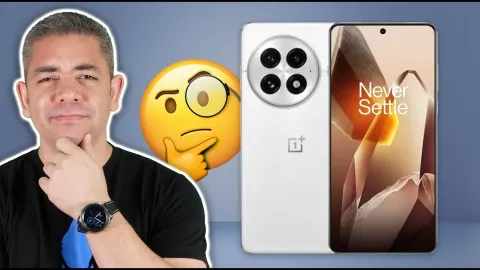
For ages, all kinds of brands around the mid-tier or budget tier were offering near-flagship specs, but cheaper. "Good enough" smartphones, like OnePlus, which is now struggling. It saw shipments fall 20% in 2024, is losing market share, and is even closing down some of its US operations. The growth era of phones is over. Even if the US is the most saturated, many countries are also reaching that saturation point. Customers have already bought their first phone - often a cheaper one - and now much of the growth comes from upgrading, or stealing customers from other brands. Exactly what Google and Apple are doing right now.
They're offering features that attract users looking to move up. But it's not just "AI smartphone." Research is showing that AI features make people upgrade, but not switch. I think what's happening is that more people are moving up the smartphone ladder. As phones last longer, they want smartphones with more advanced features that will last them longer. And that's what's really interesting. The Pixel isn't really the most powerful phone on the market. But it is premium, has that nice premium experience, and it does what so many other phones can't - because of Google Tensor. And to make matters worse, cheaper phones
are getting more expensive, thanks to components like memory getting squeezed. Carl Pei, founder of OnePlus, then Nothing, even wrote a long piece on exactly this. "For fifteen years, the smartphone industry relied on a single, reliable assumption: components would inevitably get cheaper. While short-term volatility existed, the long-term downward trend in memory and display costs allowed for annual spec bumps without price hikes. In 2026, that model has finally broken, driven by a sharp and unprecedented surge in memory costs.
Brands now face a simple choice: raise prices - by 30% or more in some cases - or downgrade specs. The 'more specs for less money' model that many value brands were built on is no longer sustainable in 2026. As a result, some markets, particularly entry and mid-tier segments, are likely to shrink by 20% or more, and brands that have historically dominated these segments will struggle." I think he's exactly right. For ages, Android smartphones were sort of defined mostly by specs and pricing. Brands were built entirely around this, offering similar Snapdragons with a few different perks, or a cheaper shell. But they're slowly disappearing.
Some went all in on being different aesthetically, like Nothing, which is surviving. But Google went a different direction. Build an entirely different chip. It took longer and cost way more, but no one can really do the same as a Pixel. You can't just order the same chip from Qualcomm and offer the same thing for cheaper. The market that rewarded specs alone is gone. Now a lot of android users are either going to iPhone, or to Google Pixel. People are buying more premium phones that last, but also offer something different.
One of the exceptions to this is Nothing, by Carl Pei. They own a tiny part of the Android market, and while they're growing, they almost destroyed themselves when they annoyed all their customers. Click here to learn the rest of the story.