11:49



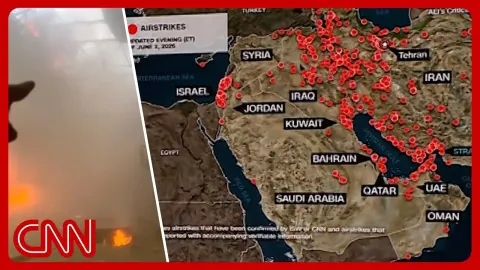
Just interesting that you see this under the radar effort to get shipping out that could sort of just continue and the Iranians clearly don't necessarily like it, but they're also not going full boore to try to stop it. Short time ago, the United States military began major combat operations in Iran. Today, President Trump says Iran's Supreme Leader Ayatah Ali was killed in the attacks. The Pentagon is weighing a takeover of that island as a way to force the reopening of the Street of Hormuz. Iran begged for this ceasefire and we all know it.
Does anyone really think that someone can tell President Trump what to do? Come on. I'm Venicia Rainey. And I'm Sophia Yam. And this is Iran, the latest. It's Thursday, the 4th of June, 2026, the 97th day of the war and 57 days into the ceasefire. Later on in this episode, we're going to be looking at the Straight of Hormuz. We haven't heard about it for a while, but it is still blocked. Or is it? We're going to be looking at how the US is arranging secret passage for ships who are trying to cross via a new channel that hugs the Omani coastline. But first, let's take a quick look at where we are today. So the big news obviously is Lebanon and Israel agreeing a ceasefire extension. There's some kind of agreement, but it is
contingent on Hezbollah removing all of its fighters from the area south of the Latani River, so southern Lebanon, and a complete cessation of its fire. Meanwhile, the Israelis are allowed to continue operations in the south of Lebanon. And defense minister Israel Katz has said that Israel also has the freedom, and that's a quote, to strike Beirut if Hezbollah attacks northern Israel. Sophia, we've we've joked previously about, you know, when is a ceasefire not a ceasefire. Um, this was Donald Trump being asked, how do you define a ceasefire in the White House yesterday?
How do you define ceasefire? Uh, pretty much the way it is. It's a different part of the world. You know, I'd say in that part of the world ceasefire is when you're shooting in a more moderate manner. Well, there's been an escalation of activity between Israel and Hezbollah. Some of the thinking is that Israel is trying to cement its position with talks that were ongoing between the US and Iran through intermediaries. If some sort of agreement was reached, experts were thinking that Israel was trying to give itself as strong of a position as possible because then the focus would then turn to figuring out what would happen next between Israel, Lebanon, and Hezbollah. Now this
ceasefire has been in place but there again it's still been an active conflict zone and this is because of a point of contention between Israel and Hezbollah. So from Hezbollah's perspective Israel is now in Lebanese territory and to Hezbollah this is an occupation. So they say that they have the right to fight back against Israel. From the Israeli perspective they're getting hit. The IDF says that gives them then the ability to hit back at Hezbollah. So thus the ceasefire has not been a complete sessation of fire as what this new joint statement that's come out is trying to reach. So it's a really complicated scenario. Uh neither side really agreeing even on a starting point. It's
worth just reiterating why and how this is linked to the Iran conflict. Iran has made it a condition that the Israeli campaign against Hezbollah stops in Lebanon before they agree to a wider deal with the US. Hezbollah is their proxy in Lebanon and they want to maintain it. It's it's a card they can play. They want to keep hold of that card. It goes without saying that Hezbollah is not in favor of this agreement. As we were recording this podcast, Hezbollah chief Nim Cassam gave a speech. Just going to read out some of his lines. He said the Lebanese government's negotiations with Israel are shameless and that the deal amounts to surrender and defeat. He described it as a road map to annihilate part of the
Lebanese people. And he warned that northern Israel will not be safe so long as Lebanese villages are being bombed. He also said the ceasefire is dependent on a full Israeli withdrawal from southern Lebanon. It's also not backed by the Israeli army and several Israeli government ministers. They think this is an absolutely rubbish deal. I think also what's interesting to me is that it involves some kind of formal agreement between the Lebanese government and the Israelis. So they've agreed this idea of pilot zones. I'm taking this from Lebanese President Joseph Aun was speaking earlier this morning. So the idea is that Israel will withdraw from certain areas and the Lebanese armed
forces, so the Lebanese official state army will take exclusive control of the territory. So the idea is to push Hezbollah out with an agreement between the Israelis and Lebanese. This is new stuff. This is new territory for Lebanon and Israel. The initial phase according to Aun will include the Zutar area in Nabatia and Boowfort Castle, which as our listeners will know was just seized last weekend by the Israeli army. But there's no maps, there's no timetable. Apparently the implementation of this deal, it could begin within 24 hours of final approval from all the various parties.
We're still waiting to see what it will actually look like on the ground, but that's the sort of sketch that we have at the moment from the Lebanese side. It puts a lot of pressure on the Lebanese government. This was the case already for the agreement that had been in place after hostilities flared up between Israel and Hezbollah in relation to the war in Gaza. So there were there was fighting then too. Uh and there was also a ceasefire agreed at the time. One of the big sticking points was for Hezbollah to completely disarm and the military was overseeing this but it's been very difficult in practice because Hezbollah is so embedded in the fabric of Lebanese government society. Uh I
mean you've got Hezbollah politicians in Lebanon. There is a strong uh sentiment amongst many Lebanese that has hardened over these years against Israel because of all of the fighting and all the deaths. That's definitely true. But I think the Lebanese government making this agreement with the Israeli government and these talks are fairly unprecedented. This does not happen often is a sign as well of the shifting sentiment within Lebanon towards Hezbollah and the problems that they've been causing for Lebanon as a country. Another reason to be potentially hopeful. This is the first time that the Americans are providing military and financial backing to the Lebanese armed forces to try and boost its capacity.
They will need that. The Lebanese armed forces are underfunded, neglected. They don't have any kind of air force. It's a pretty impoverished army and that's one of the reasons why they've never really been able to take on Hezbollah, which is backed by Iran, has much better funding and resources. Sophia, do you want to bring us up to date on what's been happening this morning on the ground in Lebanon since we've had this agreement announced? So, there have been already several strikes in southern Lebanon today. One person killed, another wounded when Israeli forces targeted a motorcycle. A family wounded in an Israeli drone attack on a car. Another person killed, four injured in an Israeli strike in the
Becca Valley. A unifilled peacekeeper killed by a mortar shell striking his position. It's unclear who launched that attack. A Hezbollah drone struck the vehicle of the chief for Israel's northern command. This happened in southern Lebanon, but the drone hit shortly after he stepped out of the vehicle, so he was not injured. And then a drone was identified in northern Israel, triggering sirens in the Galile panhandle. No injuries were reported there either. So a busy morning in southern Lebanon and parts of northern Israel. One other thing I think is worth pulling out from the agreement. Marco Rubio, the US Secretary of Statement describes Hezbollah as an enemy of Lebanon. So quite punchy language that
maybe suggests that the US, Lebanon, and Israel are starting to knit against this. We'll see. More talks in late June. There's not much trust between any of the sides. And I think given the activity that we've seen this morning, I remain skeptical that anything will hold. I think within the Lebanese government, a lot of people would agree with this statement from Rubio that Hezbollah is an enemy of Lebanon. Are they really thinking on behalf of the Lebanese people? But then again, you get the issue of the popular sentiment hardening against the Israelis. It's a really tough balance to strike for the authorities in Lebanon. It always has been. A story we're flagging from America. So the war powers resolution
has been passed by the House of Representatives. They have told Trump that he needs to withdraw from Iran or else get approval from Congress. This is the first time there's been any formal political push back in the US and it was sort of bipartisan which is significant. So four Republicans crossed the aisle. They were from Michigan, Pennsylvania, Ohio and Kentucky. So you know middle America and they crossed the aisle to get it across the line. It's symbolic. This is not a binding resolution and even if it is passed by Senate the president has a veto so we can assume it won't go anywhere. The White House also says that it's not actually involved in a war in Iran at the moment. It maintains that war stopped when the
ceasefire was declared and Trump actually sent a letter to Congress on May 1st to hit right on that 60-day deadline in the War Powers Act saying the war is over. We also heard Rubio earlier this week saying the war is over. That's the message from the White House. So, I don't think this will go anywhere. Uh you're right that it is symbolic, but it is worth noting that Republicans uh in Congress are now taking a stand against Trump. This is in a way a big step. We're just a few months now out from the midterm elections which will be this fall and Trump is under increasing pressure from first from his MAGA base regarding this war and also leading into this particular midterm elections where it's going to be a really important cycle to
see whether the Republican party with Trump and the White House can still enjoy their majority. It's a big test for the president. And then just finally, we wanted to flag the fact that the former head of MI6 here in Britain, Alex Younger, has died. Sophia, tell us a bit about him. He died on Tuesday of cancer, aged 62. Uh, Younger was the head of the Secret Intelligence Service, MI6 from 2014 to 2020. He was its longest serving chief in 50 years. He joined back in 1991 after serving as a captain in the Scots Guards and went on to serve as station chief in Afghanistan during the US-led coalition against the Taliban. He also led counterterrorism work in the three years running up to London's 2012
Olympic Games. In recent years, he was very vocal about the Middle East and often was quite preient in his comments. In 2024, he warned that Israel was locked in a shadow war with Iran and that would lead to widening regional conflict. This was him giving his verdict on the Iran war about a month into the conflict in a conversation with the economist Shashank Jooshi for the Inside Defense podcast. Who has the upper hand right now? Iran. I regret having come to this conclusion because like many MI6 officers of my generation um we faced the violence and brutality of the IRGC for most of our careers. That's the Islamic Revolutionary Guards Corp.
Yeah. So there is no love lost between us and I shed no tears for Ali Kam um who was killed at the beginning of this war. But the reality is the US underestimated the task and I think as of about 2 weeks ago lost the initiative to Iran. In practice the Iranian regime has been more resilient than I think anyone would have expected. They uh took some good decisions actually uh as early as last June about dispersing their military capability and delegating the authority for the use of those weapons which has given them uh significant extra resilience against this incredibly powerful air campaign.
They have embarked on what's technically called horizontal escalation i.e. firing rockets at anybody within range which at the time honestly um Shashank I thought was nuts but in fact has been a very good way of putting in direct price on the US sort of worked and then um they've understood the significance of the of the energy war and held the streets at threat and globalized and essentially not internationalized just globalize the conflict in a way that gives them some weapons. So, uh, you know, they've played a weak hand pretty well. My second point is that Donald Trump has said some stuff that will have confirmed something they knew already, which is that they're in a civilizational war in their terms.
They're um in a war of existence. Donald Trump made it very clear that he wanted to see them up against the wall basically, whereas America has embarked on a war of choice. And um, in those terms, I think that's imbued them with more staying power than their US and certainly US counterparts. and they know that now and I think that really is giving them the whip hand. That was former MIX boss Alex Younger speaking to the economist Shashang Jooshi. A link to their full chat is in the show notes. We're going to take a short break. Coming up afterwards, we're going to be looking at what's happening in the Straight of Hormuz and a new secret passage that's opened up close to Oman.
Welcome back. You're listening to Iran the latest with me Sophia Yam and Venicia Rainey. Today we're speaking with Brian Clark. He's a retired Navy officer from the US and now a senior fellow at the Hudson Institute think tank. We're speaking to him about what exactly is going on in the street of Hormuz where some vessels seem to be getting through. Thanks so much Brian for joining us today. There's some reports that US Sencom is helping ships to pass through Hormuz that this has been happening for the last couple of weeks. They did say on Monday there was a statement from them. Quote, "The US forces are not escorting. We continue to communicate and coordinate with commercial ships seeking to freely and
safely transit the story of Hormuse." What does this mean? So Sophia, thanks for having me on the pod. I think what's happening is uh the US uh ships are guiding the shipping out of the straight of Hormuz by hugging the coast along Oman. Basically, it's the other side of the straight. So it's 20 miles or so from the Iranian coast. And what they can do is because they've got sensors on board and they've of course got communications with Sentcom and SenCom's monitoring the Iranian coast, they can give the shipping and ideas. Do the Iranians appear to be reacting? Do there appear to be threats emanating from Iran? Do we have small boats making their way out into the straight? So if we see any reaction on the part of the
Iranians, you know, they could tell the shipping companies or the ships to turn back and we won't try to make a run for it. But basically they're providing that sensing layer that allows you to run the straight and understand whether there's any threats coming at you. So providing safe passage in a way to the extent that the US military intelligence can offer. So what they're trying to avoid is the perception that they are defending the shipping. Uh so when you say escort that means you're going to protect the shipping from air missile attack, drone attack and that kind of puts you on the hook to provide a level of force that would you know be able to defend the shipping which um is beyond what they
want to do because if you wanted really wanted to do that it would take about a dozen destroyers in rotation which would consume basically all the surface combatants that the Navy has in the region right now. So are there no military assets being dedicated to this? I saw reports that maybe some helicopters were also being deployed to help guide through. Yeah. So the helicopters uh because they're higher, they can see farther over to the Iranian coast. And so if you're a destroyer, your radar is high enough to where you can b you can basically see almost to the Iranian coast with your radar. But if you wanted to see all the way into Iran a little bit to see are there any missile launchers popping up over there or any
shahads you know coming out of a village somewhere then you kind of need that elevated uh sensor. So the helicopters provide that higher height of eye if you will uh so you can see all the way into Iran. Um the helicopters are also good for shooting down shahadetss. Um they tend to use uh rockets um this rocket called a PKWS or uh gun machine guns even to shoot down the shahads if there were any that came out. They also obviously were used in the past to attack uh small boats that the Iranians have sent against the shipping. So helicopters are very useful. Um they can and the US has been using like army helicopters launched from shore in Oman to do a lot of this work because that
that's this is the kind of thing they're trained for except they're usually doing it against tanks and trucks but here they can do it against boats and drones. There have a few reports in the last uh one or two weeks of attacks around Hormuz. Is that what is happening that the US is trying to clear the space a bit? Yeah, I think what might be happening is the US is responding to the uh Iranians reacting to the shipping this you know the stealth uh escorting which is not really escorting. The Iranians probably notice it occasionally um and are able to start to turn on their missile launchers and u maybe start launching some drones to
attack the shipping. Uh and the US retaliates against that. Um, so they're not defending the shipping per se. They're attacking the sources of the threats that might go after the shipping. So it's a little bit it's a different approach to how you might protect shipping. Uh, which doesn't require you to necessarily put ships between the enemy and the ship you're trying to protect. So it limits your risk, but uh, it does have the effect of allowing some shipping to go through. But nor but normally if you want shipping companies and their insurers to feel confident in being able to use a waterway like that, you're going to have to put military ships out there and have them basically act as bodyguards for the shipping. And that's where the that's
kind of the line the US doesn't want to go over. And just remind us at the narrowest point of the straight of Pormus, can you see across it? What kind of visibility is there? No, you can't. So, it's like it's about 22 miles. And so, uh, a person standing on the shoreline, which there's some cliffs on both sides. You can see um you can kind of see maybe half to 3/4 of the way across and it's very uh there's a lot of mist and dust in the air. So, it's really the visibility is very bad. Um, so you generally cannot see all the way across the straight. Now, you can see in the distance some of the mountains on the Iranian side, uh, but
you can't really see on the water what's happening. So you have to use radar or you have to have an elevated sensor or something to be able to see the other side of the straight. And what's the volume of vessels that are now passing through with this sort of support from the US? Well, of course the you know the data is sparse because the way these vessels are going through the straight is they hug the Omani coast uh and they turn off their AAS transponders. So the Iranians have been using the AIS as a source of intelligence to understand when ships might be trying to make their way through. And usually ships keep their AIS transponders there for safety because at least other ships will see that they're there and avoid them.
Um, so you turn the transponder off and then they might even doing this at night to try to avoid visual because the Iranians will send spotters out. They'll send out small boats that look innocuous, but they're actually doing spotting for the IRGC. So they might be doing this at night on the Iranian coast without transponders. So there's there's maybe less uh there's less information available to the Iranians to figure out when the shipping's actually going. But it also makes a little more dangerous passage for the shipping companies. So right now it looks like we're getting maybe three or four ships a day out via this method. And I think it's, you know, because they have to do it pretty slowly
and they have to [clears throat] do it in conditions where they're not able to take advantage of all their navigation aids that allow them to go more quickly because normally they'll drive through the straight at, you know, 15 knots, 20. I mean, I' I've seen people driving through, they're at like 15 or 20 knots, which is pretty fast for a merchant ship. Um, but I assume given where they're doing these transits, they're only going maybe five or 10 knots. Can you clarify the technical side of this if they've turned off their AIS transponders and how is the US able to track what's going on and know where those vessels are? That's why you have to be in communication with the ship. Uh, in the
days before EAS, you would actually just you'd see a ship and you'd call them up and say, cuz they have the name of the ship on the side, you basically call them and say, you know, what are you doing? I'm going over here. Are you going over there? Uh, and that's essentially what they're doing here is they have to just stay in communication with the ship to say, vessel X, you know, are you going to make your way out this direction? Uh, and they probably have to work out some, you know, clandestine ways of communicating that the Iranians cannot also listen in on. So, I suspect that the US has either worked out communication protocols that prevent the Iranians from listening in
or has even provided radios to some of these ships that allow them to communicate directly with the US forces in a encrypted way. But that's they're having to do it basically by directly communicating with them and conveying to them where they're going and maybe even sharing charts of where the route is that they've already verified to be clear of minds. Feels like we need a return to semaphors, right? It's the uh it's you know like the 21st century of that version of that. But yeah, it's basically you can't do broadcast communications in the same way that you could previously just
because the Iranians would listen in on anything that you say. What exactly is getting through? You mentioned three to four a day. I saw the New York Times reporting at 70 commercial ships over the last 3 weeks. That's roughly how that breaks down, right? But that's nothing compared to what was it like 100 to 150 going through every day. About 100 Yeah, about depending on the day 120 or so ships getting out. And the ones that are getting out seemed I mean it seems like it's the normal mix of ships. So it's container ships uh some tankers and then some um other transport ships that were just trapped in there because they imports come in uh that direction as well. So there's ships that offloaded material in the Gulf and
now were trying to get there get out so they could go get return to the shipping business. Um so some of them were empty ships that were just trying to get back out. Are certain nations being prioritized by the Americans? I don't know. They haven't said anything about that. I mean so the when project freedom happened uh the shortlived project freedom of about 50 hours. Yes. Right. So that was those were two US ships and I think that was mainly because US flagships were going to feel more confident you operating under US guidance because the US Navy is responsible for protecting US flagships.
Uh so they knew that they would come to their defense even if they came under attack. So I think there it's certainly US ships will probably get pri not necessarily priority but they're going to be the ones that are most willing to do this because they understand that they're going to get more protection than maybe a foreign flagship would and then I suspect you know the US is trying to prioritize the shipping of allies that don't have another arrangement right so for example China India Pakistan have all made separate arrangements with Iran to allow for safe passage it's unlikely that the US is having to work with any of those countries but you know certainly Japan Korea and then There's a few US
flagships in there. Those were all going to get priority, I assume. And, you know, unclear what they're, but they haven't really said one way or the other. Uh, which countries are benefiting from this and the countries haven't said either because I think they're all trying to avoid getting tagged with being party to this. I think, you know, it's just interesting that you see this under the radar effort to get shipping out. Um, that could sort of just continue. And the Iranians clearly don't necessarily like it, but they're also not going, you know, full boore to try to stop it, right? So if the Iranians really wanted to stop this secret escort mission, they could send a bunch of small boats out there and
really try to interfere with it. And I they've chosen not to do that. I think maybe because they're looking to not escalate the effort further. So they're threatening some kind of smallcale attacks against the shipping in an effort to make it stop or at least to keep it from growing. Um it seems like they're just trying to manage it as opposed to completely stop it. The reason I ask about sort of what's getting through in the numbers is this isn't a solution is it to the straight of horm crisis. It's it's an intriguing development but uh it's not going to help the global energy crisis the food crisis that's coming down the line.
Yeah. So it's not a solution you know because clearly this is only a fraction you know it's only 3 or 4% of what would normally get through but you're already seeing supply chains start to evolve outside of Iran. I mean, countries are changing their um buying patterns to get oil and gas from other customers or other suppliers like the US or Venezuela is even benefiting from this. So, I think you're seeing some shifts in the supply chains um that reflect an expectation that this will continue to be a problem because I think if you're a customer of Gulf oil and gas products, you're thinking this is going to be an ongoing issue. Once the straight reopens to commercial traffic, there's always
the potential for it being closed again by the Iranians kind of without notice. So, how dependent do you want to be on those supply chains? So, you're having people are and companies are starting to build more resilient supply chains. I think we're just not going to see those levels return at least in the near future, if ever. I was wondering I mean I was wondering about the sustainability of this these ships transiting closer to the coast of Oman. You know, there's some thinking that Oman may have upset the Americans because they seem to have taken the side of the Iranians. That's the accusation. So, how long could this be a possible route? I think the practicalities are that the Omani coast is the best place
to transit if you're trying to avoid Iranian attacks. And I think the US is just living with it. Just sort of accepting the fact that Oman's just trying to navigate this situation, you know, as a smaller player in the region that doesn't have a as many oil reserves or as large a military. And they've had to have a better relationship with Iran over the years just because they're the closest country to Iran. and they've they just have to kind of live with them as the closest neighbor. So, I think it's largely practicalities that are driving this rather than, you know, an ideological concern with regard to Oman's, you know, allegiance, you know, with Iran. I don't think there's any shared ideological DNA there. I think it's mostly the fact that they're just trying
to, you know, live with a neighbor who's obviously a bad actor on the on the scene. Brian, can you just remind us of the picture of where US naval forces are in the region? Am I right in thinking there are still no warships actually inside the straight of moose? And also, what are they up to? Is this all still focused on the blockade, the US blockade? It's still focused on the US blockade. So, they're all operating out in the Gulf of Oman or in the Arabian Sea. So, the Gulf of Oman is a little chunk of water that's uh just outside the straight of Hormuz on the southern side. And then if you go beyond basically the line that goes between Oman and Iran at the southern tip there, then you go into
the Arabian Sea and that they're all operating out in that area to enforce the blockade that you know is against Iranian ports. So that's really their main focus at this point. Um so just sort of driving around uh intercepting vessels that attempt to get in or out, which is not easy, right? Because a lot of these ships that might be trying to go in, it's unclear whether they're are they really going to an Iranian port or not. And so the US is having to make those determinations. It's a fairly cumbersome process that does require a fair number of ships and people to navigate. Are there still two carrier strike groups there?
Yes. And what are all those troops doing? Is there like a time limit on how long they can stay out there just roaming around? Uh yeah, cuz they're able normally they have they do a seven-month deployment and the uh Lincoln strike group which came from the Pacific is past that, right? So they're already been extended I think two months. So they're they're getting towards like the 9month point and the Ford was out there for 11 months. So you could keep they could see that they might keep the Lincoln out there for a couple more months and then um the other carrier strike group
just got there, the Bush battle group. They just showed up uh as part of their normal deployment. So they're they're going to be there. They could be there for 7 months easily. Have you been out on the straight for yourself, Brian? Oh yeah. Most people in the Navy have been there for what? Because of course we've been at war there for 20 30 years now. So everybody in the Navy has pretty much spent time going through the straight of Hormuz at one point or another in their career. So and I'd been there been through there multiple times as part of my last job in the Navy which I was the um special assistant to the chief of naval operations and we
would go out there to visit carriers and surface ships. And so we were out there on various carriers and amphibious ships and some destroy or rather some cruisers during a couple of different I guess three different trips out there. So yeah, going and making those straight transits, uh, is pretty common. It's very, I mean, normally it's a very congested environment with a lot of Iranian, you know, trafficking and clearly shady operations happening uh, dayto-day. And you'd see the IRGC boats out there on a daily basis. I mean, they would just be normally out there operating the fast boats, the um, little mini subs. We'd see them out there fairly frequently. So they were they
maintained a pretty high optempo in the years preceding this. Um so is I would say the RGC's Navy which is what we call it is a pretty capable force at least. It's operationally proficient. You know it's very familiar with the region in a way that the I the Iranian Navy is really not. I mean they tend to operate outside this outside the Persian Gulf and they deploy much less frequently and so they're more of a they're almost a kind of a show navy. they used to go and engage with other c countries in various exercises or demonstrations. But the IRGC is really the kind of serious navy that thinks about closing the straight and you know gaining control of the
Persian Gulf and you'd see them out there all the time. Um but it's it's you know it's just a very challenging environment. The water's very shallow. Like I said the visibility is very low and so you're but it's very congested. So normally it's just a very difficult environment in which to try to protect yourself from these kind of smallcale threats. If it's not wartime, what kind of interaction might there be between the IRGC Navy and then the US military in that part of the world? Well, they would they normally go out there and I mean they do faint attacks.
I mean basically they're doing training. Uh so they're going out there and they're going to go drive around like they would if they were going to mount an attack against US shipping. And you know the Navy ships are basically providing training resources to the uh IRGC. Uh and you get just have to get used to the fact that these guys are going to do these fake attacks or these fake attack runs. Uh and it's not really going to turn into an attack. But of course that's you know sometimes difficult to judge this is really going to turn into a surprise attack or is this just a training exercise for them. And they also support now the IRGC also has this whole business arm that it
basically is a big part of the economy in Iran. So it does a lot of trafficking. So you'll see these RGC boats also driving basically back and forth across the straight or across the Persian Gulf doing no doubt some illegal trafficking um that supports their business interests. So you have to also contend with the fact that they drive around in this very unsafe manner as part of these trafficking activities. So it creates congestion and you know just as a traffic hazard if nothing else. Brian Clark from the Hudson Institute. Thanks very much for joining us on Around the Latest. Oh my pleasure. Great to talk to you. That's all for today on Iran the latest.
Thank you for listening. We'll be back tomorrow. Until then, goodbye. Iran the latest is an original podcast from the Telegraph created by David Nulls and hosted by me, Venicia Rainey, and Roland Dolphant. If you appreciated this podcast, please consider following around the latest on your preferred podcast app. And if you have a moment, leave a review as it helps others find the show. For more from our foreign correspondents on the ground, sign up for our new daily newsletter, cables, or listen to our sister podcast, Ukraine,
the latest. We're still on the same email address, battle lio***@t*********o.uk, where you can contact us on X. You can find our handles in the show notes. The producer is Peter Chevlin. The executive producers are Venicia Rainey and Louisa Wells.