12:35



What you want to do instead start with empowerment promise. You want to tell people what they're going to know that they didn't know the reason. Hello good morning. My name is Brad Pachi, I am the assistant director of OCW Media Production or in other words I am in charge of managing the OCW video team, everything related to the classes we record, which we put online, oh, and also the OCW Chock Radio podcast. And it is a privilege to be here with you, even if it is in a virtual sense. And as the much-loved Professor Patrick Winston recommended in the video we just watched, I'm going to start with a promise, or rather a prediction, of the
content of the presentation. I'm going to talk first about the history of OCW, my personal history with this organization, how I came to work here. And then I'm going to talk about what we do, ah, how it's changed over the years, how we've changed our methods of providing, sharing these MIT materials ah with everyone. And I'm going to talk later specifically about my work that has to do with the videos we put on YouTube, how we choose what we're going to put online and how we present the videos, how we manage our YouTube channel. But we also want to learn from you because what you're doing with Open Saturday is incredible.
Some of their initiatives, like Linux Dominicana and others, are also incredible. These are generous, philanthropic initiatives, in many ways even more so than what we do at OCW, because I understand that some of you are volunteers and dedicate your time and energy to helping people. So, what is OCW? I'll let former MIT president Chuck Vest explain it. Openware isas programs, outlines, sets, exams for MIT courses will be posted on the web and made accessible to everyone. That was in April 2001 when OCW was announced to the world. My personal story began about two years later. I was working with an electrician at the time, but I quickly realized that I didn't like it very much, and after all, my education was in
graphic design, illustration, video, and film. Ah, so a friend, Jeff, who still works with us, called me and offered me a job on the IP or intellectual property team, and I had no idea back then that what started as a temporary job would become my career. Ah, 22 years later I'm still here. And something I always liked about OCW is the mission. Again, it is a generous initiative to share these materials with everyone so that anyone who wants to learn any subject can do so, and do it for free. Ah, and you know what it's like to have such a noble mission. Ah, it feels good. And one of the reasons I'm still at OCW is that it has always given me the opportunity to change, experiment, look for new opportunities, new methods of sharing these materials
with the world, and continue evolving the way we do things, and you'll see why I say this. Initially, video wasn't an integral part of what we did at OCW. But fast-forwarding about 3 years, we created our YouTube channel in October 2005 and gradually started putting videos online on the website and also on the YouTube channel, videos of classes and also events. And as I mentioned before, I already had experience working in video, so I and another colleague, Jason Player, started to focus more and more on this, on editing the videos of the classes that were recorded at MIT and putting them on the site and on the YouTube channel. Fast-forwarding again, these videos began to receive a lot of attention, to increase in
popularity. Videos, for example, of Gil Strang, a beloved math teacher, reached thousands of views on YouTube, as well as videos that predated the existence of OCW. In fact, you're going to see an example of a video that was recorded in black and white. For example, in this video of Professor Herb Gross, something that always makes me laugh was this exchange that happened in the comments section of his video. Basically, a user comments, what a shame that this video was recorded many years ago and most likely this teacher has already passed away. And then Herb, the professor who was still alive, answers, saying, "Here I am, I'm 87 years old, but you
can contact me." and even shared his personal email with this person. So it's funny, but it shows that by putting the videos on YouTube a community was created, and that's something we've learned: that users want to express themselves, they want to express gratitude, they also want to criticize or contradict the video, and if they do it constructively, that's fine. We are required to always be attentive to the comments. Obviously, we always remove toxic comments, insults, or personal attacks. So over the years we continued to publish more lessons, more videos on a wide variety of subjects such as chemistry, algorithms, physics, biology, mathematics, and programming. And
now is where I want to get into how we do what we do. For example, how do we choose what we are going to record? And I'm also going to talk about how we present the videos to the world. And I say the world because we know that 25% of the world uses YouTube. Now, how do we choose what we're going to put online? Well, yes, we do have a formula that we use that takes into account several factors such as relevance. In other words, how often does the topic change? For example, mathematics doesn't change much, so a class from 1999 is n't going to change much and is still useful in 2025, while other subjects become outdated faster and have to be updated more frequently.
Another factor also depends a lot on the instructor's availability and willingness. If they don't want to participate with us, we can't and we don't want to force them. Ah, but the good thing is that many of them contact us saying that they want to participate with OCW and put their classes online to help everyone. Now, how do we present the videos to the world on the channel? Well, we also put the videos on the website w.mit.edu, where all the materials are located, not only videos, but also materials such as reading lists, lecture notes, study programs or curriculum to name a few. Oh, and we also have the YouTube channel and I'm going to focus on that, since it's my main job, managing the videos and the channel. A good example
that taught us a lot was the video we saw at the beginning of the presentation. It's called How to Speak. It was a speech that the professor gave once a year and it was for the entire MIT community. Everyone was invited and frankly it took us by surprise. We knew it was an excellent presentation, but we didn't know it was going to be so popular, that it was going to have millions of views. We have learned that it is not enough for the content to be good, but the popularity of a video also depends on other factors, three in particular. Ah, first it has to be a popular or relevant topic. As you can see here, at least in the United States, many people are afraid of public speaking, and so when they have to do it, they seek
help and look for it on YouTube. Another factor that not everyone has is reliability, that is, a good reputation. For example, if you search on YouTube for how to speak in public, you will get 10,000 results. Most likely, you will choose the option that comes from a reliable source. So it's an advantage we have being MIT, that everyone recognizes the MIT name and good reputation, but again, it's not the only factor. The third important factor is how we present the videos on YouTube. It's not just about the title or name of the video, but all the information you put on YouTube: the video name, the description, the metadata, the hashtags or tags you add, but most of all it's the thumbnail, that is, the image that goes with
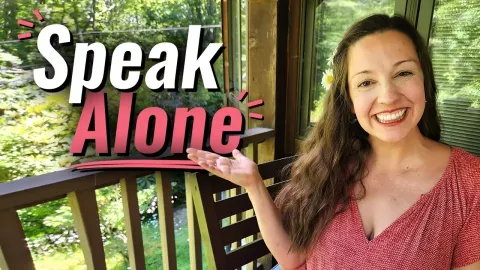
the video, that represents the video on the page. They say you shouldn't judge a book by its cover, but in reality, that's what we all do as human beings, especially in a visual medium like the internet, like YouTube. Now, speaking of the thumbnail or image on YouTube, they give you options, at least, as you can see here, three automatic options that they choose, but we have seen that what works best is to make a custom image because the options that YouTube gives, well, they don't always attract much attention. So, to be very specific on this point, what makes an image appealing or eye-catching? First, you need to have an interesting image, photo, or drawing. Ah, it seems obvious,
but for us what works well, what works best, is being able to see the person or people speaking in the video. So we tried to use a frame, a shot from the video where the person's face is visible. As human beings, we like to see other human beings. Second, it must have text, and that frustrates me a lot because, as I mentioned, we already have to put the information in many different places: the description, the tags, the video name. But they themselves told us, YouTube told us that their algorithm scans the image or thumbnail of the video to see if there is text, and that improves the probability. that they recommend the video to more people. So it's something we've incorporated into our work. It can be seen here that whenever
we add a new class, we try to add a custom thumbnail and also include text in the thumbnail, at least with the name of the class or course. And our web analytics has shown that this does work. So if your goal is to expand your reach or the visibility of what you're offering to more people, these are the things you might want to do. And I hope this helps you decide where to focus your efforts, because it's not entirely intuitive. I always thought, for example, that the most important thing was hashtags or tags on YouTube, and that does help, but not much, not compared to the thumbnail. So it's best to dedicate time to creating a custom thumbnail or a custom image and context as well.
Again, we need to think about the objective for us at MIT, according to MIT's mission, our goal is to share knowledge with everyone, to disseminate and preserve knowledge. So we do everything we can to achieve this goal. I want to finish by mentioning the initiative that for me has been the most important and most exciting in recent years, and that is the Chock Radio podcast. It is an example of not deviating from our goal or our mission, but adapting to better achieve it. About six years ago, we realized that podcasts are a way to reach the awareness of even more people. I like podcasts; I listen to them, for example, while
walking my dog or folding clothes, washing dishes, and they expose me to topics I would never have learned if it weren't for podcasts. So we created the podcast with that idea. These are interviews with instructors who have shared their classes on OCW, and in this way we learn how they teach the classes, how they are structured, for example, what the exams are like, what methods they use, but we also learn the personal context or we learn why they became so interested perhaps from a young age in this subject and why they want to teach it. to other people too, or what their motivations are, and we've had a lot of success with the podcast. From the beginning, we decided to convert the episodes not
only into audio, but also into videos, basically with the idea that we have this YouTube channel that has so many subscribers, so by turning it into a video we can also put it in front of more people. My partner Jason, whom I mentioned earlier, created this cassette and I want to mention that the timing and how the tape runs on the cassette, everything is mathematically correct and I love that, but we realized that this kind of video where you can't see the people is limited. These episodes average around 20, maybe 30,000 views per episode. So at the beginning of this year we decided to experiment with recording the episodes in a studio and we recorded two episodes in February with video of the conversation and the first video currently has over
350,000 views on YouTube. Now, the second episode hasn't been as popular as the first due to several factors, but we also decided from the beginning that we were going to create segments for each episode, segments of 3 to 5 minutes each with specific themes that we took from the interview and publish them separately as shorter segments. And one of these segments deals with the question, why learn programming if AI can do everything? This video currently has over 260,000 views on YouTube, so it seems that it works: seeing the people, seeing the topic from another perspective, seeing the personal side too, because there are people who only watch the classes and understand them. And they like them and maybe
need them for school or work. But there are other people too who may need to hear why this is such an important issue. People who have that curiosity to learn new things and want to hear the instructor's personal story to see how they came to love math or programming. And so the person becomes convinced that yes, it is a topic that interests me and I want to know more, I want to continue learning. Now, the most important thing of all is the impact. And as I mentioned on YouTube, we have over 6 million subscribers and millions more on the OCW website. And every day we receive comments like this, I had to translate it from English and it says this. Thank you MIT, thank you Professor Jonathan Gruber. I would like to express my
sincere gratitude to MIT for offering free courses to students from poorer countries who cannot afford to study at Western institutions. Watching the classes made me feel like I was sitting in a real classroom on campus, surrounded by an academic atmosphere. I felt like the teacher was a friend and studying stopped being a struggle. Thank you for helping me achieve my dream. Okay, as you've probably noticed, I could go on for hours, but I know you have other presentations to attend at Open Saturday, so it's been a huge pleasure and privilege to be able to talk to you, but we
also want it to be a conversation. So if you have any questions, you can leave them with the Linux Dominicana team, and the plan now is that I will answer them in the future in early 2026 in a live webinar, but also feel free to contact me directly if you have other questions or if you ever want to visit us at MIT and meet us in person. The last thing I wanted to say is that we don't know what the possibilities or opportunities for collaboration between us will be, or how we can help each other. But if it's nothing more than two or three of our organizations being united in friendship, having the same goal, the goal of helping the world, improving the world, and helping more people continue learning throughout their lives. So be it,
because it's worth it. So thank you very much and see you in 2026.