19:15
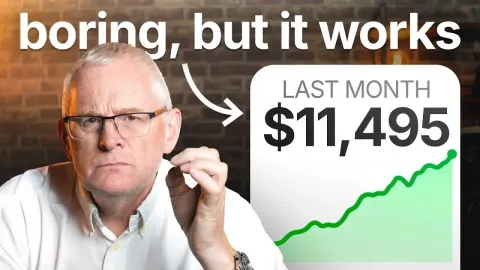



There's a well-known secret in the app space right now, and it's arguably the fastest way to see whether your idea is good or not. Well, I met a guy who executed this perfectly. I had zero experience with mobile apps, so I wasn't sure if it would work. Meet Umberto. He built a really simple mobile app, but instead of launching with a free trial, he did something different. And in 24 hours, he made over $100,000. This is the best way to validate your idea. Most people might tell you this strategy is a bad idea, but Umberto had a playbook, and it worked. So, I asked him to come on the channel to break it all down for me. And in this episode, we will dive into how a very
simple strategy generated over $100,000 in a single day, the exact email sequence you can copy for your product, and why this strategy might be the smartest move for early-stage products. If you're building something and planning on launching soon, then this is one that you cannot miss. All right, let's dive in. I'm Pat Walls, and this is Starter Story. All right, guys, before we dive in, if after watching this episode, you feel inspired to build, well, you're in luck. We built a 9-day boot camp that will take you from an idea to a real working mobile app, and I'm going to be
talking a little bit more about that later. But for now, let's dive into this awesome episode. All right, Umberto, welcome to the channel. Tell me who you are, what you built, and what's your story. Thank you. I'm Umberto, founder of Flogga, a mobile app for yoga teachers and practitioners. We pre-launched it in May 2025 with a lifetime deal, and we generated over $120,000 in just 24 hours. And today, I'm going to break down exactly how we generated those $120,000 this fast. We're going to talk all about launching your app. That's what hopefully this video is going to be about, cuz you did this really well. But before we do, I just want to understand, what did you build? It's an app, it's a product. Can
you just show me what you built and some of the revenue dashboards behind it? So, Flogga is an app for yoga teachers and practitioners and here I can show your revenue card the what happened during the launch days. As you can see, we launched on May 5th at 2:00 p.m. So, by the end of the day we generated $117,000. So, now we have a recurring revenue business model. We have different tiers. We have a monthly, quarterly that is available only on our website and then a yearly subscription. So, at the moment we have about 4,000 active users between paid and free. Approximately right now we are doing between 9,000 and 10,000 dollars a month.
Okay, cool. Thanks for sharing all that, Umberto. That's amazing that you built this and crushed it on the launch. Let's go a little bit back to your background. How do you come up with this idea? How do you build this cool yoga app that's crushing it right now? What's your background? So, my path to building an app was not linear at all. I'm not a developer. I studied economics. I had a brief experience in the corporate world then in 2012 I raised the seed funding for a startup that failed. And after that I stepped away from tech completely. I became ski instructor, worked as a fashion photographer. So, I did a bunch of things. And then I came back into the startup world around 2016 and at the time I was working as an
advertising and growth strategist and I helped several companies scale and that's where I learned how to launch and position products. Then in 2020 during COVID my girlfriend and I created Play Pause Be as a side gig. It was a brand focused on yoga decks of cards that help yoga teachers and practitioners build their sequences and practice them mindfully. We launched our first product on Kickstarter and generated over $200,000 in the first month. And actually the whole brand was about mindful screen-free practice. So, from there to basically launching a mobile app was kind of a big plot twist even for me. But what happened about a year and a half ago is that I started feeling that what we built till that moment could evolve in
something bigger. And the question was, what if I took everything we created from the physical business and transform it with technology, okay? So bring it forward with technology without losing the mindful core. And the one evening I literally sit down, I sketched the concept of an app and I thought, "Okay, we can make it." And a few months later I found a good developer and then we started working. Okay, cool. So you kind of operating in this physical world. You've done some physical product launches on Kickstarter. Maybe you learned a little bit about how to launch a product, which that's what this video is going to be
about today cuz when we chatted earlier, you mentioned that from essentially scratch, you generated over a hundred thousand dollars in the first 24 hours with this kind of launch playbook, this LTD playbook, which I think is like one of the most effective ways to just get off the ground running if you're launching an app, if you're launching a project, if you're launching anything. Can you tell me a little bit more about that? How did How were you able to build something and then make a hundred thousand dollars in essentially 24 hours? What happened? Okay, so the lifetime deal basically is a deal where a user pay for lifetime access to the app. So the first thing I did was to figure out the long-term
vision of the app and decide when we would have been ready to start monetizing. And my approach here is always to monetize as early as you can. So I prefer to build the product and simultaneously building a revenue engine that sustains it. We looked at what was the minimum set of features that we needed to basically convince people to get the lifetime deal. Then I planned the whole launch sequence, so email, landing page, videos, ad creatives, so the full machine. At the same time, I also did some lead generation to reach people that never heard about us. So there was a totally different approach, of course. And basically after a few weeks of warming up the audience and showing of course the app. Well, so
basically what I did is to record the YouTube video where I went through exactly all the feature present in the app. And I basically said, "Okay, the app is going to is work like it work like this right now. We're going to develop these other features. If you want it, you can get it now lifetime, but there is absolutely no refund. If you want to try it, you're going to wait for a couple of months till when we open the subscription plans." So, we got around, if I remember well, between 500 and 600 early customers. And that was extremely valuable, because if someone invested, he's going to be interested in making the app work. So, he's going to give you some very good suggestion. He's going to cheer you up even. So, the value you get out of this is
is huge, really, because a lot of feature we introduce in the next months were based on the feedback we were receiving from these early users. We couldn't have not done it without them. Personally, I love how Umberto is sharing everything about how he made $100,000 in a single day. But, we can sit here and learn from every launch strategy in the world, but none of that matters if you never build anything. And that is why we created the iOS Playbook. It's a 9-day sprint where you will go from an idea to a real working app in the App Store. And you'll do all that without writing a single line of code yourself. We'll walk you through
everything, generating ideas with AI, building with AI, designing your app, and actually getting it live on the App Store. Once you build your app idea, then you can start putting Umberto's launch playbook into practice. So, if you're serious about building your first app, just hit that link in the description below to start your 9-day journey for free. All right, let's get back to the episode. Okay, yeah, so this is the thing that when I talk to a lot of founders and they question doing a lifetime deal like, "I'll never be able to get revenue from these users in the future." But, my feedback and what you mentioned there is that the most important thing is just to get people to
care and commit to your app and get these early users. Don't think about these users as users you won't be able to get revenue in the future from. Think of these users as really, really valuable data and people that may spread the word about your app or show your app to other people. And as long as you do the LTD over a short period of time, you get to pull forward all these committed users who may not actually use your app if there was a free trial or they weren't there. So, you're it's almost like building an early community. I think it's one of the best ways to launch an app if you're bootstrapping like you are. So, that's super cool. I want to dive in a little deeper to the actual launch sequence because you
mentioned that you're able to basically send out some emails and then generate $100,000. I'd love if you could dive in deeper to that launch sequence. Like what did the emails look like? What was the strategy? How were you able to generate $100,000 in essentially 24 hours? So, here we have some of the images we send during the pre-launch sequence. The pre-launch lasted for about a month and 1 week. These emails, the most representative, we transformed them in in some blog post. And here there is storytelling. We don't reveal anything yet, but we create interest. And we put the basis for people to understand what we're going to show them in the following weeks. Then this in the second
email, there is still some storytelling going on, but we reveal a bit more. Here we create a bit of confusion towards our users, the our existing users. Meaning that we put our physical product on the back and then something in front which they can suspect is another physical product or something completely different. So, we create a lot of curiosity. And then here this there is another email. I don't remember if we sent other in the middle. Just these are just the most representative ones. But here we unveiled basically what was behind the red curtain and we showed the app. And we explained the pretty shortly why we did it and we linked to a video where we
present where I present a the app at that specific moment. And yeah, and then we build up towards the launch and towards the end of the pre-launch as I like to call it, we explain how it's going to work with the lifetime deals which are always limited in a number and limited in the in time frames. And this gives to lever to basically reduce the procrastination that basically everyone has. And it works very effectively. Another thing, I never ever show the price of the product before the day of launch because otherwise people are going to make the purchase decision based on price. During the warm-up campaign, they need only to evaluate the purchase of the product based on the features and the long-term vision. Okay, if
you put the price, you kind of ruin the whole thing because there is going to be this other element that they cannot unsee anymore and so never show the price before the actual launch date. Okay, Umberto. Thank you for showing this. I mean, this is amazing that you publish all this on your blog for anyone to read and be helpful for anyone who wants to watch a lifetime deal. If you've made it this far into the video, I just want to say that this right here is amazing. Like this is so helpful for people who want to launch something and maximize that launch. If you're watching this, we'll put a link in the description for you to be able to download all these. My
recommendation, if you're launching anything, maybe take these, copy them, plug them into an LLM and see how you can kind of build this sequence for your product because the building of curiosity and the positioning that you had is really smart and I imagine you got [clears throat] I imagine you learned a lot of this from your experience with physical products and Kickstarter. This is something that I see a lot of people successful with launches do something similar to this. So, thank you for sharing that. I want to talk a little bit more about coming up with a great product idea, a product idea that's going to sell well if you were to do a launch. What would be your playbook if you were starting over with
all your experience in building digital products and having successful launches? What would be your playbook if you had to start over right now for anyone watching this who wants to have a great launch? Well, step one, validate before you build. Before you even write a line of code or start building the actual product, I would talk to five to 10 people in the in your target market. Ask them about the problem you're trying to solve, but never tell them why you're asking. So, you want an unbiased honest reaction, okay? So, in our case, we did this with some of our physical product customers, and we got some really good feedback exactly because we didn't lead them. And
there is a great book about how to do this properly. I suggest you to read it. It's called The Mom Test. It's very simple and it gives you some interesting insight about this. As a second step, I would put define your minimum launchable product. So, once you have validated your idea, the next question is what is the minimum development stage where the app can convey the app or the product can convey enough value to get early adopters to pay for it. Once you know what that looks like and also you have an estimate of how long it takes to build it, you can start planning everything else around that timeline. And then step three, build your content machine before you start promoting. That's that's extremely important. So,
before you start any lead generation or lead nurturing, you need a buffer of content ready to go. So, email graphics, videos, landing pages, all of it. And there is another important thing, which is put yourself in the user's shoes because there are things that are obvious to you that are building the product, but needs to be explained simply and clearly to the end user. Okay? So, for example, when we launched our physical products, nobody knew us, so we had to create trust and also educate them on the specific platform so that when they had to make the choice, they were ready to do it without hesitations or doubts. Step four,
pricing. This part is crucial. Don't just throw a number, structure it, and I see a lot of founders that price it very low because they're scared that nobody will buy because the product is not ready and for other reasons, and I believe this is a mistake because you're leaving uh serious money on the table. So, what I did was create three tiers. The first tier gave a lifetime access to an limited set of uh features, and the price was around $109. The second tier, in our case, we priced it at around $199, and uh we included more features. And then the third tier, we give uh everything you plan to build, so the full vision. And in our case, we priced it at $349. Also, the psychology here is
that the first two tiers actually helps you sell the most expensive one because they create a sort of uh reference, okay? And they also capture those skeptical users that are not really sure about the product. Then step six, uh launch mechanics. I recommend you to be completely transparent. Show how the app is working. Be clear about exactly what is there, what are the current limitation, and how also you plan to improve it. And then set a clear line, so no refunds, okay? Otherwise, your lifetime deal get jeopardized. And if someone has some doubts or want to try it first, they can wait for the subscription model, which is going to come afterwards. Again, uh another thing, limit the time and limit the
number of spot. So, 5 to 7 days maximum in my opinion. This force people to make a decision instead of procrastinating. And this worked uh very well. Okay, cool. So, I mean, that's an awesome playbook. I think a lot of people watching this, especially if they're building bootstrap, they're trying to have a great launch to really kick off their product and set it up for a success. This is amazing. So, thank you for sharing that. I want to push back a little bit on the idea of lifetime deals. [clears throat] In, you know, if you were to ask like an investor or, you know, someone that's more raising money for their business, they might say something like lifetime
deals are bad because you're foregoing all future revenue from a customer. And, you know, on paper, if someone were to value your business, they might say, "Well, actually, you know, it's not that valuable because they've you've gotten all the revenue up front and then there's now no more opportunities for revenue generation. So, what do you think about this? Do you regret doing the lifetime deal at all? And what would be your response to this? So, no, I don't regret doing a lifetime deal because I strongly believe that when you're early, you don't have data. You don't know your LTV. You don't know your churn. You basically have assumptions, right? And a lifetime deal converts those assumptions
into real money in your bank account. There is another thing that people don't talk about that much. This is incentives. Monthly subscribers have optionality, okay? Lifetime buyer has commitment. And this change everything. So, someone paying month to month, if something breaks or if there is a bug, can just stop the subscription, give you maybe a bad review and then no feedback. While somebody that purchased the app, okay, is interested in to making the app amazing. So, they're going to report bugs. They're going to send detailed feedback. In our case, we even created a Telegram group with all these early adopters. And these have brought us enormous value. Last but not least,
there is a lot of people that just hate subscriptions. Among these people, their willingness to pay lifetime is easily three to five time more compared to a yearly plan. So, if you do the math right, early stage a lifetime deal is the smart smartest move you can make. You're basically raising capital from your customers without giving away equity, control, board seats, and getting amazing feedback. So, I don't think there is anything better than this. Yeah, I mean, I agree. Sometimes I think about lifetime deals as just a pricing strategy. If you can understand if someone's going to subscribe to your app for 24 months, what is the total amount of revenue you're going to get
from that? Well, you can price your lifetime deal, collect that cash up front. If you do that, you're really not missing out technically on revenue. So, I think that's cool. Want to switch topics a little bit and understand what you built. Would you be able to give me a little demo of this yoga app that you built? I'd love to see. Yes, of course. This on the top is our first feature. This is called sequence builder. So, you tap on a yoga style and you have bunch of poses. Okay, this is Ashtanga Vinyasa. It's very intuitive. You can swipe up to select the pose. You can filter by category, chakras, benefit. We even have an intelligent feature which suggests you poses that make sense after the one you do you have to select it
basically. And if you tap on a pose, you also have detailed videos about how the pose is going to work. There is a ton of useful information for teachers and practitioners. And then, tapping next, you can personalize further. You can move things around. You can personalize the timer in each pose, right or left side. You can go on the detail again, and then you can start your practice and you're basically going to be guided on your personalized practice that you have built. Cool. All right. Well, let's on that note, I'd I'd be curious. What's the tech stack behind this app that generated $100,000 in about 24 hours? So, we use Flutter for development, Firebase, which costs us around $25 a month. Then, RevenueCat to handle
subscription. And we host the video on Vimeo. We already have Vimeo for our other business, so the videos are there. And OneSignal for push notifications. Okay. Well, thanks for sharing that. Last question that we ask all founders come on Starter Story. If you could go back in time and give yourself advice before launching this digital product or even before you got started in entrepreneurship, what would be your advice to young Umberto or anyone watching this who wants to do what you do? Well, stop waiting for perfect.
Perfection is just uh fear disguised in uh as preparation. The real breakthrough happens the moment you put something, which might be unfinished, in front of real people. And uh there you get feedback. Feedback can be uncomfortable. And uh so if I could speak to myself, to my old self, I'd say move sooner, ship earlier, and trust the process. Uh and you learn faster in public than uh you ever do in private. Well, that's great advice. Thank you, Umberto, for coming on, sharing all this, being so open about the launch sequence. I think it's going to be really helpful for a lot of people watching. Let us know in the comments what you thought about this launch
strategy, lifetime deals. I love it. Thanks for coming on. Thank you. Producer Gus, uh what did you think about this one? I thought the coolest part was Yeah, I really like how he broke down like all the email sequences, like how he warmed up his audience. It was really like tactical. And it's cool that he published all of them. So yeah, that's kind of one of the first things I'm thinking about after this interview is wow, like if I ever want to launch something, I'm just going to go to his blog and kind of check out what he wrote and try to like implement that. So that's the first thing. Yeah, what did you think?
The moment he said that I had experience with Kickstarter launches, that everything clicked for me. I was like, okay, I see. Uh this guy knows how to launch products. And so hopefully a lot of people watching this realize that, too, and realize there's a lot to learn from this. He took his experience launching a physical product and collecting cash up front, which is the whole concept of crowdfunding, and he sort of transferred that over to digital products, which are, I think, the future and a great business to be building. I think this is an underrated strategy. I mean, we have lots of videos on the channel about lifetime deals.
It's very like, you know, it's not the most traditional way of doing things. If you were to raise money as a VC, they would say hell no, never do this. But as a bootstrap business to get off the ground running and be able to collect $100,000 up front, that's a huge boost to the business. Not only are you collecting revenue to help invest in the business, you're getting motivation to keep going because you have all these customers that are excited about it and you have this road map you can build. And a lot of people want to crap on this strategy, but I actually think that um you know, just from what I see, I talked to a lot of founders, a lot of really successful founders that now have lots
of MRR and sell their business and all this stuff, they started with a lifetime deal because it's a great way to get started. Yeah, I was thinking about this, you know, at Starter Story, you know, we've done a lot of these like email sequences and like, you know, lifetime deal things at certain times of the year. We've seen that like Black Friday or end of year or some other like, you know, so we've kind of done this a lot and I've been part of that like writing the emails and getting that set up. A lot of people crap on this idea, but you've, you know, you slash we've done it a bunch. So,
No, I mean, go sign up for most digital products. Look at companies that are like really successful ones, like companies that are doing millions per year or sometimes even like billion dollar companies. Go sign up for their products, so their emails like under the free email list and you'll notice that they send crazy amounts of emails, crazy amounts of deals. Um go sign up for any e-commerce product and look at what happens during, you know, a Black Friday or Memorial sale. They're always running deals, they're always running discounts and they're sending lots and lots of messages over email and text. This is marketing, it's sales, it's marketing, right? This is what big companies do. I think a lot of people watching this are afraid. I don't want
to bother people, I don't want to, you know, feel like I'm spamming them or whatever, but this is what you need to do if you're in marketing. If you go and see these huge companies doing it, you don't have to do it as aggressively as them, but it is what is essential to build a business. Um, you know, to stand out in the sea of all these other products. So, that would be my response to that is like it's that's that's part of the game. We did it because I saw a lot of other people who are very successful that were doing it as well and people can just unsubscribe if they don't want to see it. So, thank you guys for watching. Let us know what you thought about this lifetime deal strategy. I put a link in the
description to get a little bit more about this strategy specifically and how to find an idea that can make hundreds of thousands of dollars in 24 hours. Hope you enjoyed it. We'll see you in the next one. Peace.