17:07




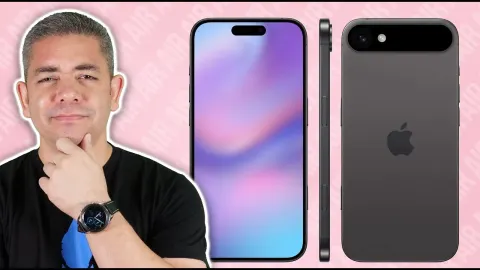
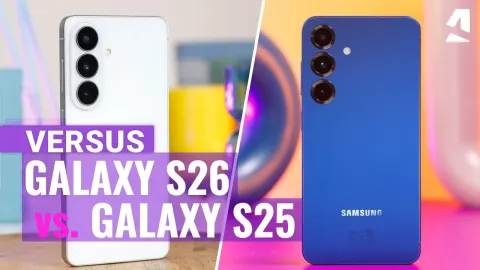
The iPhone Air is Apple's thinnest iPhone ever. But with that form factor comes trade-offs. With the most glaring one being battery life, where even though Apple is stacking most of the phone's components into what they're calling a camera plateau, the Air only has a 3,149 mAh battery. That's nearly 20% smaller than the one on the Galaxy S25 Edge, which despite only being a hair thicker, still packs an ultrawide camera and stereo speakers. Of course, Apple's always been known for getting more out of less. And with the A19 Pro and iOS 26, they even went as far as calling the Air the most efficient iPhone ever. Will that be enough for the Air to get the win over the Galaxy, or will Samsung's
ability to pack in better specs give it the edge? Let's find out. This episode is sponsored by Ridge, who sent out their new iPhone 17 cases and power banks. I've been using the Ridge wallet for years now. It's still going strong. So, I was excited to hear that they're bringing that same attention to detail and build quality to the other stuff you carry. Like the Ridge Power Bank, for example, where no matter how good your phone's battery is, eventually you're going to need to recharge it. And with 10,000 mAh hours, this one's going to be able to do it multiple times. It's basically a 5 in one where it snaps to the back of your phone with Maxafe. That same pad can also charge your Apple
Watch. And you've also got these built-in braided USBC and lightning cables on it where you can charge your other devices or your legacy AirPods. There's even a USBC port at the bottom here if you ever need it. And to top it off, there's also a kickstand so you can prop your phone up in either portrait or landscape. And that same design philosophy also carries over to Ridg's iPhone 17 cases where they're both slim and protective rated for up to 8 ft of drop protection with a rigid back and these soft edges to help absorb impact.
The buttons have a nice feel to them. The case is fully Maxafe compatible and there's even a touch sensitive camera control built right in. Keep your phone both powered and protected by checking out the link down below and using my offer code for 10% off. All right, we'll kick things off in the phone app where after going on the same 1 hour phone call, the iPhone seems to have done better, dropping by just two points to 98, while the Galaxy's down to 96. So, a good start for the iPhone early on. But here in messaging, where both phones are actively texting back and forth with our automated chat bots, this time the Galaxy does two points better, meaning we are all tied up as we head into
email. Now, it's worth noting that we calibrate the displays on each phone to 200 nits. So everything is going to be nice and fair here where 60 minutes later the two actually perform identically which lines up really nicely for this browser test since it'll let us see which chipset is more efficient as we have each phone randomly cycling through the same set of websites where wow at least according to the battery indicators the Galaxy does four points better there giving it its first lead of the test as we start working on Instagram now since we're using robots to actually scroll through the home feed like you would in real life instead of just having the phone sit there. We'll
get to see how efficiently each phone handles ramping down their refresh rates between each scroll where 60 minutes later it looks like they did about the same with each dropping by just six points. Meaning heading into the 16 hour standby, the Galaxy is still holding on to that four point lead. Of course, that can change here since Apple is calling the iPhone 17 Air their most efficient iPhone ever. But at least when it comes to the phone sitting idle, that's not the case with the Galaxy doing better, increasing its lead up to six points now. So, the iPhone has dug itself in a bit of a hole. And things might get worse here in YouTube since we calibrate the speakers on each phone to the
nearest decel count. And given that the iPhone Air only has that single speaker, we had to crank up the volume just so it can match the stereo speakers on the Galaxy. And after an hour of binging phone buff, it seems to have cost it with the Galaxy being able to add yet another point to its lead. But we'll see if the iPhone can turn things around here in gaming where we have our robots continuously tapping on the screens as they play Alto's Adventure, which you know, it's definitely not the most intensive game out there. It's actually pretty lightweight, but it is still taxing the GPUs on each phone, and it should give us at least some indication as to their efficiency. where 60 minutes
later, this time the iPhone does better. Not just in terms of the single percentage point, but also in terms of efficiency with it using only an estimated 314 mAh of its capacity compared to the 429 estimated millah usage on the Galaxy. So, a bit of good news for the iPhone, but let's see if it could keep it up here in maps as we simulate navigation with GPS and the compass turned on, each phone actively checking for traffic information, and with us scrolling through the map where no, the Galaxy edges right back, negating the iPhone's 1point advantage from the last app here in Spotify. I am interested to see how things play out since on the one hand, the iPhone is firing that single speaker
louder in order to match the total volume output from the Galaxy's stereo speakers, but then again, the Galaxy has stereo speakers, meaning it has two speakers active as our robots listen to music. Plus, it also has that slightly bigger screen. And 1 hour later, it translates into the iPhone doing one point better. So, it's still six points behind as we start working on Snapchat, which is easily the most intensive test that we've done so far. A lot of phones don't even make it all the way through this test since the screen, the camera, the microphone, the speakers, and Wi-Fi are all being used in a loop where 30 minutes into it, the iPhone has actually cut down on the Galaxy's lead from six
points all the way down to three points. though we may just see a comeback where another 25 minutes in, oh man, it is getting close. The Galaxy is definitely draining at a faster rate with it getting all the way down to the same 1% left. But no, the iPhone can't hold on with it dying first with that last percent on the Galaxy only lasting it another minute, which for me is well within the margin of error. So for all intents and purposes, this one is a tie. Anyways, that is it for me in this video. Thank you for watching and as always, I'll see you in the very next episode.