18:48



Solar eclipses don't just happen here on earth - moons of other planets also pass between those planets and the sun, resulting in various types of solar eclipses on Mars, Jupiter, Saturn, Uranus, Neptune, and even non-planets like Pluto, Eris and various asteroids. So "where are the best eclipses in the solar system?" is a question that is best answered with a tier list. So, where are the best eclipses in the solar system? For that, we need a tier list from most to least impressive. Total solar eclipses on earth are, after all, pretty darn impressive: the midday sun is blotted out and it looks like there's a dark gaping hole in the sky - we get to see the sun's
glowing corona around the inky black dark side of the moon, stars come out, the horizon looks like a sunrise is happening in any direction you look. Part of why eclipses are so great on earth is that the sizes and distances of the moon and sun work out so they appear similarly big in the sky, so the moon can block the sun but not the corona. And totality happens so rarely on any particular place on earth and is over so quickly it's a very rare experience and you don't really have time to process what's going on/what you're experiencing. I think this all makes eclipses here on earth a
pretty superb - aka S tier - phenomenon. So are eclipses on the other planets in the solar system any good? Are any of them better than ours? Let's start with a non-planet - the Moon. From the moon, a lunar eclipse (which is when the earth blocks the sun's light from the moon) from the moon, a lunar eclipse is a solar eclipse. But there's no atmosphere on the moon, so you don't get any darkening of the sky or sunrise in all directions since the sky is dark to begin with. And the earth is so big it would block the sun's corona, and take several hours for the
eclipse to pass. The eclipse would probably feel similar to lunar night, except that you would see a dusky red glow around the entire rim of the earth due to sunlight scattering through the earth's atmosphere. Which is pretty neat. B tier. Mercury and Venus are next. No moons means no eclipses, unless you count the fact that Mercury sometimes passes between the sun and Venus, but it's way too small to do anything we'd remotely consider to be eclipse-like. N tier for "no eclipses." Mars does have eclipses, but both of its moons are too small relative to the sun to cause a total eclipse; Phobos is close enough to Mars
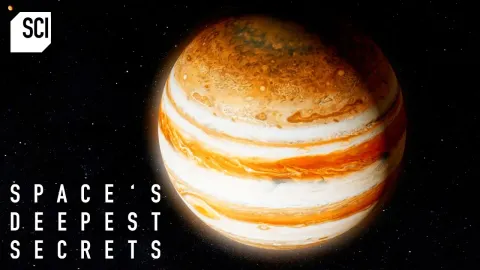
that it can cover as much as 30% of the sun during eclipses, and you get a lumpy "ring" - you'd need to wear solar glasses to see it, though. C tier. The other moon Deimos is too far away to cover more than about 1% of the sun, and appears small enough you'd just barely even be able to see it with 20/20 vision through solar glasses. D tier. Jupiter has some spectacular eclipses - at least, viewed from space - it has enough moons, and big moons close in, and the moons orbit close to the same plane as the sun, so that Jupiter regularly has eclipses - sometimes multiple at
the same time. But do they look any good from Jupiter itself. say, floating in its upper atmosphere? Three of the big moons are so big they block the sun and probably most of the corona, and their shadows would be large enough in the atmosphere you probably wouldn't see much "360° sunrise" either - you would see a lot more stars, though - it would look more like nighttime. B tier. Callisto, though, only appears about one and a half times the size of the sun and so would allow you to see the corona and the 360° sunrise. Jupiter is also big enough you might
see the surface of Callisto itself illuminated in reflected Jupiter-glow - does that make it cooler than how our moon looks like a dark hole in the sky? I don't know. And the sun and Callisto are about 5 times smaller viewed from Jupiter than our moon viewed from earth. but unlike earth where eclipses happen only a few times per year, Callisto's eclipses happen approximately every sixteen days for three years straight (and then have a three year break). All in all, I'm giving Callisto's eclipses on Jupiter A tier. Jupiter's smaller inner moons [Metis, Adrastea, Amalthea,
Thebe] all have partial eclipses substantial enough to be interesting viewing by the human eye with eclipse glasses, so they get C tier, while all of its outer moons are too small and far away for their really boring partial eclipses to be visible without a serious telescope. F tier. Saturn has almost 150 known moons, plus rings, so it has all sorts of eclipses. About 18 of its moons are some combination of big enough and close enough to see them from Saturn with the naked eye - 6 of them are too big and their eclipses probably look mostly like night time, so,
B tier [Tethys Titan Dione Rhea Mimas Enceladus]. And 8 of them are too small to fully block the sun and would require solar glasses; I'm putting the "largest" 3 of these in C tier [Iapetus, Atlas, Pan] and the others in D tier [Hyperion, Helene, Telesto, Daphnis, Calypso]. However, 4 of Saturns moons are similar enough to the sun in their apparent sizes that their eclipses would be similar to total eclipses on earth - you'd see the corona, the deeply colored sky and 360° sunrise, a dark "hole in the sky" where the sun was (or the moon illuminated by
Saturn's glow), and so on. I'm putting two of these in A tier (rather than S) because the sun is just so much smaller viewed from Saturn [Janus, Epimetheus]. But two of them - the moons Pandora and Prometheus - are just the right size to create both total and annular eclipses; they're the only moons in the rest of the solar system we know for sure can do that other than our moon. Plus they have potato-like shapes, so partial and annular eclipses would be more visually interesting than our boringly spherical moon. S tier. Editor Henry here - I just realized that
what I said about Pandora and Prometheus being the only other moons that can have total and annular eclipses - that's wrong. Janus and Epimetheus can also both have total and annular eclipses, and probably Perdita on Uranus, too! Here's what I missed: if an eclipse happens at sunrise or sunset, or near the poles, then the moon causing it will be farther away (and thus appear smaller) than if it causes an eclipse at noon (and on the equator). And when a moon appears smaller, it might cause an annular rather than total eclipse, or reveal more of the sun's corona.
This "sunrise shrinking effect" is technically true for all moons and all eclipses (and is the cause of "hybrid" annular/total eclipses here on Earth), but if a moon is far away relative to the size of the planet then the effect isn't particularly big (which is the case here on earth). I updated my eclipse calculation spreadsheet which now shows Janus and Epimetheus can have partial and total eclipses, too! So they are back to S tier. The other place where the sunrise effect makes a big difference is on Mars, whose moons are noticeably bigger
overhead and smaller when viewed on the horizon. The rest of Saturn's moons are too small and far away to see from Saturn's "surface" - aka upper atmosphere - with the human eye - F tier. But Saturn has rings, too! Is it technically an eclipse when Saturn's rings cast a shadow on the planet? I don't know and I don't care, it looks spectacular. S tier. Once you get past Saturn, you're far enough away from the sun that it starts to appear more like the star that it is - just a point in the sky rather than having a distinguishable disk. I mean,
even from Saturn the sun only appears 10% as big across as from here on earth. Uranus is almost twice as far away from the sun as Saturn, so the sun appears half as big again, and it's even worse on Neptune, where the sun only appears slightly larger than Jupiter and Venus do from Earth! With the sun so small in the sky, it's a lot easier for the apparent size of moons to be WAAY bigger than the sun - for example, Uranus has around 15 moons that appear way too big (relative to the sun) and would result in nighttime-like total eclipses, with maybe just a little 360°
sunrise on the best of them; I'm putting them in C tier [Ariel Umbriel Miranda Titania Portia Oberon Puck Juliet Cressida Belinda Desdemona Cordelia Rosalind Ophelia Bianca]. The moon Perdita has the best total eclipse on Uranus (and probably also annular eclipses), and it would be A tier except for how small the sun is, so B tier. There are two more moons [Cupid, Mab] that aren't big enough for total eclipses but whose annular eclipses are technically big enough to see with solar glasses - D tier. All the other known moons are way too small - F tier.
Neptune isn't much better - seven of its moons appear WAAY too big and completely block the sun - D tier [Triton Despina Galatea Proteus Larissa Thalassa Naiad]. Hippocamp is actually a great size, appearing just barely bigger than the sun and probably has 360° sunrise, views of the corona, and the rest - again, B tier because of how small the sun is. The rest of Neptune's known moons are too small to see: F tier [Nereid Halimede Sao Laomedeia Neso Psamathe]. Finally, we get to Pluto - yeah, it's not a planet, but it still has eclipses. Problem is,
they suck/they're horrible. Pluto has five known moons, and the smallest two [Styx & Kerberos] are actually the perfect size for just-barely-total or mostly-full-annular eclipses - except from Pluto, the sun appears as just a point of light in the sky (it's essentially a really bright star), so you couldn't see any detail of partial or annular eclipses without a telescope. And there's no atmosphere, which means no 360° sunrise or the like for total eclipses, and the sun is probably too small for the corona to look like more than a star either. Basically,
if Styx or Kerberos fully eclipse the sun, it just feels like normal nighttime. And when Styx or Kerberos have annular eclipses, you wouldn't notice anything other than a slight dimming of the sun. D tier. The other three moons [Charon, Nix, Hydra] appear substantially bigger than the sun and easily eclipse it - especially Pluto's double dwarf planet partner, aka it's oversized moon Charon. Given the minuscule size of the sun viewed from Pluto and Pluto's lack of atmosphere, these are not at all interesting eclipses. The only reason they're not F tier is that they are
technically an eclipse you can see. So, D tier. And we're not done yet! There are still other eclipses! Eris (another dwarf planet even farther out than Pluto) has one known moon, but it's so much bigger than the sun and Eris also has no atmosphere that the eclipse is definitely D tier. There are also a lot of double asteroids in our solar system and there's enough variety in their sizes and distances and such that some of the "moonlets" appear much bigger than the sun, some much smaller, and some very close in size. They're mostly closer to the sun than Jupiter
and some get as close as Earth, so the sun is a decent size in their skies; but they all suffer from a similar problem as Pluto and Eris - no atmosphere, which makes for fairly boring eclipses. The best of these are probably C tier. If you want to get really nerdy, of course, it's possible for moons of planets like Jupiter and Saturn to eclipse each other, too. but evaluating the relative distances and apparent sizes relative to the sun for all possible moon combinations and positions for hundreds of moons is definitely beyond the scope of this video. And that completes the tier list. Thanks for watching!