5:07



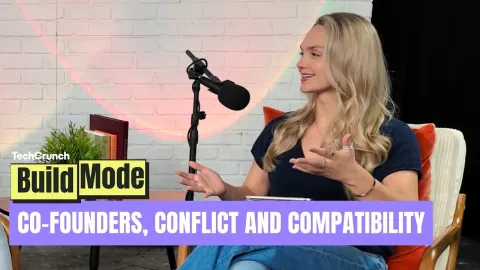
Hey builders, welcome back to Build Mode. I'm your host Isabelle Johannes and today I am here with the producer of Build Mode, Maggie Nye. Hello. I'm super stoked to be here. We are really excited. We're currently editing and making an amazing season which is going to be all about fundraising. So keep your eye on your feeds for that. If you haven't already, definitely make sure you subscribe so you're notified when that comes out. But in the meantime, we are putting out a couple of these clip shows which are covering all sorts of different topics. We're compiling tips and advice from some of
our guests that we've had over the last two seasons. And something as I've gone back and looked at these conversations, I really admire and love that these founders and experts have been so honest about missteps that they've made. And Maggie, you're pretty much getting a an education in founderhood by reviewing all of these episodes and all the footage. But this week, Maggie's compiled a an episode of um the stories of early mistakes that our guests have made that everyone can learn from. Yeah, you know, mistakes happen. Being a founder is hard and you're learning a lot on the fly and there are so many moving pieces especially in the early days as you are trying to build your
infrastructure, get a great team behind you, you know, build partnerships with VCs. So without further ado, let's get into it. For our first clip, we're going all the way back to our very first episode with Dion Nicholas, a startup Battlefield winner and the co-founder and former CEO of Foreai. And he's currently the CEO of his new venture, Espa Labs. And what really struck me about this conversation with Dion is not only is he an extremely smart businessman and product developer, he is a true student of the startup industry. I really suggest going back and listening to this full episode because he walked us through how he let failed iterations really lead him in the right direction for forethought that not
only led to a dedicated user base but a very successful exit to Zenesk. So, in this clip, he shares his mantra or idea or rules or whatever you want to call it that he found to help guide himself and his team when they're trying to find product market fit. Okay, so I have it's it's I have two rules of product. The first is this. The first thing that happens when you launch a product is nobody uses it. Okay, great. That is rule number one. And the second rule is that any product is within seven iterations of a successful product.
These are all made up. It's just like all the numbers are made up. But it's it's like weirdly freeing and I think actually more accurate to think this way because most founders I myself in the same way. I used to be this way. Like if you have like a lot of cool ideas, you're like I like this technology d you end up thinking if you build it they will come. like you just build it, you launch the product and everyone's going to come and you know so what ends up happening is you build the product that would exist if you had like a million users. Let's take like a social network for example you know when I was at Facebook Meta I was thinking about social networks and just like kind of the dynamics of that you
were to launch a social network or if you ask a founder who's building a social product the first thing they'll they'll show you is the feed and like all of the features that assume there are users on the app. But the truth is that the first thing that happens when you launch if you were to launch a new social network is nobody uses it. And so you would have to build a single player version of the app or something that has utility for that core audience before you build the version of the app that has a million users. And that's true that cold start problem is actually true in like every industry. And it's also kind of goes back to this like launch, go talk to your users, that's really all that
matters. and you actually don't know beforehand what the behaviors of the users are going to be. And so it's like this like weirdly freeing mantra I have. I mean I made it up. It's it's fake, but like it's like something I tell founders all the time, which is like look, if you knew that you were within seven iterations of the right product, what would you do? And you know that the first product you launch is not going to work. And I think it really changes your mentality and focuses you back on that kind of lean startup mentality of like I need to get in front of users. I don't know my users better than they know themselves, but I can be a better listener. I can learn and then like iterate and build and so that's
kind of like my approach um to finding product market fit, so to speak. Yeah. Know, but that's interesting and I think it must be really freeing, right? Because I know a lot of founders and I hear this all the time that you know it their company is their baby and they're they're so protective of it and I don't want to launch it to the world until it is perfect, right? But what does perfect mean? and knowing that, you know, I'm going to allow myself seven iterations of this, seven whatever failures. I don't like putting it as failures, but seven iterations before I even expect myself to or our company to get there. And I think that yeah, can lift a lot of founder anxiety, which is what we're aiming to do here today.
Here we go. It's build mode. So, obviously here at Build Mode, we know building the product is extremely important, but hiring the right team to help bring that idea to life is absolutely paramount. So, next up, you're going to hear from Jasper Carmichael Jack, the co-founder and CEO of Artisan, the AI company that despite being most wellknown for their very divisive stop hiring humans campaign, does in fact hire quite a few humans. Jasper is a young founder and like so many founders early in their career, he's learning as he goes, especially when it comes to hiring and firing and keeping his team happy.
I've made a lot of hiring mistakes. Um, yeah, like a lot with in every single role. Yeah, I feel like you learn new things about hiring every time you make a hire and it fails. I think we've probably hired over 100 people to have the 40 people that we have now just from either having to fire a lot of people or from people leaving and going to other companies. Like you learn a lot every time you hire someone doesn't work out. You're like, "Okay, I need to readjust in this method." the well let's talk about some of those learnings because I think there's a lot of really interesting kind of probably lessons that other founders would love to hear from this. So what are some of the sort of key mistakes you learned early on?
Yeah, one can be logo shopping like if you're like oh they worked at Google they must be good or oh they went to Harvard or Stanford or MIT they must be good and then not actually take into account that they didn't seem that great in the trial task or in the interview process. Done that a few times. Never really works out. I think you can kind of sense someone's raw intelligence when you speak to them. You got to index on that, an index on the work that they've done and the work that you perceive they're going to be able to do, not taking into account just the logos that they have on their CV.
Yeah. But it's interesting you say that cuz I mean I know you're pretty young. I'm fairly young myself, but like when you're hiring someone who's fresh out of college, it's really difficult when they don't have any experience. I mean, how do you have is your team generally younger? They're they're a bit younger. I don't think anyone that I've hired fresh out of college has not worked out because I think you when someone's fresh out of college, you're really judging them purely based on how they speak to you and how they communicate and what they do in a trial task, which kind of makes it easier because you don't have your judgment clouded. You're not looking at, oh, they worked at Netflix
for the past two years, so they must be amazing. Um, so whenever I've hired someone either in college or fresh out of college, I think it's always worked out, unless I'm forgetting the time that it didn't work out. Interesting. Yeah. And um I mean what other mistakes have you made? I mean I think so obviously logo shopping but there must be other. Okay. So logo shopping was a huge mistake. Hiring people who are either too senior or not senior enough is this impossible goldilock zone where you don't want someone who's three stages ahead of where you're at right now because inevitably they're not going to be able to deal with how small your company is. And if you hire a VP of sales from a huge company when you have two sales
people they're going to say like where's my product marketing team? Where are the assets? Where are all these different things that you won't have? But again, you don't want someone too junior. You don't want to hire an AE and make them your head of sales. If you got 10 AES, like it's just unlikely to work out. Another one is probably when you move too quickly in the hiring process cuz you get really excited about someone and you give them a full-time offer immediately. Maybe it's remote, you haven't met them in person, you haven't actually worked with them, and you go full steam into it, and you end up realizing a few weeks in, oh they're actually not a great fit for this role. And then it's really awkward
to fire someone after you just hired them 3 weeks ago. So I would avoid that at all costs. And then in the hiring process, if you don't communicate your expectations well, you end up with people who have completely misaligned expectations. Like if you don't tell people that they need to work really hard in the role and that it's going to be abnormal hours and they'll be work on weekends sometimes and they come in and they start and then they find that out once they're already in the role, they're going to be very disgruntled and they're going to leave and they're going to tell everyone about how terrible of a company you are. We had that happen once. So up next we are going to hear
from someone on the other side of the table. Yuri Sagalov from General Catalyst discusses what are the early signals founders might not even know they're sending to investors in the way that they structure their time and compensation. That full episode is another really great listen especially for founders who are thinking deeply about the infrastructure of their startup as they're beginning to scale. I hear a lot of founders that, you know, are waiting to leave their big cushy tech jobs until they raise their first round or until they hit some, you know, specific milestone. What have you seen with founders that are kind of waiting until they get funded? Or do you prefer as an investor to see them take that
plunge and put the risk on themselves? I think it depends a little bit on circumstances. So, if you have a family, you know, it's hard to leave a job before you have a little bit more certainty. If you're on a visa, you legally may not be able to leave a job until you have the funding situation figured out. But you do want to see like if those things are not holding you back. Like I do always wonder like if you're so truly passionate about what you want to build, like take the risk, right? Like go and start. Do you really need the safety net of the job? And so I do think it's a green flag when somebody is so passionate that they quit their job or quit whatever they were doing. they couldn't stop thinking about this
idea and they're like and they're just like, you know, I don't know how I'm going to fund this, but I know this needs to be built and I'm going to spend my time on it with a caveat of like sometimes it's just not possible for a variety of reasons. Yeah. And I mean, it's a huge risk. It's one that I would be scared to take. So, I completely understand that, you know, founders would be hesitant, but I've also heard from VCs that, you know, it's a red flag for them. So, I'm I'm glad to hear that, you know, it's circumstantial and people, you know, will look at the whole picture. Are there any other sort of as you're looking at very early stage companies green flags red flags that you look for in terms of the very base of the structure things that are
difficult to reverse later right I think that the mo anything that's nonvanilla from a formation documents perspective is always a bit of a red flag uh it could be like non-standard vesting structures it could be weird incorporation locations it could be any number of those things and the part of the thing that I always wonder is that like is this really where you want to be innovating in your business? You know, there's thousands of startups, you know, there are lawyers in the valley who specialize in this. The documents at this point are at the point where you can literally go on something like clerky and do one-click incorporation and every VC in the valley knows that this is standard. And if you're choosing
to do a non-standard, I do ask myself like why, right? Is that like is that the most important thing to your business? So that's often a bit of a red flag just on the legal side of things. So people are really trying to innovate in their company structures from that stage. Yeah. I think it's usually a mix of bad advice like somebody will give them some cookie cutter or like fortune cookie advice rather of like I wish I had one year vesting, two-year vesting instead of four year vesting or no cliff like why would you do a cliff? But I think that like the more you keep that stuff vanilla and don't like that is truly not where you want to spend your time as a founder, right? like build your business, build the product, get
customers. The legal stuff for 99.9% of founders is standard for a reason at this point. To Yuri's point, there are plenty of resources for founders to set up the legal structures and compensation infrastructure for their early employees. And the clip you're going to hear next is somewhat of a cautionary tale from a founder that perhaps didn't outsource these tasks early enough. Isaiah Granite is the co-founder and CEO of Bland. And in this clip, he shares some of the early mistakes he and his team made and his advice for founders who are trying to manage and prioritize in the early days when you're building
trying to get investor interest and manage payroll while you don't have an HR team yet. Something that is not talked about nearly enough is making sure that your employee equity grants are set up correctly. And this is something that you can't undo, especially if you're a really fast growth company. And one of the things that I recommend to every founder is take a couple of hours, sit down with a corporate lawyer, and make sure you have all of your ducks in a row. We had YC help us do a great job getting the starting point, but as you're growing, you don't think about options and strike prices and making sure that people are positioned for success. And ultimately, the frustrating thing is that if you're not
thinking about this in the moment, you can accidentally cause your employees to miss out on benefits that you want them to get. Did you feel this pain from your employees or is it just you realizing it later on or realizing later on that there was a lot of stuff that we could have done to potentially make sure that on tax implications and some of the other things that they were taken care of in a better way. I think it's the job of um any founder to take care of his early employees. I mean all employees for sure, but especially the people that are making the highest riskreward sacrifice. You should be doing everything you can early days to make sure you're looking out for them financially, emotionally.
It is really your job to take care of the whole person. And a big philosophy we have at Bland is we don't say we're a family. Um we're a team, but it's my job to look at everybody as family. And it's my job to say how can I take care of this person, not just as an employee, but as a human being. And that extends to saying they have family, they have kids, they have other things they care about, and I should be enabling that and helping them enjoy that and not taking away. I'm very glad to hear that, and I couldn't agree more. I'm curious though, how did you sort of retroactively compensate for that mistake that's hard to fix?
Lots of money. Uh, no. Uh, really it was just a lot of hours with lawyers. It was going back, reviewing documents, making sure that they had access to the right resources and learning myself too. And I think for a lot of, you know, early stage founders, your job is really not to think about these things, but there's a couple of moments where if you just pause, you ask a couple of the questions, sit down, you can make sure that you're setting people up. Things I don't advise doing. really complicated compensation plans, uh, anything that has to do with really in-depth benefits or other pieces, you should make sure that you're covering the things that matter for your employees, but don't get
bogged down in trying to build a perfect system. Your job is to make sure their basic needs are covered and that you're giving them great upside. But so, I mean, with all this money and, you know, I'm sure as an early stage founder, there's a million things you need to think about, especially in a hyperrowth phase. What about bringing on HR consultants or expanding your HR team or having, you know, bringing people on board who can take that off of your plate because I can completely empathize that it shouldn't be all on your plate? Yes. Yeah. Um, a learning right now is like we're looking for a chief people officer and so we don't have anybody that does HR at the company right now,
which is really difficult. Um, we've been able to set up some good systems that have scaled really well, but my advice is it's the founders's job to sell, to recruit, and to set the culture. And when you think about HR, especially early on, as a founder, you can't outsource the culture. Your job is to figure out what happens in the rooms that you're not in. What are people saying, how are they thinking, what are they feeling? And to me, um, I think a great piece of advice I got was culture is what you call out and what you don't call out. And so when somebody does something, culture is not a written document. It's your job to actually say, actually, that's not what we do here, or this is awesome. That is what we do
here. And having an HR person early on, I think can be destructive in the sense that you don't want to outsource that job. Totally. What you can outsource though is payroll. Yes, you can absolutely outsource payroll. I wish we had done that. What did your employees say? I mean, were they on board with this like we're growing so fast you can't get paid this month. So, sorry. Or were they pushing back a little bit or? No. I mean, look, it was not intentional and like we worked hard to get to the point where we could do it, but it was more things like taxes would get in the way and then um we were using a payroll
provider that if you didn't have your taxes set up correctly, it would get blocked. And so, a lot of it was just communicating really clearly like, "Hey guys, I chose to focus on this deal instead of unblock XYZ thing, and I'm going to make sure that this is taken care of. We're going to get done right, but I want you to have the clarity." And also making sure is like you understand the situation that your employees in and you're close enough to be able to say, "Hey, I know the impact that my actions are having or could have on this person." And the people that we had at this stage were young. They were scrappy and they were on board to say, "Let's just focus on getting done what we need
to and we'll put out the fires as we have to." So the types of early mistakes Isaiah was talking about were largely within his control. It's about decision-m, communication, prioritization. But our next clip is about riding the wave of changing markets and managing a team through industrywide changes. A yog, the founder and CEO of Anjuna, raised in early 2021, and the company grew quickly before the tides turned in 2022. And the changing VC landscape led to layoffs and major strategic changes for the company. If you haven't already listened to the full interview, it's a really insightful conversation, not only about how to survive a turbulent time in the industry, but how to make cuts in the
most compassionate way possible and still care for all of the people on your team. Oh, that way. So, we kind of started building up that team in anticipation of, you know, customer deals. Uh, we ended up in, you know, 2021 as things were, you know, and everybody was growing fast. It was about, you know, how fast can we grow? how when we hired a large sales team, we hired a bunch of customer success people to go service the customers that are going to come and then 2022 happened and the market just stopped and you know we didn't kind of reach the numbers we were hoping to reach. Uh we ended up having to cut back the company in a significant way and that meant cutting back on customer
success uh as well. Actually, as we started kind of coming out of that, we basically hired once we signed the contract, then we go out and hire somebody. And usually when you sign a contract with a very large, you know, a large bank or a large, you know, payments company or, you know, government, you know, work with um government service providers, uh, and they tend to be one, they once they sign a contract, it's a very long-term contract, so you know, years. And because we only hire once we sign the contract, we have there's less need to kind of cut back because we're not kind of leaning too much over our skis, you know, hiring ahead of where we actually need people. And then if things don't materialize, we then have to cut back.
So is that a strategy you implemented post 2022 or was that is post that's one of the lessons learned after you know that entire you know experience. Okay. And so give a little bit more context to what exactly happened in 2022. So I think if actually if I kind of go back to 2020 and 2021 the and again we're a venturebacked company. So kind of the what everybody was looking for it wasn't about you know how efficient you are with your money and how you know how efficient your sales processes. It was all about growth back in 21 and you know how fast can you grow and can you know double every year
can you triple every year? Can you can really grow super effectively 10x every year right? and you go really fast and burn as much money as there's always going to be the kind of the feeling in 21 was there's always going to be more money like don't don't worry about how much you that does that was exactly the feeling and to some extent I think there's a lot of and again I've talked to a lot of founders about this there was a lot of sort of hesit like especially people that kind of been through that cycle before and kind of seen how quickly that can change but the problem was if you try to be more say conservative with how much you spend and grow a little slower then it would have been harder for
you to raise the next round because nobody valued you know investors just would wouldn't value that they only valued how fast you can grow so there was this huge push on everybody to just grow as fast as you can and that meant basically building a very large especially for us we're in B2B sales right we sell to large enterprise it was just building a very large sales team and every seller needs a bunch of support system you know like a team around them right they need a sales engineer and they need you know a sales development uh person, they need you know marketing resources and then you know once they sell they need customer success. You kind of build that huge team in anticipation for growth. Uh and
then basically 2022 the music kind of stopped right we had the you know the financial crisis everybody was kind of stopping to reassess and it was true with the customers where a lot of them even kind of mid you know you're kind of in the process and then they say you know what we just don't know what's going on we have to stop everything and at that point a lot of companies I think the big game was how quickly you kind of realize that this is the case and you cut back and I think we could have definitely done it faster but I don't think we're kind too slow to react, which is why we're we're still here. But a lot of it was just say, okay, that the market is not as fast. And suddenly,
every investor started caring about, you know, not about how quickly you grow, but how efficient you are within how, you know, with bringing on new customers. And suddenly those metrics became the only thing they cared about. So every company had to readjust. Uh and it's funny you see a lot of you know investors are so vocal you know in social media about you know just growth and don't care about sunny said you know we always told our you know founders to be very careful about how much they they spend they kind of completely changed the tune and so everybody had to adjust and that meant basically cutting back and again we ended up doing it's funny every time you cut back you do a riff which is insanely painful
experience and happy to it's painful for pretty much everybody involved in the process obviously just a horrible experience, but you always think that you've kind of cut back enough kind of even more than you needed to, but like it was true for us, but I've seen so many people that end up doing a second one because, you know, once you've cut once, you realize actually I haven't cut deep enough and I had to go and do this again. So, we had to we end up doing it in two twice, which again is to some extent even worth, right? There's there's only so much um you're going to build trust with your team, right? when you grow and you know doing a riff takes away some of that trust and doing it riff twice takes away even more you know I think the
second one kind of hurts even more in many ways for this final clip we're going to leave you with some very salient advice from Sarah Lucenna the co-founder and CEO of MAPA an AI company that uses voice analysis to match job candidates with companies so this is her best advice for earlystage founders to set themselves up for success when navigating term sheets and negotiating deals. When you make some money, find a good lawyer. Wait, why? Why that last one? Because you're going to need it. That's the truth. You're going to need it. Like, it's it's tricky navigating term sheets and deals and the multiple and different stakeholders. And it's not that anybody's there, you know,
to get you. Nobody's there to get you. But everybody is navigating their own, you know, journeys and interests. and it's important that you give yourself the two and the resources to navigate at the same level. And I say that because sometimes as founders and especially as female founders, we enter that the game and I will use this word for a l for lack of a better word. Um we entered the game thinking that you know we are not seeing eye to eye with other players in the industry. And I guess like one of the things that helped me gain the confidence and sit with you know more strength on the table I created uh
was giving myself the resources to navigate those relationships and understanding them better. So, I think like everyone needs a great lawyer. I could not agree more with Sarah. A good lawyer is essential for any founder. And just a quick plug, be sure you're subscribed to this feed because in our next season, we're going to be talking with a lawyer and a founder in her own right about navigating term sheets and the tools every founder should have in their back pocket to make sure that they are setting themselves up for success legally. But for now, that's it for this Best of Build Mode episode.
Be sure you are subscribed to us wherever you like to listen to podcasts. Give us a like, check us out on YouTube, leave us a review, and we will see you right back here next week. Build Mode is a TechCrunch podcast. Each episode is produced and edited by Maggie Nye, and hosted by me, Isabelle Johannes. Our art and design is also by Maggie Nye. A big thanks to Morgan Little who leads our audience development, the Foundry and Cheddar video teams, and most of all to you, the builders, and everyone else in the wider startup community. We'll see you back here next time.