5:07
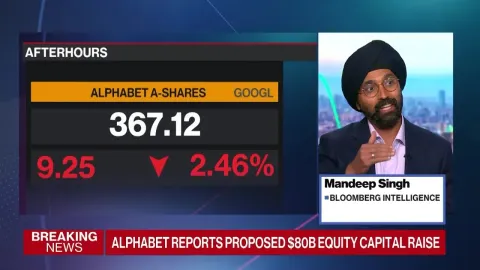



CBS recently did a 60-minute special about the stock market, but it wasn't a report about how the stock market is hitting all-time record highs and how investors are getting rich. It was a special with Andrew Ross Sorcin about why today's stock market looks like the stock market before the 1929 Great Depression crash. Take a listen. From 1928 to September of 1929, the stock market was up 90%. When you say the stock market was way up, immediately I think of now, are you scared? I'm anxious. I'm anxious that we are at prices that may not feel sustainable. So, in this video, I want to do something a little bit different. I want to break down and analyze what happened in the CBS special. That way, you can be
a smarter investor and see why they're relating today's stock market to what happened before 1929. And then, I want to talk about some of the differences. That way you can be a smarter investor and understand where the opportunities are, not just to protect your wealth, but also grow your wealth. So, make sure you stick with me until the end of this video. By the way, this is again one of the reasons why on June 16th, 2026, I'm hosting a live free and virtual investor workshop at 12:00 p.m. Eastern time, noon. Because if you want to see how you can invest your money better in Trump's economy, during a time where AI is changing technology, during a time where we have way more geopolitical conflicts
that we've seen in recent history, all of these things create investment opportunities. So, if you want to see how you can build your wealth faster outside of your 401k, outside of your house by using these changes to your advantage, I invite you to join me on June 16th. Again, it's a free workshop. It's live. And when you actually sign up for the workshop, you're going to get access to Market Briefs, which is my newsletter for investors, completely for free. And when you show up live on June 16th, you're going to get a free digital copy of my team's new book, How Money Changed Forever. Now, you have to actually show up live on June 16th at 12:00 p.m. Eastern time to get a digital copy of this book. But if you're an
investor or want to be an investor and you want to see how you can use our economic changes to your advantage, I invite you to join me for free on this workshop. The link is free to register down in the description below. And as a reminder, our software has a limited number of people that can actually join me live. Every time I've done one of these workshops in the past, we've hit capacity. So, I invite you to register soon and then make sure you actually show up on time in a few minutes early. That way, you can secure your spot. Before the Great Depression started in 1929, the United States entered a period called the Roaring 20s. And it was called the roaring 20s because we had
this brand new technology called electricity that was sweeping the country and changing our economy because now all of a sudden all these businesses started adopting and mass using electricity to make more products and our economy was booming. And it wasn't just a select few business owners. The stock market also was soaring as a result and investors were getting incredibly wealthy during these roaring 20s. That was until the bubble popped in 1929. That was when the Great Depression hit and then the stock market fell by 89% over the next few years. Now, fast forward to today, almost 100 years later, and CBS says that we are seeing the roaring 20s again. This time, it's the roaring 2020s.
Andrew Ross Sorcin says we're in our own roaring 20s, the 2020s, with stocks climbing for months just like then. And throughout the interview, there were three main concerns that were brought up. Number one is the increase of speculation in the markets. Number two, fueled by high amounts of debt while we have lower guard rails happening. Let me start with the speculation. In every single bubble, what happens is markets start to go up and now people start to feel like they're rich because they made investments and they're going up. And then markets start to go up even more because people are starting to make more money. And now people are getting really greedy and excited because now look at
how much money you have made. And now everybody starts to buy in because well everybody and their moms and their neighbors are getting rich and now prices start to go a little bit too high. This is what speculation is where people are now buying this investment not because they think it's a good investment but because they think it's a great way to get rich. And in the CBS interview it sounds like people are starting to see the same thing with AI. I would argue to you that the economy is being propped up almost artificially by the artificial intelligence boom. There are hundreds of billions of dollars that are being invested today in artificial intelligence. This is either a gold rush
or a sugar rush and we probably won't know for a couple of years which one it is. Now, to be clear, speculation by itself isn't really a major problem because if I have $100 in my wallet and I take that $100 and I make a very risky bet, I throw it into a meme stock, well, it's not that big of a deal if I lose all of that money because I already had that money in my pocket. But it becomes a bigger problem when you start to have this type of speculation with number two, debt. What we started to see happen for the first time in the 1920s is people started to buy stocks not with the money in their pocket but with credit. The way it worked is you could go out and buy a $100 stock with $10
down and now your broker was financing the rest. Your broker was giving the loan. This was a margin trade and that's when it started to become popular. The idea being you could start investing money that's not yours. And this is great when markets are going up, but when markets are going down, that's when it starts to become a problem. They realize that they can lend out money so that more folks can buy stocks. It was all sort of wrapped in the flag of democratizing access. And in good times, when the stock is going up, it's like free money. In bad times, you're on the hook. And you're on the hook in a very bad way.
Well, according to the data today, margin trading is now breaking brand new record highs. Again, this is great when markets are going up. And right now, markets are breaking brand new record highs, which means a lot of people are becoming incredibly wealthy because they're making money off of money that's not theirs. But if the market starts to turn around, well, that means now a lot of people are all of a sudden underwater. Why? Because their investments are down and they're investing money that they don't have. And if you don't have the ability to cover those losses, well, you can start to see how that can become a problem. And this is where I'd like to hope that there's some protection out there to
prevent bad things from happening. Well, this brings me to number three, the loosening of guard rails because the government is actually loosening restrictions. They're taking away some of these protections as a way to give people more access to more investments. This can help people who are more educated, but it can be a very dangerous weapon for people that don't know what they're doing. There's speculation in the market today. There's an increasing amount of debt in the market today and all of that's happening against the backdrop of the guard rails coming off. Let me give you an example of what I mean. If you wanted to go out and invest in a public company like Uber or Meta or
Tesla, each one of these companies is required to report their financial statements. And now you as an investor or even not an investor, you can go and view these financial statements and understand the risks of your investment. Well, if you were to go out and invest in a private company that's not on the stock market, those disclosures are not required by the government. So, you don't have as much data. And so, previously, if you wanted to invest in one of these private companies, you'd have to meet a certain number of regulations where you have to have a certain amount of income, certain amount of net worth. You have to be something called an accredited investor. Well,
we're starting to see those restrictions loosen where it's becoming easier and easier for regular people to invest in these private credit companies. The idea is these private credit companies have made people incredibly wealthy. Imagine if you invested in Meta or Amazon or Tesla before they went public. You would have built a lot of wealth, but you couldn't do that unless you were already wealthy and accredited an investor. And so now as more and more regular people can have access to these public and private markets, it allows regular people to invest into non-traditional investments. But the problem is there's not as much disclosures. There's not as much protections. So it creates the
opportunity for more upside and more risk. And a lot of people might not understand that risk. There is a real push partially by the Trump administration um partially by the industry itself which wants to get more money in to open up the market to more and more people. So we have these guard rails for a reason. I mean they're there to protect and they have protected a lot of people but some people would say they protected people from getting rich. One of these more speculative investments that this report talked about was cryptocurrency specifically. The idea being that meme coins are a hub and target for scams and bad things happening on the internet. And to help give some guidance and
insight whether regular people should be investing in cryptocurrency, they interviewed Larry Frink, the CEO of Black Rockck, which is the largest asset manager in the world. Now, you can imagine that some people were not happy about this because a lot of people don't like Black Rockck. But listen to what the CEO of Black Rockck said about owning cryptocurrency. There is a role for crypto in the same way there's a role for gold that is it's an alternative for those looking to diversify. This is not a bad asset but I don't believe that it should be a large component of your portfolio. So now
you can start to see the similarities between what's happening right now and what happened before the Great Depression. But there are also some big differences that I want you to understand as well. Namely, two that I want to focus in on. The first one is that our banking system and financial system is very different today than what it was 100 years ago. Because 100 years ago, we did not have FDIC insurance. So, a big part of the financial depression and the crash had to do with something called bank runs. People got worried about the economy crashing. So, what did they do? They went to the bank and they pulled their money out of the bank.
Well, these banks did not have a infinite amount of money or even all of your money sitting in the bank in a vault because they would lend your money out. So, as more and more people started pulling their money out, banks started to not have the money to run their operations. So, banks started to shut down. As more banks started to shut down, more people went to the banks and started pulling their money out, which created then this panic called the run on the banks, which then caused more banks to collapse. And you can imagine the craziness that would happen if you had your life savings in a bank and now the bank is not there anymore. It's collapsed. You just lost everything
you've worked for. And that was when in the 1930s FDIC insurance was created. The idea being now even if the bank collapses, some of your money up to $250,000 is insured. That way you're protected. But the other part to this that you should really think about and understand has to do with money and money printing because the way that the Federal Reserve Bank prints money today is very different than how our central bank would print money in the 1920s. And what I mean by that is we've entered an economy today where the government and our central bank are actively working to prop up financial markets. Now, of course, there's risk to that. That's one of the reasons why our markets are so
volatile today. We have so much money that's being printed, so much economic stimulus entering our economy, so much injection into the markets. But that also changes the way the market crashes and recessions happen. Let's go back to the 2020 pandemic. When the 2020 pandemic hit, our economy was shut down. It was the worst economic crisis since the Great Depression. The stock market crashed harder than the Great Depression. And then the Federal Reserve Bank opened up the money printer. The government unleashed an crazy amount of stimulus and then we went from the fastest stock market crash in the history of time to the fastest stock market rally and boom in the history of time both in the same year. How is that
possible? Well, that's in part due to the money printing by the Federal Reserve Bank and the stimulus by the government. Now, this doesn't mean that we're not going to see a crash. This doesn't mean we're not going to see a recession. It means that the way that we see crashes and recessions now are different than before. When we see the next crash, well, there's a good chance that it could be even more volatile and even more painful because of all the free money out there because now the concerns aren't just economic concerns. There's also concerns about our dollar. There's concerns about our national debt. These are different than what we saw in the 1920s and 1930s. So, there
are similarities, but there are differences. But this is where you want to understand how no matter what happens, how you can build wealth. Again, this is one of the things I'll be talking about on my live workshop on June 16th. If you haven't registered for it yet, again, that link is free down in the description. But the thing that I want you to understand is number one, recessions happen. Period. When is the next one going to happen? Nobody knows. It is a part of our economy. In the last 100 years, do you know how many recessions we've seen? It's not one or two or five or 10 or 15. It's 16, which
means yes, we're averaging more than one recession per decade. In the last 100 years, do you know how many market crashes we've saw? A market crash is when the stock market falls by 20% or more. It's not one or five or 10 or 15 or 20. It's 25 market crashes in the last 100 years, which means we've seen more than two market crashes on average per decade. Market crashes and recessions happen. They are a part of our economic system. They're going to continue to happen. But do you know what also happens with a recession? Some people get hurt, but some people become incredibly wealthy.
Market crashes and recessions create more millionaires than any other time. The reason why is because they allow for the financially savvy to come in and buy good investments at a discounted price. This is why the financially savvy love recessions. This is why the financially savvy love market crashes. It sounds like a crazy thing to say because when you have these downturns, people lose their jobs. People lose their 401ks. People lose their wealth. But the people that are financially savvy use these downturns as opportunities to become incredibly rich. Why? Because now you can come in and buy good investments at a discounted price. Imagine in 2020 if
you could buy stocks for 40% off. Imagine in 2020 if you could buy crypto for 40% off. Imagine in 2022 when the stock market fell by 20%, you could have bought stocks for 20% discount. Imagine 2022 Bitcoin fell by about 60%. You could have bought Bitcoin for a 60% discount. Imagine in 2020 the stock market fell by 34%. You could have bought stocks for a 30% discount. Imagine in 2020 Bitcoin fell by 40%. You could have bought Bitcoin for a 40% discount. Imagine in 2008 the stock market got cut in half. You could have bought stocks for a 50% discount.
Imagine in 2008 you were buying real estate after the crash happened. In some markets like the Metro Detroit area, real estate prices fell by more than 90%. I'm telling you from experience because that was when I was coming in and I started investing in real estate. Imagine if you're buying real estate then when you could buy houses for $5,000, $10,000, $15,000 that today are worth multiple hundreds of thousands of dollars. This is why I want you to understand that recessions number one happen. Don't panic about it. understand it and prepare for it. And number two, there's a very important financial
concept that I want you to understand. This is something that took me years, more than a decade to learn. And this financial concept is called poop. P O P. Panic leads to overselling, leads to opportunity, leads to profits for the patient and the financially savvy. The idea being anytime you see a market downturn, do you know what happens? People panic. And what happens when people panic? They start selling. Because when they see markets go down, the media comes in and they tell you about how things are going to collapse, how the world is going to end, how things are so bad. It's never been like
this before. And so then people panic and then they start to oversell. Not because they have a bad investment. Sometimes you do. If you have a bad investment, then that's a different story. But sometimes people have good investments that they just freak out because everybody else is selling and now they oversell. Now, sometimes it's forced to sell because you have margin because you have too much debt. I'm not talking about that right now. I'm talking about the people that have good investments that just now start panic and overselling and now this downturn then creates opportunity for the financially savvy to come in, buy good investments when they're on sale, and then profit on the way up. Now, the difficult part about this is we don't
know how long that turnaround is going to take. In the 2020 pandemic, it took weeks. That's not normal. That's not how it's supposed to happen. That was the money printer in action. During the 2008 crash, it took more than a year. In previous crashes, sometimes it's taken months, sometimes it's taken years. So, we don't know how long the turnaround is going to take. But what we do know is that over the long run, investment owners, stocks, real estate have built more wealth than anything else. This doesn't mean you shouldn't be an investor. It doesn't mean you should try to time the market because guess what?
There's always a recession coming. There's always a market crash coming. I don't care what time of year it is. I don't care what type of market we're in. There's always a market crash coming. So, be prepared for it. This doesn't mean don't invest your money. And take a look at Warren Buffett. He talks about how time in the market beats time in the market. My goal here isn't to tell you the market's going to crash tomorrow, markets are going to boom tomorrow, because I have no idea. Anybody sitting here trying to tell you that is lying to you. What I do know is number one, I want to understand where money is moving. That's where my investment
opportunities are going to go. I want to buy them when they're on sale. But number two, I want to own for the long term. I want to own not for 6 months. I want to own for years or decades. That's my investment horizon because now I know that when the recessions happen, it's just a piece of my investment horizon. And then when markets go down, I use that as an opportunity to buy even more, which means yes, I have to be prepared financially. I have to have cash put aside to be able to not only protect me but also capitalize on those types of investments which requires that financial education to be prepared with cash. That means yes you have to make sacrifices to not spend all of your
money to have some extra money put aside to be able to take advantage of opportunities that come your way. But the idea is this is not the first time we've heard stories like this. This is not the first time we've heard concerns about a recession. A recession is coming. Yes, we have concerns about the economy. You have concerns about our national debt. We have concerns about inflation. We have concerns about unemployment. We have concerns about AI. Yes, the stock market is still near record highs. Yes, unemployment is still no according to the numbers. Yes, we've seen a lot of growth in the economy. Who knows what's going to happen tomorrow? But we know the recessions will happen.
We know that when you print so much money that it can create more volatility in the markets. Stop getting so emotional. Stop being a headline investor. Invest based off of financials. Invest based off of research. Be willing to understand where opportunities are moving. And then when downturns happen, not if, when they happen, use them as the opportunity to take advantage of them. Again, I'm going to be going way deeper into where opportunities are moving on my workshop on June 16th. If you haven't registered for a workshop, that link is for you down in the description. And if you got value out of this video, the best thank you is a referral. So, if you could please share this video with a friend,
family member, colleague, or fellow investor. That way, we can continue to spread this type of financial education. Thank you. President Trump just launched his new plan to save the United States dollar from the $39 trillion debt crisis. No, it's not by having the dollar backed by gold. And no, it's not by having the dollar backed by oil either. It's by having the United States dollar backed by crypto. Let me explain. The value of a money depends on if people believe that it has value. If I walk into