3:04


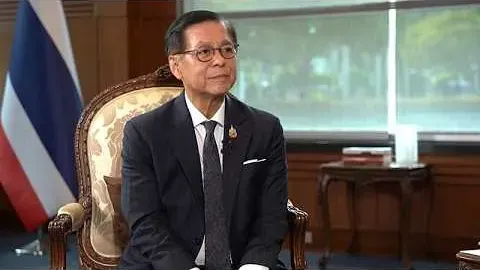
force displacement and genocide of Palestinians to other issues, permanent members of the UN Security Council have frequently used their veto power to prevent action against aggressors. In many instances, they've gone against the will of the international community. Is the United Nations still relevant? I sit down with UNGA President Dr. Khalil Rahman oneon one. Mr. President, we find the UNGA often voting overwhelmingly on an issue, but then that issue is sort of [snorts] struck down by the Security Council in the form of the veto. Many people are asking, and I'm talking about citizens
around the world, if the UN is even relevant anymore. Thank you. Uh this is how actually this works. According to the UN charter, the main responsibility for keeping peace and security is with the security council. It does not preclude general assembly to discuss matters of security, peace and security. Uh but the real action is with the uh security council. Um it is not that uh general assembly discusses something and it is struck down by the security council. Security council has its own agenda and we have seen on uh many issues they have not been able to come to u uh an agreement uh resulting in conflicts uh continuing.
Um and you are uh talking about uh veto uh certain whenever um a veto is applied by any country. Um this matter is discussed in the general assembly. uh this year I already have done two of them uh so far and uh this is more of by way of uh of transparency of activities of uh of security council. It's very important that the security council uh discharges its functions as uh the framers of the charter expected and anticipated and this is why um I continuously call upon the security council to discharge its mandate. Um, and I said during my opening address at the General Assembly that when Security Council acts, the United Nations is seen as acting. You've said that we're not living in 1945.
Presumably, you're talking about the need for reforms. How far do you want those reforms to go? For example, we've had the Turkish president. He's talking about and he's repeatedly saying the world is bigger than five. Should the UN Security Council be expanded? Should it be dismantled? How far are you willing to go? Very good question. And where I'm dealing with right now as a president of the general assembly, uh I oversee intergovernmental negotiations on uh security council reform. I have just reappointed the co-chairman of the negotiations. Uh indeed 19 it world is in not in 1945 and I said say this often and today uh president Erdogan alluded to the same thing. uh security council reform um
issue has is almost as old as the organization and uh right now to me and I made it very clear to the assembly the most important point is to address the historic injustice that is um that the Africans African continent has been facing. Security Council took many decisions on peace and security um when it comes to Africa without Africa being at the table. So this is what I said that Africa needs to be at the table not on the menu. Uh so I'm working uh with uh various groups of countries uh on this reform and I believe uh by the end of the my presidency we'll make some headway. I'm also working very closely with security council uh members including the permanent members. Any expansion change etc of the composition
of the security council will require the agreement of uh will require a change in the charter which will require an agreement by the security council and therefore the uh permanent members. So I work with them as well. So I believe the I should make it very clear that this change will be incremental but and we are looking at least I'm looking at where there is no representation at this point and Africa comes out the most glaring example of unrepresentation as uh as permanent level. So let's get this straight. Any change to the structure of the UN security council would require approval from the UN security council. Why would they want to approve anything that challenges their monopoly?
You see, security council members are no different from the members of general assembly. Uh so they sit at the general assembly and the uh the process of uh security council reform has been agreed upon by everybody. So everybody recognizes the world has changed. The question is how you undertake the reform in a way that it is agreeable to everybody and that is what I'm trying to do. Sometimes we hear calls from the public in particular demanding that certain members of the UN be punished for continuously violating the UN charter.
How far can the UNGA go in terms of punishing a member state? Is it possible to expel them for example from the United States or is that procedurally not possible? There are provisions in the charter for expulsion. Um uh we haven't seen any expul expulsion yet except for when Taiwan uh Republic of China um its seat was given to people's republic of China. That's the only instance I can remember. uh and there then for gross violations of uh international law you have international court of justice is part of the United Nations and u and the court pronounced itself on a and has been pronouncing um on a good number of matters for example uh
on 19th of November the court will come up uh with its judgment on the issue of uh Myanmar versus um Gambia on the issue of uh Rohingyas. So the uh the system functions in terms of providing um legal judgments on behavior of countries when issues are brought before the court. So the system and the international court of justice is an integral part of the UN. There's a lot of talk about the so-called rules-based international system effectively having collapsed. Is it not really the case now of might is right, hard power basically deciding. In that case, is it even possible to or is it realistic to expect that perhaps you're going to be able to not just in your term but maybe those
who will come after you be able to bring substantial change to the structure of the United Nations? Is that even possible? You see, uh it is often said that if you uh do a with the United Nations today, you'll be recreating it tomorrow. There's no substitute for it. And uh the recent uh surveys have uh shown that majority of world's people in especially young people still have uh trust in the United Nations to do good. You see the process that we are here on climate change today here in Antalya is a UN process. We are trying to bring the various parties that are um party to the
core uh on an agenda where we have take decisive actions to reverse uh global warming to improve on financing for uh for addressing the issues of uh climate change. So this is the only forum that you have and as I said if you do with it you'll recreate it. The question is how do we enhance its effectiveness and this is the uh main thrust of my work in the general assembly. My moto is rebuilding trust and managing transformation united nations that delivers for all. So it is often it often misses uh um our attention how much the UN does at the country level. I'll give an example. Um I used to be um Bangladesh's uh high representative on Rohingya refugees. Uh you can call it minister for Rohingya and there I worked with UN's country
team in Bangladesh. We had a serious resource crunch and the country team innovated rapidly by getting national institutions, national um h personnel including people from the refugee camps in order to make sure that the service delivery continues and in some cases the service delivery improved. So it at if you look at country level you go to any country they will say the event matters. So that part of the story is not usually told. I'm coming back from Congo and I spoke with the leadership. I spoke with the UN leadership. I spoke even with the major donors and they all said in one voice that the country team of the United Nations in Congo is doing a very effective job. So if you look at security council you'll
see one side of this story but if you look at the contribution UN making at the country level you'll see a completely different picture that's why I say at country level UN works and in my uh presidency I want to shift greater focus on delivery to peoples of the United Nations who matter most to us. The term of the UN secretary general is about to end. What's going to be the procedure for the appointment of the next secretary general? You see um the charter makes it very clear. The general assembly appoints the secretary general upon recommendation of the security council. So once the security council sends its recommendation, the general assembly will be taking a decision on appointment. So far we have seen that um
the candidates uh that the security council recommended over previous nine times general assembly accepted it. Now the thing is this time we have uh several candidates running um for this post. uh my job was to introduce them uh first of all announce their candidacy and introduce them to the general assembly uh and to arrange an interactive debate with the general assembly members. I've done that. Now it will be up to the security council to take a decision in the next 6 weeks or so that we get a new secretary general effective 1st of January. uh in previous occasions there are at least three occasions the appointments were made as early as in December. U I have been um appealing to members uh to expedite the process so that we get a
secretary general as soon as we can. Thank you.