6:55
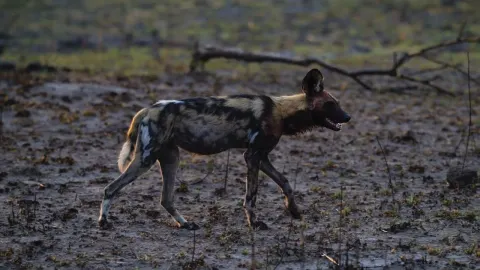



The hyena that you are seeing here, this is the female. Behind me there is a mound where she stays. In fact, they are male with two females and one cub. So, what happened when they come back from hunting, they stay about 4 40 minutes just to wait for the sunrise and then after that, that's when they enter into the burrow. This is the place they normally stay when they come back from hunting. My name is Ferrison Kalembelembe. Welcome to Kafue National Park at Kasanka Camp. Join me on safari. So, this is the male Harlequin Quail. And as you can see, it's very busy feeding and it's feeding on the seeds.
Yeah, and it's not only the species that we have, there is another one which is the Button Quail. So, they all do the same thing. Feed on seeds on the ground. So, the lioness we can see with the collar, uh we call it Princess. And where she's looking, there's elephants. I'm sure she's not happy with the with them. That's the reason why she's just focus on them looking. The elephants, they are moving towards the island called Kapinga. So, during the day they all stay at Kapinga island. And then, around 3:00 to 3:30 in the uh
afternoon, that's the time most of they come out from the forest, then they go to other places to feed. Then in the morning, they do the same coming back in the Kapinga forest where they feel safe for staying in the day. This is uh the male lion called the Sobongo. In fact, in Busanga plains, we have about three male lions that are known. The one you are seeing is called Sobongo. Sobongo, it's the Kaonde name for the hunter of the dogs. Uh the bird you can see, it's the lesser grey shrike. Uh this is the time of the year they start to arrive from North Africa.
This is the hooded vulture. What has happened here, a lot of vultures they came to feed on the dead lechwe. And they all finished, they've gone. Now, it still have the chance of feeding because it has a very small beak which goes into the sockets or the joints. And it's still feeding it up to now. Yeah, it's specialized to feed in between the bones. It also specialized on the droppings from the lions. The bird that you can see, it's the lapet car which is called the African gasser.
Normally, it has a very distinctive call which sounds like tweet. Yeah, and it got a small bird. So, it's almost finished. Okay, so there are 1 2 3. Looking at the way they are moving, it's like they are in the hunting mode. We call them Mukara boys. And the reason why we call them Mukara boys, they came from uh south of the park in the Sheshe Mukara area. And um they shifted from Mukara to Musanga plains which is more than 200 km. Um they are looking at zebras. And then at a far distance, they saw um lechwes.
I'm sure that can be the easy one for them to go for. What they do is that they can even go for a male lechwe. One will start to attack, you know, from the head whereby the other two will start biting from behind. Because it's not easy like they also fight back. Yeah, so that's why they are three and they need help from each other. This time of the year, if we see the pelicans, that's the indication that the water is drying up because they come to hunt for the catfish. Yeah, normally you'll find in big flock, you know, maybe let's say maybe up to 50 birds. And uh they'll be moving, you know, pushing the fish towards the bank. So, by the time the fish reaches the bank, when they turn around, that's when they go for them.
A gully there, it's part of the Rufupa River. Where you can see the tall trees there, that's uh the normal river, you know, uh Rufupa with the trees to the bank. So, what is what happened when you're in the plains, the Sangha plains there, you won't find, you know, the river. It's just the deep gullies. And then here where the plain starts, if you follow it, it's the normal river with the trees to the bank. So, during rainy season, here where we are, gets flooded. The rainy season starts November, December, then we start to experience heavy rains up to March.