14:12


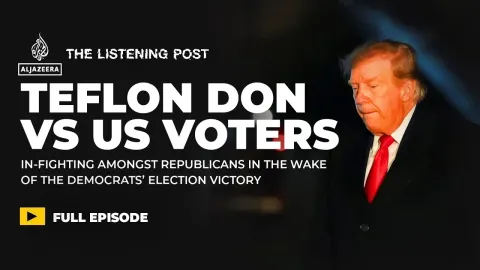
The Democrats had an extremely successful midterm election. They easily won the House of Representatives. They won Senate seats and gubernatorial positions deep in traditionally red territory. President Trump asked voters to pretend he was on the ballot. They agreed, and his party suffered. For a decade, Trump has been the dominant force in American politics. Is this the end now? I just want to take a moment to focus on these results, which, as we said, are extraordinary. I mean, Mississippi is a swing state right now. As we write, Democrats hold 54 seats in the Senate. We're still waiting on Mississippi and Alaska,
but it seems likely they'll take them, bringing their tally to 56. In the House, Democrats have up to 235 seats, but they could gain up to 260. Charlotte, as US editor, you led coverage of the midterm elections for the Economist. These results are quite impressive. You had some time to think them over. You slept a little. Stepping back a bit, what surprises you most about what just happened? Americans have been extremely pessimistic about the state of democracy for years. Polls were conducted in the run-up to these elections. About 70% of Americans believed that their democracy was in crisis. And this, of course, was a triumph for the
Democrats, for this race. But beyond that, I think there are ways in which Americans on both sides of the political spectrum have become remarkably resigned to this idea that the government is not particularly accountable to the American people. That this feedback loop, I talked to our colleague Dan Rosenhack about this, that this feedback loop of accountability between voters and government officials has broken down for all sorts of reasons. You know, gerrymandering, which insulates politicians from public opinion, the perception that the amounts of money spent on election campaigns can affect campaign spending, and advertising can affect the outcome one way or the other.
We've seen all sorts of ways that partisan sorting, you know, where voters decide to move to places that are more aligned with their views, has had the effect over time that there are states that are red, there are states that are blue, and elections are won in an extremely small number of regions in the United States, with politicians not really trying to convince voters of the other party to join them, not really making a case for their position, but instead resorting to really partisan tactics to convince their base. And this campaign can be quite ugly. It also, of course, has a detrimental effect on how government works, period.
You know, if you don't feel responsible to the members of the other party, you are incentivized to just fight when you are in power, rather than actually govern. And what we saw in this election is that voters are simply saying : we expect more from the government, and we are going to hold you accountable for causing chaos on a grand scale. These were not elections that were specifically related to culture wars. This was an election that had nothing to do with anything other than Americans being fed up with it. They don't see that the president has achieved the results he promised, especially in the economy.
They're frustrated with the state of corruption or the perception of corruption in this White House, you know, nine or ten Americans say that's a problem. So there's a huge frustration and this feedback loop between voters who are frustrated and unable to hold politicians accountable, I think you've seen it happen in state after state. You know, Donald Trump has disrupted American politics throughout his career, and this has been a kind of mega- disruption where he rewrites the rules, the normal rules of party politics. James, do you want to comment on what this result means for American democracy and the country, and maybe put it in some context? I mean, the scale of the fluctuations is staggering. The largest against an incumbent in the
White House in a midterm since Watergate. You know, such fluctuations are impossible in such a party era. What, what, what, strikes you about what this means for American democracy? Yes, the Watergate comparison is really interesting, John, because, listen, in the national election, in terms of the national vote, the Democrats won by a margin of 13 points, which is the largest margin in a midterm election since 1974. And these elections brought to power a new generation of democrats who were committed to reform. It was a reaction to the corruption of the Nixon era and fundamentally changed not only the electoral makeup of the House of Representatives
, but also the approach to thinking about politics, as Charlotte said. And we may witness something similar. It is a seismic process in that sense. You know, we've seen, when you consider the changes and the numerous swing elections that we've had since then, and really big swings in the House, in 1994 when the Republicans came to power with Contract America, or in 2006 after the Iraq War and Katrina. We have seen greater fluctuations in the total number of seats in the House of Representatives. Um, as everyone knows, gerrymandering, as Charlotte said, polarization, geographic self-sorting, uh, limited the swings. And in the last three cycles, no one has won
more than 222 seats out of 435. But this time, Democrats have overcome many of those limits. And as you said, they are heading towards over 250 and possibly 260 in the Senate. This is really great. Um, but what's really striking is the geographical distribution of these victories. Democrats won in states where they were blocked. They won in counties like Northern Nevada where they had never won. And I think that's what really has the potential to change our politics. Shashank, you prepared for your new job as Washington Bureau Chief by studying a lot about the causes of hyperpartisanship in America and this trajectory of total bailout that the country has
been on for a long time. You show up in Washington, and suddenly South Carolina becomes a swing state. Democrats run Texas. I mean, what, what, what gives? Is this a cause-and-effect relationship? Is this a correlation? What do you think about what happened? Well, first, I think it's important to acknowledge the centrality of the war with Iran in many of these events, as well as the deeply unforced errors, one of which is Iran, but also many others, including Donald Trump's decision to challenge established incumbents in the primaries, particularly in Texas. And I think we can all discuss the counterfactual scenario of whether a candidate like John Cornyn would have survived this wave in Texas. I think, you know, you could argue that he would have been
defeated, like other good candidates, but he could very well have survived. And so there are huge unforced errors and randomness, an administration that, frankly, mismanages. But the other thing, of course, is that we were sitting here in 2024 and discussing this extraordinary turn of Hispanic voters, Asian voters, minorities, to Donald Trump, the great survivor of U.S. politics. And was it a regrouping? And, of course, no. These were borrowed voices. And I think Democrats will be very aware that these are still, in many cases, borrowed votes. This is not the kind of alignment that, you know, is going to set in stone some permanent left-wing majority in American politics. This is something quite, quite, quite cautious.
But nevertheless, given what I have been reliably told how deeply rooted partisanship is, the prospect of all this creating this incredible scope. I mean, looking at the numbers here, by the way, if you look at the swing from a 24-vote Republican lead in the House to Democrats, that's in the top ten since the Civil War, I think that gives you an idea of how fluid and flexible this moment is in American politics. I mean, to me, it just seems like such a positive sign for American democracy, you know, regardless of the outcome. Charlotte, let's stay with Donald Trump for a moment. You know, he spent months telling Republican voters to just
pretend he was on the ballot and vote like I am, and, you know, the voters did that, and the result is what it is. Is this the end of the Trump era in American politics, or the beginning of the end? How do you see it? I don't think this is the end, because he's still the president, and he's also not one who, uh, happily hides from the spotlight, right As we have seen over the past few months, he insists on remaining at its center. So I think he'll stay, and as Shashank wrote, he can do a lot in the area of foreign policy, uh, which we can delve into more. Aside from that, I mean, I just want to pick up on the point that Shashank made, which is that American politics has for a long time been
focused on political identity rather than on the results that politicians achieve in office. So it was more about political identity than governance. And Donald Trump really put this to the test. You know, he's been talking for years about how much America loves him, how much he loves Americans. He said, you know, very early on, that he could shoot someone on Fifth Avenue and it would n't alienate his supporters. You know, to me, it's, we were joking, we were joking before, I think it's a little bit like a person realizing that actually, uh, they were under the impression that they were in an environment of unconditional love, and actually he's just an employee of the American people, and they're
essentially firing him. I mean, he's still in office, but they said he's doing a really bad job. So I think, you know, let's talk more about what the next two years will bring. But it's worth dwelling on both how, from a governance perspective, Donald Trump has screwed up, and how, over the past year and a half, he has really misunderstood the nature of his contract with the American people, which is that he can get away with any political situation , and they will line up for him. Can I add one thing to that: I agree with everything Charlotte says, and I thought, you know, that this would be a slow, careful process of reducing support for Trump. I would say this is the beginning of the end of the
Trump era. And what I thought was extraordinary, the day after the results came out, was that J.D. Vance, the vice president, posted this long post on social media, laying out his own assessment of the reasons for the defeat. And it was, of course, you know, worded carefully, but it was a clear rebuke to the president. It said that war was the problem, and there was this list of things that needed to change, including America's relationship with Israel. And it said that if you think the war is worth it, worth losing the Senate for six years, then say so, but that's madness. And it was a stunning rebuke to Trump, who just a few hours ago had clearly said, "I would do it all over again."
Yes, Iran was a part of it, but I would do it all over again. I don't think the Vice President of the United States would publicly break with the President the day after the election if it weren't for the scale of this defeat. I don't think Ron DeSantis or Ted Cruz would speak out as strongly as they did. And thus the permission to contradict the president appeared. His impact in the primaries, I predict, will be weakened by the obvious inadequacy and deeply flawed nature of his choices and their consequences. And so I agree that this is not the end of the Trump era. He's the president, and, you know, there was a
post on social media saying I'm still the president. Thank you for your attention to this issue, and, you know, it's a reminder that I still have all this executive power. But this, I think, is the starting point from which a certain political power begins to gradually and steadily retreat from Trump. JD, I want to engage you on this question of whether this is the end of the Trump era, because the counterargument is that Donald Trump remains extremely popular among Republican voters, among Republican primary voters. He has a huge military fund that he can play with in the upcoming primaries. He changed the Republican Party for good when it comes to trade, immigration, and various other things. It's hard to imagine the party
going back to a kind of pre-Trump era, isn't it? Oh yeah, no, I don't think she's going to go back to what she was before, but I think she has to change, and she will change. I mean, he's not leaving for all the reasons you say, um, to be fair, um, and he'll remain a powerful force in the party. But I think this is kind of Trump's Wizard of Oz moment, you know, the curtain is lifted, because it's been such a big part of his politics that he's this commanding, domineering, invincible force. Uh, his comeback in 2024, which was impressive after the attack on the capital, after being convicted of serious crimes, re-election with what looked like a new coalition, it was all exaggerated. If you look closely at the numbers, they
were always a weaker reality than the statements he certainly made, but he was able to turn that victory into this policy, into this halo of invincibility. And we, I think, will look back with amazement on the first two years of this administration, how he was able to dominate his own party, over Republican leaders who knew better, who simply fell in line behind him. And not just them, but corporate leaders, media leaders, law firms, university presidents, who essentially bowed to this extraordinary use of executive power because of this, I mean, it was governance through intimidation and fear, and it worked because of this aura of invincibility, and it went away.
You know, it's gone. Hmm, there's no reason to be afraid either. And this, I think, will begin to unravel the coalition that he will create. And that will create, I think, and we can talk about it, more, uh, real opportunities even for him to, uh, govern differently in the last two years of this administration. I think there are two questions, John. You know, as James raised, the first thing: what does the Republican Party stand for? And second: what does the fight for this issue mean for the next period? I mean, the Republican Party had a certain set of principles that it supported before Donald Trump came along. And he just destroyed them all, didn't he And even at the height of his power,
the definition of Trumpism was shifting and sometimes inconsistent, which partly explains such a negative reaction. You know, you're against eternal wars, as long as you don't start a war that has no clear end. So, in my opinion, there has always been a certain vagueness about the ideas underlying the MAGA movement. And now there will be this extraordinary fight for what the Republican Party stands for, including J.D. Vance and others, Chris Christie. There's a group of Republicans who have just been quietly biding their time, praying that this era would end, and now they want to come back and, um, help shape the party again.
You know, if you looked at the, um, you know, little home offices around the country where traditional Republicans have been hiding out for the last few years, they're all kind of rubbing their hands, thinking, ah, here's my moment. It's unclear to me which of these types of Republicans is going to win, because all that fervor that brought Donald Trump to power, you know, the frustration that he was able to turn, ahem, into real, ahem, excitement in the elections for him in 2016 and 2024. You know, this disappointment, hmm, generally remains. It's not like America is going back to the old Republican Party, as James said, but there's going to be this extraordinary effort between different parts of the Republican Party to
figure out, you know, how to move forward. Uh, I think one of the critical questions is what did they learn from this defeat, right? And then if they understand that the problem is an expansive, aggressive belligerent foreign policy, and you need to rein it in, that will benefit people like Vance who advocate restraint. And in a way, this goes back to Obama's famous foreign policy mantra: don't do stupid things. Uh, but there are other dimensions, right? What do they learn from the issue of nativism, immigration, even racism, which was a factor in racial discrimination, as we discussed in Texas, Michigan, elsewhere, in Montana? Uh, and does that seem like a reason for the defeat? Should they rein in
some of that nativism in a way that makes Vance's platform harder to support? And finally, uh, how much of this would they consider to be related to corruption, the Trump family, self-enrichment, self-deception, all of that, which I think they would acknowledge was a factor in this election, and that would also be the third component, the threat, in all of this debate. So the lessons they learn, which is that we are in the very early stages of the autopsy, will be extremely important to which Republican you are going to come out of this with a new vision. Shashank, you wrote a briefing on American foreign policy and what the midterm elections mean for it in this week's Economist. I know you talked about this topic last week on
The Insider with Ed, Zanni, and David Rennie, but since then we've had new information, you know, J.D. Vance has been talking about war, as you mentioned, Donald Trump has said he's ready to cut off aid to Israel. How do you think these results will affect American foreign policy in the next few years? Well, I don't think Democratic control of the House and Senate matters much. Of course, they will be able to have leverage over Senate-confirmed positions if he decides to replace Rubio or Hegseth, and that will be a factor here unless Trump governs in a very unorthodox style and appoints only acting ones to these positions. But in a more immediate sense, in a more tangible sense, what does Trump feel? I think
that when he is in such a difficult position at home, when his legislative agenda, as much as it has ever been, is completely undermined by the opposition's control of the legislative branch, he, like all last-term presidents in the last two years of his presidency, will be more active on foreign policy. He already was. I think he will be even more active. And I think he has a lot of unfinished business. He has unfinished business in Iran. He has unfinished business in Ukraine. Unfinished business in Cuba. Uh, and while I think he'll be much more cautious about launching large-scale strikes on Iran now that it's become such a big topic of debate right after the election, so my chances of striking are a little lower, I think we'll see much more vigorous
attempts to reach a peace deal in Ukraine to change the government of Cuba through coercion or blockade. I fully expect to see a lot more of this. Charlotte, let's talk a little bit about what the Democrats will do with their newfound power in Washington when they take office in January. They campaigned on a variety of issues, but were quite disciplined about sticking to the cost of living and corruption issues. So what, if anything, can they do about these two issues with a majority in the legislature since January?
Yeah, I mean, it's funny, because of course, it's a huge win for the Democratic Party. And now they have a terrible job of actually delivering on the promises they made during the campaign, which were, you know, pretty significant: that they would take real action, that they would hear the frustrations of the American people, that they would take real action to end the war in Iran, to lower grocery prices, to lower housing prices, to help deal with health care costs, and to hold the president accountable. And they linked this issue very directly: the president enriches himself and doesn't care about your economic interests.
He only pursues his own. So those were two parts of what the Democrats said they would do, and then the question is whether they can do it. The problem, as is always the case with divided government, is that of course it is very difficult to push through major legislation when you don't have a veto-proof majority, which the Democrats don't have despite this huge victory. And so, I think you can expect, and we've written about this, our colleague Kenneth Werner has been looking at this and talking to people on the Hill, that you're going to have a whole series of ceremonial votes to signal the priorities of the Democrats, and also put the Republicans in a position to block, you know, efforts to roll back the health care cuts,
block, you know, efforts to try to return the power of tariffs to Congress, not the presidency. So you're going to have this series of kind of signal votes, but there's a tool that Congress essentially has, which is its power over the budget. You know, I don't think they're going to try to force a government shutdown right away, but they're probably going to make some effort, you know, to delay it until the spring. But that's when they can try to pressure the White House and Republicans to make some kind of deal on these issues. On the issue of corruption, I think there is much more that can be done in terms of issuing subpoenas, holding hearings, ensuring that Congress plays an important role as an
oversight body over the executive branch. So I think you're going to see a lot of activity: some Democrats think they're too weak, others say the Democrats are going too far, and if they get bogged down in impeachment, it won't lead to the desired outcome. So, you know, it's really hard right now. They have won a great victory, and now they must come and rule. It turns out that governing is really difficult, but, you know, Hakeem Jeffries and Chuck Schumer, these two guys from New York, have a huge task ahead of them. Shashank, what do you think is happening with this issue of oversight and corruption? Because the last time the Democrats won the midterm elections, when Donald Trump was incumbent president in 2018, they vigorously pursued
investigations against him, including into whether his campaign colluded with Russia. It didn't work out that much, and this time you already have Democrats in the House of Representatives, you know, warning Republicans to hire lawyers. What do you expect from this? I think there's an interesting debate among Democrats about how far revenge should go, how vindictive and vindictive it should be, and how forward-looking it should be. And part of the question is deciding what to focus on, because there are a million things you can focus your subpoena mechanism on, right? There is corruption, there are cryptocurrency transactions, there are the activities of the Trump family, there is the war in
Iran, there is Russian diplomacy. You know, that's all. I think one of the things that they will see as electorally beneficial and in keeping with a sense of responsibility over the last two years would be to throw the accountability mechanism back directly in the direction of Elon Musk, who, you know, has become the guiding point of all of these things, right? Trump, the way the Trump administration is run opaquely, has close friends of Donald Trump, but also big tech companies in their excesses. And I think they'll look at tech executives who they think Democrats have actually been indifferent to and have bowed their heads to Trump, famously donating money to his inauguration, appearing at his inauguration very prominently. So, it's
people like Mark Zuckerberg who actively changed metapolitics after the election in a way that was considered very cowardly. So I fully expect the hearings to focus on that, but I think Democrats will also be very, very astute in recognizing that corruption is such a resonant topic among the electorate that this is another place where you should be looking at it. Look where they pumped money from, who made deals, who got rich. I would say that this would be a very, very attractive political opportunity. John, can I step in, and just can I step in and play against character and make a more optimistic argument here and an even more optimistic argument for the kids here.
I, well, I appreciate it. I see that there will be investigations, there should be investigations, and polls showed that corruption was in first place, along with the economy and accessibility for voters. And there will be debate within the Democratic Party about how far to go on this issue and whether to go as far as impeachment. I think management would really like to avoid this. Democrats are sober. They realized how they overdid it during the Biden years. But what has actually changed? I've talked to some of these candidates, and these guys, Talarico in Texas, Hamilton in Kansas, these are a different type of
Democrat, and they come to Washington, committing to working bipartisanly, even finding ways to praise Donald Trump, some of the things that Donald Trump has done. And I think they feel a responsibility to do that. So, at the same time, and this is where I think there might be an opportunity, Donald Trump doesn't have much time left. He is 80 years old. His power has diminished significantly. He's desperate to make his mark on history, and I think he's working on that by building this crazy monument and redoing the White House lawn.
He will have the opportunity, I think, to pass some serious laws. Some of them he would resist, but there might be an opportunity again on something like immigration reform, where if he were willing to do it, it would take a big issue away from the Republican Party. And if he were to run again, this could be his main task. Donald Trump actually, I don't think, cares much about the future of the Republican Party. He cares very much about his place in history And this could actually create some basis for real progress even in the next two years. I just want to cool this optimism a little and play a role. Do you think there's a middle ground where Democrats can work with Donald Trump on infrastructure, on cutting spending, and also bring
his family members into Congress and prosecute them? I think it's going to be hard, but I'm, you know, maybe. I like to think so. I don't know. We asked our audience if they thought the president could work with Democrats, and 68% said they had serious doubts. Another 18% think it's hopeless and are just cautiously hopeful, and I think that's where we are right now. They are hopelessly hoping, hopelessly hoping. We are completely sure. We're not a real political podcast because we've come this far without mentioning 2028. So I just want to throw this out there to you all. James, maybe you could start. What do you
think these results mean for what might happen in the primaries in a couple of years Well, first of all, John, mathematics has changed radically, right? Look at the electoral system map. I mean, Texas is a swing state right now. We did n't really talk about Texas that much. There is only one state Republican left in Texas Crazy. It's Ted Cruz, and he wasn't there this time. Democrats haven't won office in the state of Texas in 32 years. During that 32-year period, a Democrat won every other state in the country.
Um, and now they also control the Texas House of Representatives. So I think it's reasonable to call Texas a swing state. Um, Texas has 40 electoral votes. After the next census, it will have even more. This is a Republican stronghold in terms of their electoral map, and Democrats now have a real chance at it. So their path to 270 electoral votes is radically expanded. And I didn't mention Ohio, I didn't mention Iowa, um, Kansas, um, North Carolina suddenly looks like a blue state, as does Georgia. Again, these are small gains, and that's the challenge for the Democratic Party to achieve results in a way that they can build on, sustain, and build on. But that also indicates, I think, where they will need to move and
where the debate will be about who their candidate should be in 2028. Suddenly, I think, it looks a lot less like California Governor Gavin Newsom, who is like last year's resistance fighter, ahem, who is a champion of redistricting for Democrats. And it's more like someone who is, I'm not saying it's him, but someone who is more like James Tallarico or Adam Hamilton, who represents this new. And by the way, we haven't talked about this yet: this politics of decency and love of neighbor that you hear from Democrats, which is not cynical, it's not about positioning. I think it resonates deeply with who these candidates are and what they feel they have a responsibility to represent. So I think it will be very interesting to see how the
national leadership of the Democratic Party deals with their potential victory on this new electoral map. On the Republican side, as we discussed earlier, there is simply an identity crisis. Interestingly, this was the problem we thought Democrats would have to deal with in the next few years. Now that's the problem Republicans face. What is MAGA at the moment? Already, you know, there was an NBC poll in August that showed that a minority of Republicans identify with MAGA, as opposed to the Republican Party. Now, I mean, MAGA, I think, is going to split into this weird fight between Christian nationalists and dead-ends of one kind or another, isolationists or whatever, and the new Republican Party has to be
designed in some way. What are they advocating for, if not tariffs, if not debt, if not unchecked executive branch power in this war in Iran? What is the Republican Party if not Trumpism? So I'm wondering, Charlotte, do you want to participate in deciding the issues of 2028, or do you want to keep the last word to yourself No, I think it's kind of like I agree with all of this. I think in a way the outcome can taint everyone, right? If you believe that war was the main driving force behind this, then Marco Rubio, who embodies this traditional "hawkish " consensus, it is very difficult to make significant progress on this issue.
If you think the problem was, you know, the excesses and the gratuitous brutality of the deportation campaign, then the kind of, blood-and-soil nationalism of J.D. Vance would taint him, unlike you might sympathize with the progressivism of people like Talarico, and if you think corruption was the problem and self-enrichment was the problem of anyone associated with the administration, then of course Don Junior and other people with unconventional capabilities are certainly tainted. Pete Hegseth was talked about a few months ago, and now he's likely to be fired or impeached, so I think you're going to have to do that, and then finally
you're going to see outsiders set up their stalls, right? You can immediately see Ted Cruz and Ron DeSantis offering long discursive essays about why they think they understand the root causes of this. But really, I mean, they embody that, uh, free trade , open market, liberal consensus in some respects that seems to have disappeared, and you won't find any support for that from any part of the electorate. The Republicans lost this, uh, election not primarily because they bought up shares in companies, or even because of tariffs, which could have contributed to inflation. So you'll be looking, I think, on the periphery of Republican politics for
serious, credible and, frankly, exciting candidates, I think, in 2028, and that's going to take six months to form. We won't see them right away. One thing to be humble about the Democrats is that they won't actually be running against Donald Trump in 2028. I mean, Donald Trump was the easiest person to fight in this cycle for all the reasons we outlined earlier, because, you know, he took office in the White House and then went so far in the opposite direction of what the voters elected him to do, which is to lower prices and then systematically raise them and then make these other policy mistakes that we've talked about.
So you know Trump, um, won't be on the ballot. The Democrats won this year both because of the disappointment with the president and because I think the party deserves credit for running disciplined campaigns and for the emergence of these really talented politicians on the Democratic side, which have been particularly evident if you just look at this corridor in the middle of the country: Talarico, Turk, Hamilton, you know, a lot of really strong candidates. Hmm, so-so, the Democrats deserve praise, but they won't be running against Trump in 2028, which will make their job harder if, as Shashank just pointed out, the Republicans can get together and nominate a few people who can represent something new. But I will say that
my daughter asked me this morning, can you imagine if Donald Trump had not been re-elected, what he would be talking about today? And I just thought that was such a great question. I mean, we've been so consumed with this figure in American politics for so long, and I think now we're gradually going back to the beginning of the end of the Trump era, we're at the first stage, the beginning of the end, the nature of our conversation is changing. It moves away from just discussing Trump to the different ideas that different people in these incredibly, you know, fickle parties are now putting forward about how they can solve the problems that American voters have made so clear
that they want the government to help them.