11:50
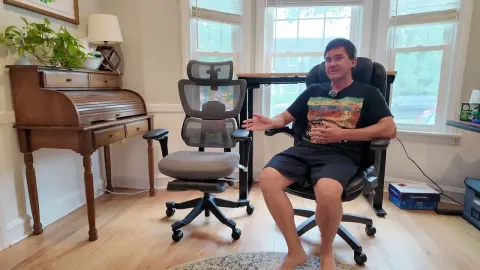


This is where I stay at. This is my kitchen and all's in here. Oh, nice. And this right here is my picking table. TV right here for your PlayStation. Damn. We got a computer right here for audio file pilot. The only thing that gets you by a boat this size you run out of room, you know. Yeah. What is life like in Louisiana's most remote bayous? I think some people will watch this and go, "Okay, I get that this is your home. But this area is going away. It's disappearing."
What do you say to that? Long as I got something underneath me, I ain't leaving here. But Dulac, man, you ain't going to find a better bayou. I tell you that. I call it the apocalyptic fishing village. You can't imagine how the coastline changed. 200 ft of that beach has gone. We traveled as far down these bayous as the roads will take you, and then farther. We found towns that are barely hanging on, and in some cases they're disappearing, literally. Grass is leaving, the marsh is leaving.
Get more water. Redfish hard to come by, used to be plentiful. So, come with us to explore that in the southernmost parts of Louisiana. We end the video in Leeville, a town with just 20 residents today. Over 70% of the town, in fact, has sunk into the Gulf. This is a cemetery, and we did not build cemeteries in marsh. So, where you see this marsh, you actually had dry land with old trees and other types of trees, and this is where the people moved to. But our journey began in the remote town of Dulac.
Dulac, man, it's a straight fishing and shrimping town. I think what it is, if you look at it, it's a unincorporated town. So, like I call it the apocalyptic fishing village. So we got people pulling in the names. And this is Nangs gas station. If you know anything about Dulac, this is the heart of Dulac. I'm from the Florida Keys, but I moved down here and fell in love with the fishing and the marsh and the area. But Dulac, man, you ain't going to find a better bayou. I tell you that. Dulac is a fishing town, but it's known for something else, having a large Native American population. This is Dulac. The French pronounce it pronunciation is Dulac, which means of the lake. We have a living system of about 14 ft above sea level. And we had
Hurricane Barry that hit us and it pushed about 8 ft of water, but living system kept it from coming in. How is Dulac changed in the last say 30 years? Our population has dropped on the lower end, but basically people moved further up the bayou. By the way, I'm Houma Indian. Mhm. Uh former tribal chairman of United Houma Nation. And Dulac at one time had about 40 to 45% Native American population.
You're Native American? Yeah. Oh, yes. You know, God works in mysterious ways. I was brought up when it was not popular to be Native American. So God made me camouflage. In fact, in the Terrebonne Parish, we could not as Native Americans go into high school until the mid-60s. When I started in 1980, there were three public high schools and out of the whole three, only 24 Native Americans graduated. And by the 1990s, we got it over 100. Yeah, he's always around here. Hello, boy. You miss me? Yeah, he's so friendly. What's big around here today, industry? Well, shrimping still is, but the major good jobs are in the oil field.
All right, one thing about the houses here they're all super elevated. I mean, almost to a T, every single one is this high off the ground. And apparently, that's by law now. But, this town is it's hurricane ready, for sure. Before leaving Dulac, we saw a fisherman on his boat and began talking to him. Then we learned he lived there. Yeah, actually I live on my boat. Wow, you live on the boat? This is do. Yeah. How long have you lived on this boat? Uh it's about 6 years now. Yeah, I went through some battles with a divorce and all that and sold a house and all the nine yards with the picket fence
and the dogs and all that and three car garage and all that, you know, and wind up shrimping again. I tell you it's it's it's a great living. It really is. I love fishing and uh you can't ask for better, you know, you go out down the water and you're your own boss and well, lately I've been having my son on the boat, which he's going back on the tugs and stuff, but I've been having my son on the boat, so you can't ask for better than a better work with your own kid, you know, and not want to strangle him, you know, so they got to have a plus to it somewhere there, you know.
I rode Hurricane Dry on this boat. Oh, yeah. What do you do during hurricane? I just buckle it down and ride her out. I take plywood and I put plywood over my windows, to block my windows like you would on a home. And uh for Ida, I had 13 ropes on her. And I didn't ever thought that shrimp boats this size would have sunk it from a hurricane in a bayou. I stay out in the gulf and you know, ride out some crazy weather, but to think you'd sink in a bayou and yeah, I have some that sunk. Yours is built different, though. Yeah, she's an old battle-ax, I'll tell you. Your family, how long you've been in the Louisiana? For all my life.
Yeah. All my life, yeah. What about your generate like your grandparents from here? they're all from down here. Yeah, that's all they doing, shrimp, fish. You How old were you when you knew you wanted to go into this work? Ooh, I was probably third or fourth grade. I was out on a boat with an uncle of mine. Back when we was talking about that yesterday, that the crabs used to be so plentiful out here in the lakes. And we'd come in, load the boat down with crabs. I mean, more crabs than you've ever seen in your life. And come in and sell them. But it's dying out. Everything's dying out in this bay.
It ain't nothing like it used to be. I was telling that to my son a couple of days ago. It's all the little towns are dying, you know, down in these bays. Cuz they ain't no more like it used to be. It's It's You know, the shrimping industry's going to pot. And oysters and oil all over the damn water. And you know, it's just It's all going to hell. When I first got in this business, there was times that we came in. I was working on 85-ft shrimp boat at the time. But we'd go to Piggly Wiggly, and I'm not BSing you. Cash the check, and you'd have so much cash that you couldn't put in your pocket. You had to take one of the little brown paper bags
to put it in and stuff it in your duffel bag. And now, you barely break even. How you usually make about half of what you made is got to go to the bill. Do you think about the water levels? Like people talk about like Louisiana loses coastline every year. Is that a What's your That's a big issue. In back of money where I'm from, uh they had a big oil field back there called Leeville Field. And uh they pumped so much oil out of that marsh that it made the mud It's like silt. It's It's like coffee ground. Everything's sinking over there.
Everything's sinking. All the little islands and everything over there on a high tide, everything's under water. And people think that it's just because of the levels in the water, you know, from the glaciers, which I'm not saying it ain't, but money to you sinking from the them pumping all the oils out of them cavities, that place is sinking, you know? I tell you, like I said, it's still a it's still decent place to live. I really enjoy living on the bayou. I don't believe I'd want to be nowhere else. Do you like watch TV here? Oh, yeah. I got Starlink and all that. Oh, you got Starlink? Shout out to Elon Musk.
Yeah, yeah. So, you're set on that front. We watch mostly uh reality and stuff like that, you know? You got to. Deadliest Catch and like that, you know? Yeah. And looks like you got like a kitchen right there up front. No, no, no, no. This is where I stay at. It's my kitchen and all's in here. Oh, nice. And this right here is my picking table. Uh you excuse my mess. Like I said, I got dog pads and stuff down on the floor, is a cool setup. You got a dog in here? Hello, buddy. Yeah.
Yeah, yeah. But as you can see, we from bayou as it gets with our clothes in the and the shampoo baskets for clothes baskets. So, you got your kitchen set up here. You got your TV there with Starlink. Yeah, yeah. You got a great setup. The TV right here for your PlayStation. Damn. We got the computer right here for audio file pilot. The only thing that gets you about A BOAT THIS SIZE, YOU run out of room, you know? Yeah. And uh you just run out of room. You wish it'd be a little bigger, but a little bit bigger would be a little smaller at time it gets smaller again, you know?
Oh, yeah. We cook jambalaya and gumbos Oh, yeah, definitely. The next day, we started off in the town of Larose. This is where LSU's former head coach Ed Orgeron grew up. Another great young man from Destrehan, Louisiana. Hold on a second. HEY, GUYS. I'M HAVING A PRESS CONFERENCE, OKAY? Thank you. Coach O is one of football's most unique figures, so we were eager to learn about his hometown. Did you know is it Coach O from here?
Yes, yes, it is. Mom lives on the highway. That brick house when you turn that curve to come here. One thing that people love to hear from Coach O is his accent. Is that the distinctive accent around here? You don't have as strong an accent as No, I'm from actually a few bayous over. So, the accent is way thicker. Way thicker down here. It's It's authentic. There's no marketing. Only to be honest with you, the best person I could advise you to go see is an old man. His name is Rusty Bourne. He's 86 years old. He's been down here from the jump, born and raised on the bayou. He's as ass as you can get. That's what we call people down here, locals, asses.
By the way, do you know who Coach O is? Who? Ed Orgeron? Oh, yeah. Ed, yeah. Did you know him growing up at all? Oh, yeah. I knew all the Orgerons all the way. I ran out of here to hunt for 18 years. But I started alligator hunting with my daddy I was 10 years old. Walking the marsh. You can't imagine how the coastline changed. 200 ft of that beach is gone. Now, we're going to pause our conversation with Rusty here since we spent nearly 2 hours with him and we want to give him his own video. He is a relic of the past and we had no choice but to give him his own. So, please make sure to subscribe to see that one and of course to support our mission of capturing America without bias or fear. Now, let's keep driving
south. Our final stop was Leeville, a town we could barely find on the map. All right, so we are coming up on Leeville and it's just a bizarre location. First of all, the water is like higher than the road for a lot of the journey out here. And now we're just I don't even know where we're going, but apparently Leeville is 1.8 mi away in a loop. Okay, so this is the end of the road to get to Leeville. Now, the map says you can go on this little dirt road over here, but there's not much of that. We can try it, but I don't know how it will go. All right, we just talked to a fisherman, didn't want to be on camera, but he said this is the old way to get to Leeville. And then when they built the bridge, they knocked out the end of
Highway 1 here. So, we're going to go the new way to get to Leeville. I mean, we're right up on the water. The water's like coming up onto the road. I can't even imagine what a flood's like here, a hurricane, or anything. Leeville is disappearing due to coastal erosion and hurricanes. That's ironic because it was founded when survivors from an 1893 hurricane settled there. You catch anything? Yes, sir. All right, we met a few people coming back from fishing. And they said they're just visiting, but that they know someone in Leeville who can tell us about Leeville, so we're going to see where they take us.
We're the only ones here working. Huh. Look at that. Y'all catch that today? I caught it yesterday. I mean, I caught them when I was a kid. Yeah. It's all different. It's all different? different. Where's the old road? What's changed? Grass is leaving, the marsh is leaving. Get more water. Redfish hard to come by, used to be plentiful. See, I mean, what happened to Highway 1? We were driving down it.
This is the new bridge. So, the old road come across here. And if you When you go to the end, if you go to the pier, you can see the old road across. So, this is just a new expressway to Grand Isle. So, so the marsh and grass stuff Why did it die? Just hurricanes. used to have stores here. There's no stores, there's no gas. You know, it's all It's kind of going back rural. Are people leaving? Like, do people used to live here not live here anymore? No, I think the same people are here. Nobody All the locals, they still They're not going away. This is home. I mean, every time the storm comes in
there used to be a bait shop if you go up front. I mean, it knocked it completely off the slab. You'll get 8 10 ft of water right here. I mean, the surge There's nothing between here and the Gulf of Mexico, you know? So, when the water comes up, it just wipes everything out. That's why everybody's got campers. You don't see many permanent structures anymore. Yeah. People tired of rebuilding. How long have you lived here? I've been here 54 years. How has it changed? Well, the tides, the marsh, it's all gone right where I get my crabs at. On the Harrison property, they lost 25% of the marsh in that area.
25% of the marsh? Yeah. I ain't getting my crabs. After each storm, you can see it going away? I can see it daily. I'll lose a huge area, and next thing you know, whatever got a hole in it, it's gone. It's salt water erosion. What would it take for you to leave Leeville? Retirement. I don't plan on retiring. What I mean, what do you do when a hurricane comes? Leave. Pack it up and bring whatever got wheels with you. After I didn't have nothing, I didn't even know telephone poles were even there. Just clear water.
No crab traps. Nothing. I think some people will watch this and go, "Okay, I get that this is your home, but this area is going away. It's disappearing." What do you say to that? As long as I got something underneath me, I ain't leaving. I ain't scared of water, you know. How has the town changed? Like have a lot of people left or most stayed? What's the deal? Yeah, a lot of people have left. We used to have a store called Rickland's. The hurricane hit it and got destroyed.
It never reopened? Never reopened. They ain't got a store down there. Did you speak French growing up or your parents? No. I had to learn how to speak English when I went to school. Cuz my grandma didn't speak a bit of English. She practically raised us. Mom and dad were working in the print factory. Ain't too many people that does that. Like my older friends and all, you know, we all speak French a lot of times. You know that.
It's easy to forget it. Some of the older people all in the alligator hunt. What makes you happy? What's your secret to happiness? You seem like a happy man. Get up in the morning and go to work. I'm good after that. But now I'm I'm one of the old ones now. I'll be 72. You still work? Yeah. Traveling the country has taught me so much about the nature of happiness. I mean, the fact that gentleman is so happy. When you read stories about Leeville and think they must be depressed, it's dying, it's terrible, it's all this.
That guy was just so at peace. Doing his job, feeling fulfilled, feeling proud of what he's done, and being home. It just It's just sort of amazing. Shows you what mattered and what doesn't matter. Louisiana loses a football field of land every 100 minutes. And while coastal towns are disappearing, they're also starting to fight back. We read about a new project to build seashell reefs along the Leeville coast that act as a hurricane buffer. In Dulac, they're building a canal system. And we even heard about one charity that's turning beer bottles in the French Quarter into sand for the coastline and starting to do it at scale. And at our next stop, you could really feel the ghosts left by recent
hurricanes. So, this is Boudreaux's Waterfront Motel. And the weird thing about it is it looks closed, but if you check their Google reviews, they had one a month ago. I mean, I'm going to go up there. So, I guess this part of the motel is open. Looks like a little cleaner, so I really hope I'm not, you know, speaking ill of the business. It just That side certainly seemed closed, but this side is alive and well. Now, everyone told us that we had to check out the bait shop. And so, we stopped by, and that's where we ended our night with a local fishing company who gave us some gumbo. That's all our what we do. Alligator hunts, bow fishing charters,
shark charters, you know, a little bit of everything. Been running this for 15 years, but we lost our original lodge during Hurricane Ida. And we moved to here. This was a gas station and a restaurant. We gutted it out and turned it into a fishing lodge. We had insurance, and we were some of the only people that didn't get screwed on our insurance. Wow. So, it was a It turned out to be a blessing. We got a better place, and So, how's Leeville changed? I mean, Well, it changes with every hurricane. Every hurricane that rolls through here you There's nothing new being built for the most part. And there's less and less structures after every hurricane.
How many people live in Leeville right now? Actual residents of Leeville? You have very few. I'd say it's under 20. And probably less than that. After Ida, they probably lost over 30 structures. Uh convenience store, a restaurant, a lot of places you get a hurricane, but it's not so bad here. You got less and less marsh and just They call it subsidence, you know? I mean, it's it's just washing away. Our GPS usually lasts 2 or 3 years before you have to replace them. And you could go where your original lines were 3 years ago. So, now you're following a bank that is 200 yd from where your original line was 3 years ago. So, you've lost 200 yd of marsh in some areas in 3
years. My sons, one has a captain's license and the other one's going to school to get his captain's license. I'd say they have another 15 years and then they won't even be able to do the job that we do here. It just won't be possible anymore. My business, we started it here about 15 years ago. And I've brought like I've brought people from all over the world here to this town. Go out at night with lights and we find the red fish and shoot at them with bow fishing bows, but uh And then in September and October, we do alligator hunts a little bit north of here. So, if you look around and it looks like it's a dying town, but in the next nine nights, I have 24 different individual groups of people traveling from all over the country to
meet at this camp and go bow fishing. It's funny, you read about Leeville online and it sounds all depressing, right? It's like dying and then you come here and Nick panned it around, but it's I said what there's a big pot of chicken gumbo getting cooked right now. So, that's the vultures that are that have arrived to pick the bones, you know? Y'all should stay and eat a bowl of gumbo. We should. He said he would show you how to cook fish and gumbo. Gumbo right here. All right, we're going to have some gumbo. Y'all are so nice to let us have some. And if you need you're hungry, it's your fault.
Thank you all for welcoming us. This is actually compliments to the chef or whoever made this. This is incredible. This is a tiny caught a shark with a bow and arrow. Look how big that is. It'd be a world record. Biggest lemon shark I've ever shot with a bow. Unbelievable what you'll find off-road in America. I mean, just driving to Leeville, you read about this disappearing town and then here's what we found here. Midnight blue bow fishing unbelievably hospitable. You know, there's a lot of beauty in a town like this that's supposedly disappearing. But, I think wow, just incredible spirit here. In a number of videos, we've discovered the
incredible gravitational pull of home. To outsiders, it might seem insane that these people still live in towns like Leeville, but again, Leeville is home and they're taking steps to make their home still livable, even if coastal erosion has other plans. And the swamp people, if they're anything, it's resilient. And there's nobody like the Louisiana the people in these towns. Thank you for watching and make sure to subscribe to see more of our videos capturing America without bias or fear, and also to catch our video on Rusty, a true Louisiana swamp man.