10:56



Patagonia. It's one word. And yet, most people imagine one single destination with some mountains and a glacier. But the reality is that Patagonia is massive, wildly diverse, and surprisingly easy to misunderstand if it's your first visit. I've been fortunate enough to do multiple trips across Patagonia, both on the Argentine and Chilean side, from the Andes to the coast, and I've learned a lot of lessons along the way, and I want to share those with you today. So, in this video, I am sharing my top Patagonia travel tips for firsttime visitors. These are things I wish I had known before visiting for the first time. And these are things that are going to save you time, money, and help your trip go a lot smoother. So, my
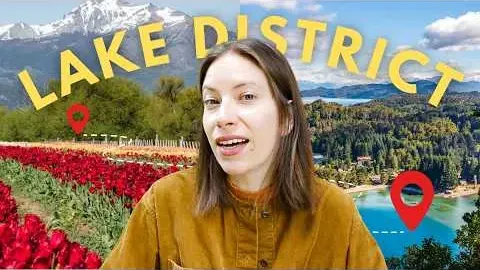
tip is to focus on one region because Patagonia is massive and it is very difficult to see it all unless you have a lot of time. So, just to give you an idea, Patagonia spans two countries, Argentina and Chile. It is 2500 km from north to south and 800 km from west to east at its widest point. So where should you even start? I really like northern Patagonia. So to give you a few ideas of the places you could visit on the Argentine side, you've got places like Bariloce, Vija Langostura, San Martin de Los Andes, El Bolson, Eskeell, and then on the Chilean side you have Puerto Vadas, Puerto Mont, Valdivia, Chiloway. These are mountain towns that are great for hiking. They have a very
laid-back vibe. Lots of breweries, lots of chocolate shops, lots of lakes, and it's a great place to unwind. Then you have southern Patagonia, which is probably what you're envisioning when you're thinking of Patagonia. This is where you're going to find glaciers and epic mountain peaks and some world famous destinations. So to give you an idea on the Argentine side you're probably thinking of El Calate and Elchen Los Glaciadis National Park and then over on the Chilean side you have Puerto Natales Torres Alpine National Park. Further south you have Puntaenas on the Chilean side and Usuaya on the Argentine side which is kind of like the end of the world. It is as far south as you can go. So reaching Usuaya actually
feels like a huge accomplishment. And then to contrast all of this, you have coastal Patagonia on the Atlantic side, on the Argentine side. And this is where you can visit places like Puerto Madrin, Peninsula Valdes, Puerto Pyramides. This is a hub for wildlife. We're talking penguins, southern right whales, sea lions, elephant seals, and then as you continue further south, you can find Welsh culture because this area was settled by a lot of Welsh immigrants. And you can visit towns like Gan, TLEO, Dolavon, and it feels like a different world. Welsh culture in Patagonia is quite unexpected. Next travel tip.
Distances in Patagonia are very, very long. It sounds like the kind of place you can visit in a week, but that is not the case. You will need to be prepared to take flights or long overnight buses. So just to give you an idea, say you wanted to drive from Bariloce to El Caliphate, that would be 18 hours one way. If you wanted to go from El Calat to Ushuaya, that would be 11 hours and it would involve a ferry and a double border crossing. And these times that I'm mentioning are if you are driving, if you are doing it by car, if you need to travel by bus, it's going to take even longer. So, my advice is to try to break up your trip into shorter, more manageable segments and just travel
slowly. If you've got the time and you can do it, that is the best way. Another thing that surprised me about Patagonia is that many of the destinations are seasonal. So, we first discovered this when we visited the seaside town of Las Gutas. We got there at the end of the season and were surprised that hotels shut down, restaurants shut down, shops shut down. So, we had very limited options in terms of what we could do there, what we could visit, where we could eat. And this is a theme that you're going to see across all of Patagonia. It also happens in the trekking capital of Elchen. During winter, basically, nothing happens there. And that's because winters are so extreme and so rugged. So, typically, a lot of businesses will start shutting
down from late fall until midspring. So, for several months out of the year, there isn't a whole lot going on in many Patagonian destinations. So, keep that in mind when you're planning your trip. Next, let's talk about the weather in Patagonia because it is quite varied. Because this is a massive region, you know, the weather is going to vary from north to south. That means you could be visiting Bariloce in the summertime and you could be roasting. The temperature might be close to 30°. You could be swimming in lakes to cool down. And to contrast, if you go down to El Calate, where you've got glaciers, you'll probably be wearing multiple layers and
be all bundled up as you explore. The weather changes four times in one day. Sunshine, rain, snow, ice, wind. It's unpredictable. So, keep that in mind when you are packing for Patagonia. Next, let's talk about the roaring 40s. And these are the westerly winds that you typically experience between the 40° and 50° latitude. This is an area that experiences a lot of wind and it can be quite extreme. The app Wind guru is going to become your friend as you plan activities during your travels in Patagonia. It is not uncommon to see vehicles overturned if they were traveling too fast and too light.
Sometimes during the extreme winds, you can lean your body into the wind and it'll hold you up and you might be talking to your friend right in front of you, shouting at them, and the wind is still carrying away your voice and your friend cannot hear a word of what you're saying. These are just a few of the things that we experienced during our first trip to Patagonia, which really surprised us. Also, I remember our first night in El Caliphate, we had rented an A-frame cabin. The bedroom was on the second floor and the winds were so insane that day that we were convinced the roof was going to fly off. So, we actually ended up sleeping downstairs on the ground floor because that's where
the living room was. There was a sofa and we were just so scared to be sleeping up top. Um, that gives you an idea of how crazy the winds can be. Now, let's talk about wardrobe and gear. So it doesn't matter where you go in Patagonia, whether it's the coast or the mountains, you are going to be spending a lot of time in nature and that means you need to dress in layers. So I would recommend quick drying or moisture wicking shirts, fleece, rain jackets, hiking boots. Try to choose something that is waterproof. We were definitely not prepared or adequately dressed for a lot of the hikes we did when we visited Patagonia for the first time. So learn from our mistakes. Layers are key and
you definitely want waterproof or weatherproof stuff. Now, let's move on to our next point. The sun is sneaky down south. Even when it's cold and windy, the UV can be very high. So, chapstick, sunglasses, a hat. Basically, what I'm trying to say is that sun protection is just as important as rain protection. You don't want to get wet, but you also do not want to get sunburnt. So, consider that. Yes, you are far south. It might feel cool, but the sun is still burning you, especially if you're going on dayong hikes, which you probably will. Okay, now let's talk about food, specifically Patagonian cuisine and what to expect. So, if you've been traveling around Argentina for a while, you already know that barbecue is king, specifically beef.
When you make it down to Patagonia, it's going to be all about the lamb. So this is because there's a lot of sheep farming from coastal Patagonia all the way down to southern Patagonia. There are so many estansas. And then as you head further south once you reach Tier del Fuego, the southernmost province, you'll want to try seafood. Specifically, the thing to try is Sentoa, which is the southern king crab. The meat is tender with a hint of sweetness, and it's very similar to lobster in terms of its texture. So my favorite way to try king crab in Yeshua was cooked aliscoco or on the plow. This is a very traditional way of cooking it
and it's almost like a stew. And then another thing to try in Patagonia is calafat berries. These are little berries that are kind of like a mixture between a blackberry and a blueberry in terms of its flavor. And they make an appearance in all sorts of desserts, cakes, jams, smoothies, ice cream. And they say that if you eat caliphate berries when you're in Patagonia, you will return to Patagonia. So that's probably something that you're going to hear at a lot of restaurants and even from your tour guides. My next travel tip is to not confuse the two Pito Morenos. That is right. There are two places with the exact same name, which is very confusing and could be a costly
mistake if you end up traveling to the wrong place. So one is the Pito Moreno Glacier which is located in Los Glaciadis National Park in the southern part of the Santa Cruz province. So in order to visit this glacier you'll want to travel to the town of Elcalafate which is the nearest access point. The other is Perito Moreno the town not the glacier the town. So this place is located in the northern part of the Santa Cruz province and there isn't much to see in the town itself. There certainly aren't any glaciers. However, it is the gateway to visit a UNESCO World Heritage site. The place is called Qua de Las Manos or the cave of the hands. And this is a cave known for its ancient art, including stencled paintings of human hands. So, two
completely different attractions, two completely different geographies, and they are both in the same province, but on opposite parts of the province. So, be very careful when you are booking your transportation to Perito Moreno. You've got to specify you want to see the glacier or you want to see the town. So my next travel tip for Patagonia is to venture off into the smaller towns. It's very easy to stick to the bigger places like Bariloce or Elcalafate or Yusuaya. But I think the charm of Patagonia is when you visit the smaller mountain towns. Some places we have really enjoyed include Trellin where we
visited vineyards. This town also has a lot of Welsh history. Beautiful scenery. You can go fishing here. Another favorite of ours is the town of Elbolson. We have been back there so many times. Beautiful rivers, great hiking trails, just a very laid-back vibe. And then we also enjoyed places like the town of Puerto Pyramides, which is located on Peninsula Valdez. This is a very small town and it's sort of off-rid like a lot of the places depend on solar energy and it's just so raw and rugged and you're right by the ocean and you can see so much wildlife. So, there are great experiences to be had once you get outside the big cities in Patagonia.
My next Patagonia travel tip is to book things well in advance, especially if you are visiting during high season. That would be during the summer months between December and February when a lot of Argentines are on vacation because things will sell out. Just to give you some examples in El Califhate, you can do experiences like trekking on the glacier on Perito Moreno that sells out days in advance. I remember arriving in town inquiring about this activity and there was no availability for like three more days and we just didn't have the time to book it. And the same thing goes for experiences like the luxury boat tours to go visit the glaciers. Those are high ticket items that also sell out
in advance. If you want to stay in fancy accommodations, there are some beautiful hotels, estas, glamping domes. But again, they sell out months in advance because they are bucket list items. The same thing goes for renting a car in Patagonia. If you can only drive automatic, you need to book your car well in advance because otherwise if you arrive, they may have no cars or they may only have manual, which I know isn't super popular in North America. So, these are just a few things to consider. Yes, Patagonia is remote. Yes, it's at the end of the world, but it's also quite popular. It's a very desirable destination, and things do get booked up and experiences do sell out. So, plan in
advance. Don't leave your mustdo experiences till the very last minute. Next travel tip. Let's talk about the importance of having flexibility in your itinerary. Like I've mentioned already, the weather in Patagonia is quite unpredictable and you may get some extreme weather days where you just cannot do anything outside. We certainly experienced a few of those. On those days, it is really good to have some indoor activities. Maybe some museums or maybe you can go cafe hopping. Maybe you can do your souvenir shopping in town, or maybe you can just treat yourself to a bit of rest and relaxation. If your hotel has a pool or a spa, it might be a nice day to just take it easy and chill.
Next travel tip for Patagonia, I'm going to say pace yourself. Take it easy. Don't try to move too quickly and switch hotels every night or two because you are going to burn yourself out. So, I like to recommend spending at least 3 days per destination in Patagonia. Some destinations certainly require a bit more time, but I'm saying a minimum of 3 days because the first day you're getting there, you're arriving, checking into your hotel, getting settled in, and aside from going out for a meal, and maybe visiting a nearby attraction, you aren't going to do a whole lot. So that gives you two full days to really enjoy the destination, do some tours, see the attractions. So really think about that
when you're building your itinerary. Consider travel time and consider that the longer you travel, the more tired you're going to get, and you're going to need a little bit of downtime to just recuperate, refresh yourself, and keep going. So, one issue that we encountered time and time again traveling across Patagonia, it didn't matter if it was a rural area or a city is that the internet can be quite spotty. So, this became a problem because sometimes we would be trying to check into a hotel and pay with our credit card and the system would be down or we would be at a national park trying to pay for our admission fee and also the system was down. We couldn't use our card. So, some tips to just navigate the
internet situation in Patagonia. It's a good idea to have some cash with the hotel scenario. You can always try again later. The receptionists were certainly flexible with us when you know the system was down and they couldn't charge us, but it's a good idea to have cash, especially to pay for the admission fees going into the national parks or at a restaurant to pay for your meal. It's also a good idea to download offline maps if you're going to be trekking and also just to navigate a new town. So, those are a few ways to navigate the situation. Just expect the internet to not be amazing and it's just part of the experience of being at the end of the world down in Patagonia. Now, some
Patagonia tips for those planning to drive. Wind can yank doors out of your hand, so open carefully and park facing into the wind when you can. Also, many routes include ripio or gravel, so you'll want to go slower, expect flying stones, and watch out for cattle. Fuel gaps are real, so top up whenever you can, especially outside major cities. And lastly, check if your rental agency allows you to cross the border into Chile and Patagonia and vice versa. Extra paperwork is required in the form of a permit, and that needs to be arranged in advance. So, those are my 15 travel tips for anybody planning a trip down to Patagonia. I hope you found those useful. If you have any questions,
feel free to write to me in the comments below. And I'll be sure to get back to you and answer your concerns to the best of my abilities. And if you enjoy this video, I invite you to give it a like, hit subscribe, and I'll be seeing you soon with more videos from Patagonia, Argentina, and other corners of the globe. Tata.