21:15



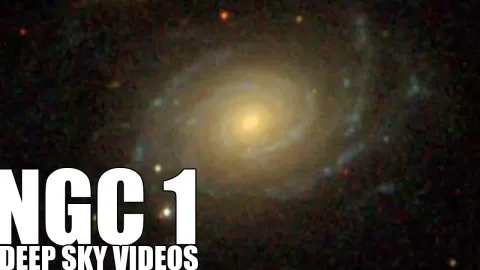
globular clusters like these are interesting because there's just so many of them in and around galaxies so in our milky way in the disc alone there's 150 globular clusters and they're really important to study galactic evolution figuring out where they come from what they are will help us learn about our galaxy as a whole one thing i wanted to talk about with this object we know that galaxies and galaxy clusters form within the gravitational potential well of a collapsing dark matter halo then the question becomes do globular clusters similarly form within their own dark matter halos so i found this paper called testing for dark matter in the outskirts of globular clusters so recall that dark matter is
this elusive substance that pervades all of the universe it's everywhere but it doesn't emit any light so we can't really detect it one of our best evidence and early kind of measurements for dark matter is through galaxy rotation curves basically stars orbit around the center of our galaxy just like planets orbit our sun and thing is in our solar system the inner planets they orbit much quicker than the outer planets in order to make the outer planets move faster we would have to add more mass into the system and so when we look at it on a galaxy scale or even a galaxy cluster scale you'll see that the speeds of the stars in the galaxies it increases up to a point but when you get further and further out it doesn't
decrease as it should do in fact in almost all galaxies the rotation curves are flat and in galaxy cluster rotation curves we see the same as well so these galaxies orbiting around other galaxies right in galaxy clusters that's the same and so that is kind of like the most probable like um it's the best evidence that we have of dark matter there is more mass in the system um that provides these outer objects the um the speeds that they have this paper wants to know if globular clusters themselves lie within a dark matter halo they call them sub halos and to do this they have to measure the stars in the globular cluster their velocities as a function of distance from the center of the globular cluster so here is messier 107. what we're
seeing here is its velocity profile so it's projected star velocities against their distance from the center of the globular cluster so each circle represents a star in the globular cluster and the size of the circle represents its weight to be fit so some stars will have better measured velocities than others so you'll want to have them contribute more to the fits and so we've got a dotted line which shows its unweighted fit and a solid line showing its weighted fit of the profile when you look at the outskirts of the globular cluster i would say that's like anything above 10 or 20 pass x we've only really got four stars to measure up so two of them are like down here and then two of them are way up here
in the other plot that we have it's the same velocity profile but they've overlaid the theoretical models so we have a red line which corresponds to a self-gravitating model that means that no dark matter exists and then you've got a green line which is the theoretical model that the globular cluster doesn't live in its own sub-halo but it is embedded within the galactic background of the dark matter so the galaxy itself has a dark matter halo but the globular cluster doesn't have a subhalo the two stars are around 20 parsecs they're pretty in agreement with the green line that there's a dark matter galactic halo but then the last two up here is better in agreement if the globular cluster is within its own dark matter
subhalo they looked at 25 globular clusters in total 11 were consistent with just a galactic dark matter halo background there were six globular clusters with flat velocity profiles which were consistent with a dark matter subhalo but then there were two with definitely increasing stellar velocities and for those ones they're sure um these um globular clusters lived in their own dark matter halo our messier object m107 was one of the unknowns yeah unfortunately they still don't know if it lives in its own dark matter halo but hopefully with future data we can find that out the tiniest mass they're about a million times smaller than an electron okay so we're talking incredibly small the only reason that we
even knew they existed was because in radioactive decay reactions sort of if you balance the two sides of the equation about what you started with and what you decayed into it wasn't quite balanced right it was always a tiny amount of energy