8:47
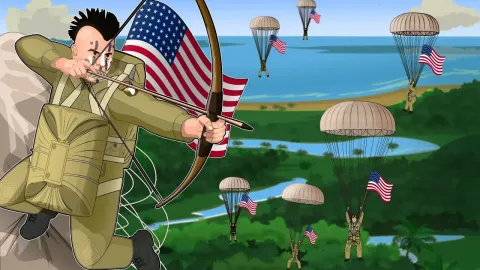



Watch out, it's a tiger. That's not a tiger, it's a burnt-out truck. What about that? Half-track. And that? That looks like a tree. You got to stop being so paranoid. There aren't that many tigers to begin with. Our chances of running into one are Told you so. The origin of the Tiger I, arguably Germany's most famous tank of the Second World War, is complex. The development started in the mid-1930s when the industrial firm Henschel and Sohn was given the task of creating a breakthrough tank by the German military. While in development, new specifications for the tank were given, including a required armor thickness and the use of a 75-mm main gun. After the war broke out in 1939, experiences against French and British tanks led to more redesigns, each
prototype building off the previous attempts. In 1941, Germany launched Operation Barbarossa. Though wildly successful, German tanks had issues dealing with the Soviet tanks, especially the moving bunker that was the KV-1 and the ubiquitous T-34, prompting more redesigns. A competition was held for the new heavy tank that could surpass what the Soviets could throw at them, held between Henschel and Porsche. Henschel won the contest and the Tiger went into production. The final version was a conglomeration of designs from Henschel and Sohn, Porsche, and Krupp.
It was given the designation Panzerkampfwagen VI Tiger. The Tiger was given the Roman numeral I after the introduction of the Tiger II. Dimensions. The Tiger I was a large tank designed with many features in mind, subtlety not being one of them. It tipped the scales at an impressive 57 metric tons or just under 63 US tons, classifying it as a heavy tank. For comparison, the rival T-34 weighed between 26 and 35 tons depending on the version. The Tiger I is just shy of 28 ft in length with a width of 10 and 1/2 ft and 10 ft in height.
The Tiger was so massive, it couldn't count on smaller bridges not collapsing, so it had special features to make sure it could ford across a river. These included an airtight hull and turret, a 10-ft long snorkel, and a pump to bail out leaking water. Armament. The Tiger I was designed to be able to overpower any opposition with ease. The original 75-mm main gun was replaced with an 88-mm KwK 36 L/56 gun based on the 88-mm flak cannon. The high velocity of the projectile could rip through the toughest armor plating that it faced. It was also equipped with two MG 34 machine guns, one mounted in the hull and one coaxial to the main gun. And you can never have too many MG 34s,
so one extra could be mounted on the top which could be used for anti-infantry or anti-aircraft roles. Armor. The Tiger could take a punishment as well as it could dish out. The frontal armor of the tank was an impressive 100 mm in thickness or about 4 in. The side armor of the Tiger I was a bit thinner at 80 mm or about 3 in. The metal used was a homogeneous nickel and steel which was less brittle than other types of armor and could withstand all but the most powerful anti-tank weapons. The armor was not sloped, giving the Tiger its distinctive boxy appearance. Engine and performance. The first versions of the Tiger I were fitted with the HL 210 21-L V12 Maybach engine which had a power output of
around 650 horsepower. When this proved to be insufficient for a vehicle the size of the Tiger, it was upgraded to an HL 230 23-L Maybach engine which could generate over 700 horsepower. This could propel the Tiger at a top speed of around 25 mph, though this was the road speed. Over unpaved ground or uneven surfaces, the top speed was greatly reduced. The Tiger was also a thirsty beast and the 125-gal fuel tank gave the Tiger an operational range of between 45 and 75 mi depending on the conditions.
Wheels and suspension. The tank rode on 48 interleaved road wheels, a setup that helped distribute the immense weight of the Tiger, giving it surprising mobility for a vehicle of its size, though it made repair difficult since several layers of wheels had to be removed to reach an inner wheel. The road wheels had an outer lining of rubber, but supply problems forced the Germans to shift to steel wheels in early 1944. These wheels were more sturdy and engineers were able to remove 16 of the wheels per side in later versions, streamlining production.
The wheels were attached to a torsion bar suspension system and when combined with shock absorbers, this gave the Tiger I a relatively smooth ride. Crew. The Tiger I had a crew of five. In the hull was the driver on the left and the radio operator on the right. In the turret was the commander who was on the back left, the gunner who was in the front left, and the loader who was on the right side. Since the Tiger was the premier vehicle in the German arsenal, the crews were hand-selected for their ability and were even sent to the Henschel factories in order to learn the intricacies and maintenance of the tank.
Production. The first Tigers were ordered in April 1942 with the first batch sent into combat in August of that year. Due to wartime needs, the production was rushed in order to get them to the front as fast as possible. Because of this, the Tiger I was modified multiple times over its production run with each new version working out the flaws in the design on the go. Almost every month, a new feature would be added, modified, or removed. The Tiger was also expensive with each tank costing around 250,000 reichsmarks. For comparison, the Panzer V Panther cost about half as much. It also took about 300,000 man-hours of labor to build one Tiger, almost twice that of a Panther.
Because of these limitations, only around 1,354 Tiger I tanks were built. Production lasted from April 1942 until August 1944 when the Tiger was phased out in favor of the Tiger II. There were alternative variants including a command vehicle which had extra radios. More famous was the Sturmtiger or Assault Tiger which mounted a gargantuan 380-mm mortar which was designed to simply flatten enemy positions. There was also a Tiger with winch equipment, though there was only one known to have that feature, so it was probably an improvised retrofitting rather than a dedicated vehicle type.
The Tiger in battle. The first batch of Tigers to roll off the assembly line were sent to the Eastern Front near Leningrad in August of 1942 and had their first major combat operation at the Great Tank Battle of Kursk in 1943. There were some flaws with the Tiger I that plagued an otherwise effective vehicle. It was a complex machine that suffered numerous mechanical failures. The most common issues were from faulty gearbox or engine failures. Many Tigers had to be abandoned after catastrophic breakdowns. Looking at other German tanks of the war, there might be a bit of a theme here. When they were operational, however,
there was no tank that struck fear into the heart of the enemy quite like the Tiger. The allies would watch in horror as the 88-mm gun would rip through even the toughest tank with ease and their return fire bounced harmlessly off the Tiger's hull. Though it was designed as a breakout vehicle, as the war turned against Germany, the Tiger was used defensively, ambushing columns of allied tanks, causing absolute position with an experienced crew could devastate enemy formations vastly outnumbering it. In one example, Tiger ace Michael Wittmann destroyed 14 British tanks, 15 APCs, and two anti-tank guns in under 15 minutes.
Stories like these fueled Tiger phobia where allied tank crews lived in perpetual fear of encountering one right up until the end of the war. This was so rampant that Tigers were blamed for destroying allied vehicles even when the actual culprit was a different kind of tank or even an anti-tank gun. The fear generated by the Tiger far outweighed its actual effectiveness on the battlefield, a legacy that was cemented in Hollywood films that emphasized its superiority over its adversaries. Even today, the myth persists that it would take five allied tanks to knock out a single Tiger. Today, only a handful of Tigers remain and only one in operational condition, Tiger 131 located at The Tank Museum in Bovington in the UK.
One of the most famous aspects of the Second World War was the introduction of fast-moving maneuver warfare. Spearheading lightning-fast advances into enemy territory were high-performance tanks, a far cry from the clunky metal boxes of the First World War. Among the famous tank designs that roamed the battlefield, there are few as iconic or as controversial as the American M4 Sherman. By the 1930s, the United States lagged behind other world powers in tank development. As the build-up to war began in Europe, American planners devised the M2 and M3 tanks, vehicles that were hoped to be sufficient for any future conflict.
After the outbreak of hostilities, a number of M3 Lees were shipped to Great Britain and renamed the M3 Grant as part of lend-lease agreements. Its performance was met with mixed reactions. The M3 was a robust and reliable tank that operated well in the harsh conditions of North Africa, but the positive features of the vehicle ended there. It had a tall profile, making it easy to spot and providing a large target for enemy fire. Another unfortunate aspect of its design, however, was the lack of a rotating turret. The main gun was mounted on a side position sponson with a limited firing arc, which meant that the entire vehicle would have to pivot around to engage targets.
With these limitations in mind, American planners used the blueprints of the M3 as well as the M2, but made it larger and more powerful. As early as April 1941, plans for the M4 Sherman were being drawn up, and by September of that year, the first prototype was ready for testing. After a few minor adjustments, the M4 was ready for full-scale production by February of 1942. Production and variants. The Sherman was designed to be simple and easy to mass-produce. Over the course of the war, 11 factories churned out M4s in prodigious numbers. By the time the production had ceased, almost 50,000 were made, second only to the
Soviet T-34 in sheer volume. Because of the simple nature of the M4's chassis, modifications to the basic design were easy to create, and numerous subvariants were created, including more powerful tank destroyer versions, a flamethrower variant, and the chassis was used as the basis for a self-propelled howitzer, a tank recovery vehicle, and bridge layer. Dimensions. The M4 Sherman is classified as a medium tank, weighing in at around 30 tons with a length of 19 ft 2 in, a width of 8 ft 7 in, and it was 9 ft high, though this can change somewhat with each subvariant.
Performance. The Sherman was propelled by a Continental R975 C1 nine-cylinder engine, capable of producing up to 400 horsepower, and was able to reach speeds of around 30 mph. Later variants were given more powerful engines that could generate up to 450 horsepower. The fuel tank could hold up to 175 gallons of gasoline, giving it a maximum range of around 120 miles. Due to the simple and reliable construction, the M4 could traverse up to 4,000 miles before requiring maintenance, enabling it to stay in the field longer than many other tanks of the era.
Should repairs be needed, the simple design meant that the crews could perform basic repairs themselves, rather than needing specialized equipment or dedicated mechanics. Tank crew. The crew of a Sherman consisted of five men, the commander, the driver, a co-driver who also operated a machine gun, the gunner, and the loader. The interior of the M4 was spacious compared to many other tanks, and while the conditions were far from luxurious, it was marginally better than most contemporary vehicles.
Access came from four hatches, two located on the front of the hull, another located on the top of the turret, and an escape hatch in the floor behind the driver's seat, which allowed the crew to abandon the vehicle in an emergency. The driver was located at the front left of the hull and steered the tank with a pair of control levers and floor pedals with transmission controls directly to his right. Vision to the outside was originally provided by a vision slot, but this was replaced by a periscope. Drivers had a limited field of view and relied on the commander for accurate information to steer the tank. To his right sat the
co-driver, who also operated one of the.30 caliber machine guns. Should the driver be incapacitated, he would step in as a replacement. Located behind was the gunner, who traversed the turret. Above him were the loader, who selected the appropriate ammunition and loaded the main gun, and the commander, who directed the tank and called out targets for the gunner to engage. The gunner would fire by flipping a firing switch and using a foot pedal. The tank's commander could view the outside world through a mounted periscope, but this limited the field of vision, so many commanders would stick their heads outside the turret for a
more clear view, making their position the most vulnerable to enemy fire. Commands were given verbally over an intercom system, but experienced crews would communicate nonverbally, such as the loader tapping the gunner with his foot to indicate a loaded gun, saving valuable seconds on the battlefield. Armor. The Sherman was protected by up to 3 in of steel armor plating, angled to help deflect incoming rounds. The armor was left deliberately limited in order to save weight, making the tank faster and more maneuverable, though sacrificing survivability to do so.
The earliest version of the hull was made from cast steel, giving the tank its distinctive rounded appearance, while some later versions were welded. Later versions of the Sherman also featured thicker armor in response to encounters with their German counterparts. Tank crews in the field would often supplement the armor with improvised protection, often in the form of sandbags, cinder blocks, spare track links, or anything else they could scrounge. This type of armor provided limited additional protection, but also strained the suspension and engine, and General George Patton forbade this practice, though the troops continued to do it anyway.
Armament. The first variants of the Sherman to roll off the production line were equipped with a 75 mm main gun. This was generally effective against many earlier German tanks, such as the Panzer III and IV, though later tanks, such as the Panther and Tiger, could easily deflect the low-velocity round, especially against their frontal armor. With the 75 mm gun woefully inadequate against more advanced German tanks, a more effective weapon was needed. The British first came up with the idea to equip the Sherman with the much more powerful 17-pounder or 76.2 mm gun. This led to the development of the Firefly variant, which had a heavier suspension and an extended turret to accommodate the larger gun.
This and other variants, including the E8 or Easy Eight, would use a 76 mm gun, which had a much higher muzzle velocity and were more than sufficient to deal with German armor. All versions of the Sherman's main gun, with the exception of a 105 mm variant, came with a gyro stabilizer. In theory, it allowed the gun to maintain its elevation even as the vehicle bounced along rough terrain. In practice, the equipment was complex, and many crews lacked the proper training to use or maintain it, and many simply didn't use it. In addition to the main cannon, the Sherman was equipped with a pair of.30 caliber machine guns, one located on the
right side of the frontal hull, the other coaxial to the main gun. A larger.50 caliber machine gun was mounted on the outside of the turret for both anti-personnel and anti-aircraft capabilities. Users and post-war service. Due to the vast numbers, reliable and simple design, and ease of production, the M4 was sent virtually to every major battlefront of the war. Though the vast majority were used by the Americans, lend-lease supply shipments saw Shermans in use by the British, Soviet, Free French, and other Allied armies. China was given 100 of the M4A4 variants by Britain to use against the Japanese forces in Burma. Even the Germans made use of a few captured tanks.
Shermans also had an extensive history after the war, used as the main battle tank of the American armed forces in the Korean War, as well as by other nations, including Israel, Greece, Yemen, Iran, Iraq, India, Pakistan, and a host of others, even into the 1970s. Myths and reputation. Few tanks are as controversial as the Sherman. Its poor reputation stems from its inadequate performance against German tanks, especially the heavier Panther and Tiger variants. The earlier version with the low-powered 75 mm gun proved futile against the frontal armor of these vehicles, forcing tank crews to maneuver for a shot to the side or rear of the enemy, often relying on sheer numbers to destroy the enemy
tank from multiple directions. While it is true that the 75 mm gun was underpowered for this role, they were continually produced even after the 76 mm versions were created. The Sherman wasn't designed as a tank destroyer, but for general purposes. Most engagements that the Sherman found itself involved in was supporting infantry, and its targets were machine gun nests, bunkers, and field artillery pieces, something the 75 mm gun was more than capable of dealing with. Another myth involves the nickname of the M4 as Ronsons, after the lighter company who had a slogan, "Lights the first time, every time." Ronson did not adopt that slogan until the 1950s,
making the reference a post-war fallacy. It is true that earlier Shermans would burst into flame after being hit by the enemy, often launching the turret clear of the hull. This was initially blamed on the engine and the gasoline fuel which combusts much more readily than diesel. A study performed by the army soon found that this was not due to the engine, but it was due to ammunition stored in the turret which could set off a chain reaction after being hit. This problem was mitigated by removing the ammunition stored there and adding additional armor plating to ammo storage areas.
These and other myths gave the M4 Sherman an unearned reputation as an inferior tank. Realistically, it had its flaws and shortcomings, but was a very well-built general purpose tank that fulfilled its role on the battlefield well.