2:55
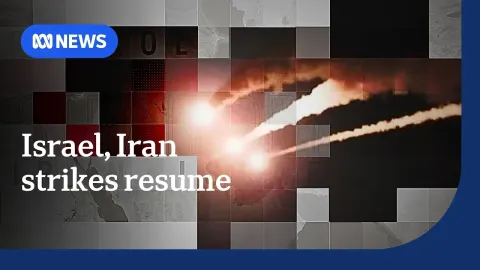



Today marks two months since the ceasefire between America and Iran took effect and also the most significant violation yet of that ceasefire. Overnight, Iran fired several salvos of ballistic missiles at Israel and Israel has now retaliated with air strikes in Iran. So Gregg, just fill in for us exactly what happened overnight. So first we saw Iran launch uh several waves of ballistic missiles at Israel. This was late on Sunday night local time uh which the Iranians said they were doing in response to uh Israeli air strikes in the Lebanese capital earlier in the weekend. Israel
said those missiles were intercepted. There were no reports of significant damage on the ground. Then a few hours later, we saw Israel uh launch a wave of air strikes in Iran. It attacked missile sites there, also a prochemical plant and other targets in Iran. And then as we're speaking now on Monday morning, there are reports just coming out of Israel uh that sirens are going off and that there are more waves of incoming uh Iranian missiles aimed at both the north and the center of the country. Uh there was an attack as well by the Houthis in Yemen. Uh the Iranianbacked
Shia militia there which uh carried out an attack on Israel. So why exactly did Iran attack Israel? For two months since the ceasefire took hold in April, there's been a dispute between America, Israel, and Iran over whether that ceasefire would also include Lebanon, a cessation of Israeli attacks on Lebanon. Uh so if you go back to the first days of the deal in early April, uh once it was agreed, Iran said it wouldn't abide by the ceasefire unless uh Donald Trump uh restrained the Israelis in Lebanon. And he eventually did that. He didn't tell them to halt their attacks entirely. Uh but he ordered Israel to halt the geographic scope
and the intensity uh of its air strikes in Lebanon. Now obviously Israel has always rejected this linkage. It understandably is unhappy about the idea that Iran could impose conditions on its war in Lebanon. And so Binyamin Netanyao the prime minister has always insisted that these two conflicts should be separate. And what we've seen over the past few weeks uh has been Israel intensifying its combat in Lebanon. Hezbollah has continued to fire at northern Israel. Uh it has been using in some cases fiber optic drones that Israel doesn't have a reliable way to
defend against uh to kill Israeli troops both in Lebanon and in northern Israel and to attack uh civilian targets in northern Israel. And this has put a lot of pressure on Netanyahu's government. Uh and so we've seen him uh expand the scope of air strikes in Lebanon, including the strike in Beirut, the capital. Uh over the weekend, he's ordered Israeli troops further into Lebanon. Uh and so for Iran now, the message that they are sending is that they insist on these two conflicts being linked. And if Israel does continue to carry out these attacks in Lebanon,
it has threatened to carry out further attacks on Israel. And Israel in turn is now sending quite a clear message to Iran. Right. It is. And I think particularly this strike on a prochemical plant uh is significant for two reasons. One is the impact that it will have on uh the Iranian energy sector, the Iranian economy. And then there's also the question of how Iran views that attack and how they will uh retaliate for it. They have treated these sorts of attacks in the past as being major escalations. We saw that happen in March when Israel bombed a petrochemical facility in southern
Iran. The next day, Iran launched a missile attack on the gas liquefaction plant in Qatar uh which caused extensive damage there. It fired at a Saudi oil refinery. Uh so will they follow a similar logic here? either attacking economically significant targets in Israel or perhaps uh widening the war horizontally and going back to attacks on Gulf States. Now, I think it's riskier if they attack Gulf states because they risk uh America getting into the conflict as well, and they risk the ceasefire falling apart uh entirely, but there is a fear here in the Gulf this morning
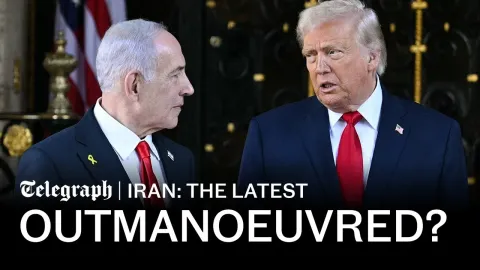
that they might once again uh find themselves on the receiving end of Iranian attacks. And Greg, where does Donald Trump stand in all of this? Depends what time of day you reach him on the phone and what mood he's in. I mean, as usual, the public messaging that we've heard, both what Trump has said personally and the leaks that are coming out of the administration overnight uh make it seem as if he's very unhappy uh with these Israeli strikes on Iran. Uh journalist from the FT called him up in the middle of the night. He answered. He said Netanyahu has
to accept whatever deal I impose. I call the shots. He doesn't call the shots. Remarkable thing for the president of the United States to say about Israel. Also remarkable that Trump is apparently taking phone calls from journalists uh in the middle of what you would think is a crisis situation in the White House. So, we heard that from him uh and we've heard reports in Fox News and elsewhere uh that the president supposedly told the Israelis that he's had enough and this needs to stop. Now, that's what we're hearing in public. I don't know if that's what the
Israelis are hearing in private. Uh I would be surprised if Trump had laid down a clear red line for Netanyahu. Had told him, "You cannot retaliate for this." I think more likely, uh he is saying this in public to avoid antagonizing the Iranians, but in private, uh he told the Israelis, they have a green light to retaliate so long as they stay within certain parameters. They don't do anything uh too massive in Iran. I suspect that is what happened here despite the appearance of a conflict in public. So where does this leave the ceasefire between US and Iran? Hanging
by a thread hanging by a slimmer thread than at any point uh in the previous two months. You know, whenever we've talked about this ceasefire uh since April, I've been saying I think both America and Iran uh want to abide by the deal. they see it as being in their interest to uh reach a more durable agreement rather than to resume the war and go another even more destructive round of fighting. And I still think that's the case even after what's happened over the weekend. Uh America has not gotten involved directly. It hasn't carried out its own strikes
in Iran. Uh I think it is trying to somewhat restrain the Israelis uh behind the scenes and Iran not to minimize or dismiss the fact that it's firing ballistic missiles at Israel but it has fired much larger salvos in the past. So I think it is trying to preserve a bit of an offramp here. So at some point the onus here really is on the Americans on the Trump administration. Uh are they going to call a halt to this? Are they going to tell Israel, you know, at this point you cannot carry out any further attacks against Iran? Uh or are they going to let this keep going and
risk again the possible resumption of the war, resumption of attacks on Gulf States? Uh there's there's a lot riding here on the hope that there will be no significant damage caused by this exchange of fire and this will stay within certain parameters, but the longer it goes on, I think the harder it's going to be to restrain this. Greg, thank you for talking to me. Thank you, Rosie.