6:47


. You know, this is one of the most famous pieces of music ever written. It was written for orchestra in 1808. This was long before the advent of recorded music. In other words, the only way to listen to music was to hear it live. And, of course, most people didn't have the luxury of listening to a live orchestra. If they were lucky, they might hear a fiddler on a farm or a piano in a rich man's luxurious home. Beethoven knew this, and he personally approved of arrangements that shortened his symphonic masterpieces, where about 40 musicians played on stage.
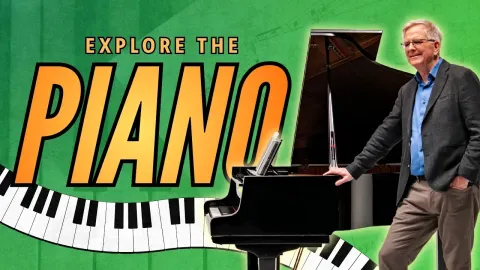
Orchestras were smaller then than two hands on one piano. Well, we all know that two hands are better than one, but a pianist knows that four hands are better than two. Julie, do you mind if I join you on the bench for a moment? Please. Yes. It's not quite an orchestra, but listen to a little bit of what 20 fingers can do, even if 10 of them are mine, with a good translation of a piece for a full orchestra. Are you ready, Julie? I am as ready as possible. Me too. Let's go. One, two, one. Heat. Hey, hey, hey. Heat. Hey, Zhar. Heat. Once upon a time, before the advent of recorded music, a hit was not a specific recording that could be listened to over and over again. It was a
piece of music that lived only at the moment of performance. The composer wrote it. Musicians studied, interpreted, and performed it. And the listeners gathered around to listen to him. Maybe an orchestra in a large hall. Maybe an ensemble in a small room. Maybe even just around one or two musicians at the piano.