17:17



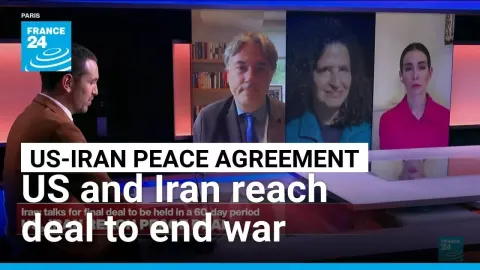
We're headed to the G7 summit later this month in Evian, France, where President Trump is expected to meet with six of the United States's closest allies. President Trump has long had a difficult relationship with most, if not all, of the G7 leaders. I'd say the two that he has the best relationship with are Giorgia Meloni of Italy, as well as the leader of Japan. But when you think of the top European officials, as well as Canada, that are there, all four of those leaders really having a difficult relationship with this U.S. president, increasingly unafraid to stand up to him on issues like tariffs, the war in Ukraine, the war in Iran. And this is a stark contrast from what we've traditionally seen between the U.S. and all of its G7 allies.
These are some of the U.S.'s longest, oldest friendships and partnerships. The Europeans have been a little bit replaced, at least in public image, with relations with the Middle East. Particularly the Gulf is closing these massive economic deals and the focus on tech and AI and trade. And we have not seen anything comparable in transatlantic relations with the Europeans. Both in Europe and in Asia, the feeling is increasingly that the U.S. has pivoted away from them and is focused right now on the Middle East.
This is the first time that the president will be seeing any of these leaders since the Iran war broke out, and that has been the biggest pressure point with these relationships since it began. All of these European officials have been unafraid to stand up to the president and saying that they do not support this war. They want to know what his end game is. They want to know how he plans to get out of this, how he plans, for example, to reopen the Strait of Hormuz, because these economic effects, as they pile up, they're impacting Europe more than anybody else. European leaders also really want to hear about Ukraine.
Is President Trump, as has been reported, planning to withdraw some support for that effort. Is he planning to stop sending weapons to Ukraine, for example? And President Zelenskyy of Ukraine will also be in attendance to try to push some of those issues forward. Tariffs are going to be another big issue on this G7 agenda. The president continues to threaten to use tariffs in different ways. There are still outstanding investigations that could potentially lead to higher tariffs on many of these countries. On the other hand, when we're looking at the Gulf countries, they've been in a very privileged position in relationship to the United States over the past one and a half years.
We've seen billions and billions, sometimes even pledges of trillions, that have sort of spotlighted the relationship between the United States and the Gulf countries in an unprecedented way. There's also things like AI regulation that they'll be discussing, as well as the president's recent moves to pull troops out of Germany and Japan. And they want to discuss securing supply chains, especially when it comes to critical minerals and standing up to China.