7:09



Millions of refugees and displaced people in Africa risk losing vital aid as financial agencies to scale back. UNXR says it has reduced operations in at least four countries. How can the crisis be contained? UN heads warning. Cams as conflict, hunger, and displacement strains Africa's humanitarian operations. We examine what the funding crisis means for refugees and host countries and the growing gap between needs and available aid. UNCR says it requires $8.5 billion for its global humanitarian operations in 2026. But as of October this year, the refugee agency reports it has only received $3 billion, leaving a deficit of $5.5 billion. The shortfall follows aid cuts
by several countries, including the United States. We have a responsibility to make every resource entrusted to us count. But efficiency has limits. There comes a point when greater efficiency cannot compensate for fewer resources. When funding falls below that point, the consequences are not abstract. They are borne by people who depend on it. Now, UNCR's budget for operations in West and Central Africa and the East and Horn of Africa and the Great Lakes region for 2026 stands at $3.2 $2 billion. Humanitarian operations in Uganda will require $361 million. Child around $352 million, Ethiopia $341
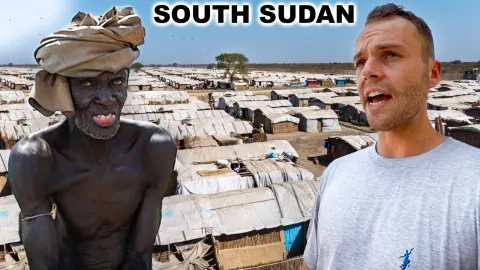
million. South Sudan $287 million and the DRC $220 million. However, there are still funding gaps between several countries, including Uganda in need of $273 million. Ethiopia $258 million and Sudan a gap of $221 million. Due to the funding shortfall, Ethiopia has suspended registration of refugees from Arthria and South Sudan. In Ched, a lack of funding risk disrupting health care and legal services for over 50,000 survivors of sexual and gender-based violence. And in South Sudan, more than 650,000 refugees and asylum seekers risk losing access to food and other assistance, according to UNCR and WFP.
I am now caring for six orphan children. My husband is missing and so are my two brothers. In the past 7 months, I have received financial assistance. Unless uh additional resources are secured, uh more than a million vulnerable people could lose access to lifesaving food and nutrition assistance by October. So this is looming. Now for countries like Uganda, South Sudan and Chad, which host millions of refugees, funding cuts are putting further strain on already overstretched public services. Now let's hear more from Mutinta Chimuka. She is the WFP country director in South Sudan. She joins me from Juba, South Sudan. Thank you for joining us here on Africa Matters. The situation has been displayed or portrayed by the UNCCR in
terms of what they've gotten and what is remaining. So, what's the what's driving this shortfall and how unusual is the situation compared to the previous years? Thanks for having me. Um, as you know, WFIP works together with UNHCR to support some 240,000 refugees living within the borders of South Sudan. We have been currently on a reduced Russian, meaning that the refugees are receiving half of what they should be receiving. And in the month of September, we had planned our last distribution, which meant that the refugees would have had no food assistance. However, thanks to uh some of our partners, we have been able to receive a little bit of uh resources
which will see us into uh the end of the year, just until December. But it means after December, we're again at the brink and we as the World Food Program, I'm not sure where we will find resources to ensure that the people who are living in these refugee settlements have enough to eat. And I stress just enough to eat because already they're getting a reduced ration. And just imagine in your household if normally you were uh spending money and having resources for what you normally eat, reduce that by half. How would you be able to manage in your own household? So between now and um December, allow me to say it's probably like two and a half months. So what is the priority of WFP? because you're saying if you don't get
enough funds by December then I mean operations will be halted. So what is your priority right now? Right now we have receive some uh funds and contribution pledges for us to be able to provide a half Russian half of what the refugees need for the next two months. So when I say next two months, we're talking about November and December. We'll be able to provide a half Russian to the refugees living within South Sudan. Where we have challenges is what will happen after December in 2027. We need to advocate still for resources so that the people living in these settlements who have no other means can have the bare minimum to actually survive from one day to the next. particularly um in countries like South Sudan where you are at right now.
So what are the immediate consequences for the refugees and uh displaced people when aid programs are cut? There's actually almost nothing for them to do. You talked about where we the refugees where they are coming from most of them are coming from uh Sudan which you know is currently facing conflict. So going to Sudan is not an option. Going to neighboring countries also is not an option. uh we have the consequences of uh El Nino which means that even within South Sudan and in the neighboring countries the harvests are going to be poor. So the resources even if people were able to grow food it's not growing at the level it should and unfortunately even across the region the
world food program is also suffering from a shortage of resources not just in South Sudan but in other countries uh in the region where uh the governments are hosting refugee populations including uh in Uganda and other neighboring countries. All right, I want us to have a look at um you know what higher commissioner Sally from the UNCCR had to say. This is what he said that there is a difference between doing quote unquote more with less and being asked to do the impossible. When we are looking at his statement, let's talk about the women and children who are usually the hardest hit by these funding cuts. What specific protection risks are these women and children facing as assistance is reduced?
First of all, if the women and children in particular, but not just the women and children were to go outside of the refugee uh settlements, for example, going um as if they were feeling very hopeless to go back to Sudan. They're facing a war in Sudan. the dangers for them are huge uh to go back to such an unsafe uh situation. Um and then also from other uh people could also do you know negative coping mechanisms which means uh things like uh marrying off their daughters uh young so that they have one less mouth to feed in that household. These are things that are really having long-term consequences that we don't want to even uh have and the solution is more resources as soon
as possible so that people can be in the protection uh and safety of the refugee settlements. get assistance in terms of food and get assistance in terms of other services such as water uh sanitation and medical services that other partners uh are also providing to the refugees living in the settlements here in South Sudan. And you know just based on what you've told us the picture you've painted for us it clearly sends a message that South Sudan is not alone in all this in the you know funding shortfalls. But how is the funding crisis um affecting refugees across Africa? And which countries are the most vulnerable? Now, as we speak, this situation of refugees is affecting countries such as uh Uganda, um Sudan, and definitely here in
South Sudan. We see some 240,000 refugees who are in settlements right now who rely entirely on the World Food Program and other part uh partners to provide uh assistance. This is really an unprecedented situation where we're talking about only two months of assistance to provide to these uh refugees and already it's already at a reduced uh ration. It's not that we're providing a huge amount of assistance. We're providing what a person needs half sorry half of what a person needs to survive on a daily basis. This is what we've had to do to stretch our resources as far as possible. But it is far from an ideal situation.
Mhm. And you know given this massive um shortfalls from traditional western donors, we're seeing the United States cut its you know um funding uh you know just put a cat on the sort of help they need to they used to give. What where does the responsibility now fall? Does it fall on the African countries or maybe regional bodies like the African Union so as to step in and fill the gap that has been left? No, very uh very good point. I think uh in South Sudan in particular, one of the main uh reasons for people facing insecurity uh food insecurity is the conflict. So number one, there needs to be peace. Then when there's peace, people can go to their farms, grow their own food. It
will take a little bit of time, but that is the fun fundamental. In the meantime, we really call on all um regional bodies, but particularly the government of South Sudan as well um to contribute and fill in the gap. We're talking about either financial resources uh cash that will enable WMP to buy uh food but also in kind contributions from the government of South Sudan would be very much welcome so that they using what resources that they have we can actually reach those uh those populations. So we also expect some responsibility from the government of South Sudan but also um regional bodies such as the African Union etc.
Right. Minta Chimuka, thank you for your time and for joining us here on Africa Matters. She's uh the WFP country director in South Sudan. She's talking to us from Juba. Still to come here on Africa Matters. I am Muhammed here in Micious Somalia. Diialysis keeps patients alive, but many here cannot afford it. We meet those receiving free treatment through a takish supported program. From aid challenges to health care, hundreds of Somali kidney patients are receiving free diialysis through a Takish program aimed at easing the financial burden of the life-saving treatment supported by the Tesish Red Crescent and the Somali Tukia training
and research hospital in Mogadishu. The program has provided hundreds of diialysis sessions over the last several months. Muhammad Kahir has more from the capital. 55year-old former public transport driver Salah Hussein Nur is a father of 15. He has been receiving free dialysis at this Turkish run hospital in Mishu for the past two years. Thanks to Almighty, I'm feeling much better now. I received diialysis through the support of the Somalian Turkish brothers. My health is better now.
Thanks to God. In MDishu, a dialysis session costs around $50 US and a typical patient needs 10 sessions per month. For patients with kidney failure in Somalia, regular diialysis is essential to staying alive. But each session comes at a cost that many families struggle to cover. Halima has been living with kidney disease for six years. For the past four years, she has been receiving treatment at this center where she under goes two sessions per week. I used to get donations from mosque and shops to pay for my diialysis. But for the past 4 years, it has been free of charge. For the past decade, the diialysis unit at Erdogan Hospital has provided treatment to more than 40,000 kidney
patients. The hospital says around 80% of those treatments were provided free of charge. Most of the medical staff at the diialysis unit are simileies trained by Turkish doctors. We have a complete system to ensure the safety and care of the patients. Access to diialysis remains limited in southern Somalia. There are only three facilities providing kidney diialysis in the region. most of them located in Modishu. For patients living in rural areas, traveling long distances for regular treatment can add another layer of difficulty. Patients receive $500 US monthly from the Turkish road crescent. A contribution that covers both the sessions and transport to and from the center. Our immediate priority is to
perfect our blueprint here in Mogadishu proving that uh cash transfer combined with uh hospital verification system work efficiently. Turkish red crescent field data shows that demand for diialysis in Somalia is growing but only three facilities in Mishu serve the south central region. According to the Turkish ro crescent, the program could pave the way for expanding the alysis access to the regions beyond Mishu. Ahmed Kah Africa Matis Mishu Somalia.
Now to the Commerus. A new law restricting foreign nationals from working in certain sectors is raising concerns among migrant communities who rely on those jobs to support themselves and their families back home. Bahar Uur reports. Every pair of shoes Larissa Resitiana sells helps her send money to her family back in Madagascar. A new law that has been passed but not yet enforced would prevent anyone who is not comorian by birth from running small commercial businesses like hers. Now she fears she could lose the business she and her family back home depend on. I am really scared because I came here looking to make money. Then a Malagasi person comes here and they grant him a visa. Mine was refused for business.
Where am I supposed to get money from? There is no way to get money. Around 20,000 Malagasa people live in the Comos. Many of them are women. In 2020, nearly 80% of all migrants were from Madagascar. Around 55% of the population of the Comarose lives below the poverty line, rising to 75% in Madagascar. Migration in search of work is common across Africa and the Comarose is not alone in tightening rules on foreignrun businesses. Just last month, Kenyan President William RTO called on authorities to shut down small businesses operated by foreign nationals. Tanzania made a similar move last year, banning foreigners from owning around 15 types of businesses. In South Africa, ongoing protests have long
targeted undocumented foreign traders. Supporters of the new law, however, argue that such restrictions are necessary. It's a law social justice. Many countries have done it without being accused of xenophobia or discrimination. In salaried employment, foreigners are welcome. But when it comes to entrepreneurship, they need to come and invest in sectors where we lack skills or where we lack capital. And I believe our country has the right to choose the type of investors who should come to our country. For many Malagasa families, working abroad is a lifeline. But if these small businesses are off limits, the impact could reach far beyond the comos to families who would depend on
the money sent home. Baharush, Africa matters. Meanwhile, for many minors and young adults detained after being suspected of committing a crime in Nigeria, getting legal help can be difficult, especially when they are detained or separated from their families. But a new partnership between the UN and Nigerian lawyers aims to make legal representation available to more children for free. Tessm Aende reports. 17-year-old Denla de Mafen, not his real name, was accused of being part of a gang that burgled a house in Jos and stole several items. The homeowners reported the burglary to police who went to the area. I'm from a very humble
background. There was nobody to come to my aid, but honestly, I was innocent. The experience was horrible. Maf and other suspects spent more than a week in police custody without being brought before a court. It took the intervention of lawyer praised Juluku and her colleagues to secure his release. As a firm, one of our core values is representing minors and juveniles. However, this has been difficult for us because of lack of funds. While Mafen received help, many other children in Nigeria have not been as fortunate. The United Nations Children's Fund, UNICEF, says many children involved in cases of trafficking, exploitation, neglect, and violence do not have access to legal aid. Many remain in remand homes or police custody
without trial with no family members or lawyers to speak on their behalf. Lack of knowledge of the law to say that somebody doesn't know that if you detain somebody for a certain period of time is illegal. and um the fact that in fact when it comes to minors in particular some people don't even know the ages of the people they even detaining. So when somebody is arrested and you keep the person beyond 48 hours 24 hours not taking the person to the nearest court is called illegal detention or if you detain somebody and you're torturing the person it's illegal detention. If you go to most juvenile home, you will discover that the children who have committed alleged crimes are children who do not
have a point of contact. Where can we find your parents? They will tell you that we don't know. According to a 2025 government and UNICEF report, over 133,000 miners and young adults were arrested in Nigeria between 2018 and 2022. and over 120,000 of them were held in adult prisons while about 68% of detained children lacked legal aid. To bridge that gap, about 7,000 Nigerian lawyers have been mobilized to provide proono legal services to thousands of children between July this year and March next year. But legal practitioners say more needs to be done to prevent unlawful detention in the first place. The government says it is training security personnel on the rights of people in custody. The aim is to ensure that people like Mafen have access to a
lawyer and their day in court. Tessum Akendi Africa matters draws Nigeria. In Nairobi's largest informal settlement, discarded plastic waste is being recycled into chess pieces. The project is helping to tackle a major environmental challenge while giving local children the chance to master a game often seen as a sport for the privileged. Hop Kirubi reports. Plastic waste is a familiar site across Kenya's Cabera, but a local initiative is changing that. We collect plastics along with other waste in the slum here in Cuba and we sort it and process it. We send the particular plastics that we need to a processor in another settlement. It comes back to us after washing and shredding and other processes as pellets
that we use in our process which is an extruder with molds that we had custom made here in Nairobi that are in the shape of chest pieces. The project has made nearly 2,000 chest sets using around 200 kg of plastic. Now these recycled pieces are opening doors to a world once closed to local youth. Chess is normally regarded as a rich man sport. It's very difficult to find chess in the slums. But for these kids, I feel like it gives them an escape from uh from the life within the slums because once they go to that board, it does not matter where you come
from. It's just your skills and your competence. Across the settlement's classrooms, teachers say the game is helping children focus better and solve problems. When I started chess, I was not very good. So I always came for training every day. So after sometimes maybe after some months, I started improving in my academics which I in months I used to get 80, 90 or 100. What began as an effort to clear waste now has an even bigger purpose for these children. It is more than a game. It's a chance to learn, compete, and prove their abilities. Hope Kirubi, Africa matters. And finally, Formula 1 is returning to
Africa for the first time in over three decades with Ronda set to host the Grand Prix from the early 2030s. To be known as the African Grand Prix, the race is set to be held at a sakute that is yet to be built about 40 kilometers south of the capital, Kgali. Diana reports. It has been such a great day here at the BK arena where Rwanda has signed a 10-year partnership with Formula 1 with its first race expected to take place in the early 2030s and um that will be in a district called BJera in the east south of Kgali. As we all know Randa is known for um carrying out different partnerships with different sports teams such as Paris Sanja LA Clippers and Arsenal to mention but a few. So this is
not the first time such a huge milestone is happening here in the country. We want to contribute not just participate and this new chapter in motorsports starts today. So many randons are pretty much excited about this whole experience because they expect it to create jobs for the young Randons. They're expected to boost uh um upcoming uh businesses, small businesses. It's expected to enhance um tourism and um lots of investments. And for the international world, uh they expect to experience um Formula 1 in a completely different environment um that is in Rwanda, which is a very good thing. And um so basically the whole concept of Formula 1 in Rwanda is it's it's here to show the world what Rwanda can offer, what Africa as a
continent can offer, and the kind of opportunities it can create for the next generation. That's our show this week. Share your thoughts and suggestions about the stories you've seen on this episode and leave your comments on Africa Matters YouTube page or on X. Thanks for watching and it's goodbye from me, Brenda Zeda Radido.