26:11



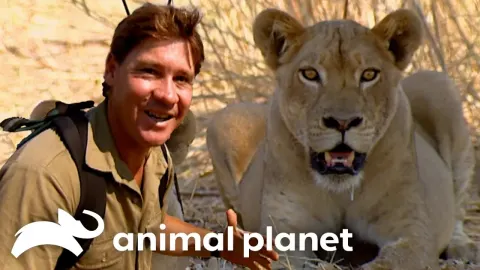
Few animals in the world inspire such awe as a male lion in his prime. His confident yellow eyes, huge head, and lush golden mane command respect. He is the largest of all Africa's carnivores. Powerfully built and beautiful. It's shocking then for many to imagine killing such a noble beast. But colonial hunters who came to Africa considered tracking and shooting lions as one of their highest achievements. Along with four other of the continent's most powerful and impressive animals. In time, this group became known as the big five. each revered by hunters as dangerous adversaries and thus sought after trophies
as each of the five could easily kill an unwary hunter. In modern times, thankfully, trophy hunting is far less popular and many of these majestic animals now live in protected wildlife parks and reserves around Africa. But they still face the brutal challenges of the natural world where their survival is by no means secure. Each animal must use its unique combinations of size, stealth, and power in numbers to persevere. Lions are the biggest of Africa's cats with males standing 1.2 m tall at the shoulder and weighing around 200 kg. While lionesses are smaller at about 130 kg, they are the only truly social big cats living together in groups known as prides.
Their ability to hunt as a team gives them the edge and allows them to bring down prey well over twice their size. By weight, lions are responsible for 65% of the prey killed on the savannah. And these lions specialize in hunting one of their fellow big five. Buffaloos are no easy target, though, because these huge herbivores have one special weapon against predators. Power in numbers. Herds like this one are made up mostly of females and their young and can have several hundred members. Within such a big group, organization is needed. And buffaloos have a well-ordered herd structure with smaller family units sticking together.
This mother had her first calf at around 5 years old. The youngster will be weaned at 7 months and from there on will subsist on grass like his mom. If conditions are good, the mother will have a new calf every 15 months. She, like all buffalo cows, won't move far from her relatives in the herd. But the bulls must look further a field if they're to find a mate. Before they can breed, they have to fight their way up the herd's hierarchy. This means going headto head with other bulls. Two 800 kg bulls slamming into each other has the equivalent force of a car hitting a wall at 50 kmh To protect their brains and absorb the impact, males have a thick helmet of horn called a boss.
It takes 8 years of battling for a buffalo bull to get high enough on the pecking order to be eligible for breeding. Dominance in these mega herds has other benefits, too. The highest ranking buffaloos take up position at front and center of the herd, giving them first access to the best food and minimizing their chances of becoming prey. But not all buffalo enjoy the safety of the herd. Bulls leave when they get too old to fight for dominance or keep up with the group. Alone, they are far more vulnerable to lions Legends of these old bulls trampling and goring hunters to death struck fear into the hearts of men
and earned buffalo a place in the big five. Unlike rhino and elephant, buffalo weigh less than a ton, making them small enough to be killed by lions. Mostly the mega herders have the edge and a united front of horned heads can drive away a whole pride of lions. Such large congregations not only offer protection from predators. They also play a crucial role in maintaining the savannah ecosystem. Buffalo are bulk grazers using wide rows of incizers to crop large quantities of long grass. As they feed, they clear access to shorter, more nutritious shoots below for selective grazers like rhino.
It's the buffalo's ability to work as a herd and to survive on lowquality food that has allowed them to thrive in the face of nature's challenges. With population estimates ranging from 500,000 to a million, they are the most numerous of any of the big five. because lions are also experts at working together, which is no doubt how this buffalo became a meal. Male lions are more powerful than the females and eat first. Once this big male has had the proverbial lion's share, the rest will eat. The pride is at home in the dense cover of the bushfelt, using the cloak of foliage to remain unseen. and protect their newest and most vulnerable members.
The young lions are barely 6 weeks old and have only just left the den where they spent their first weeks of life. Still, they're too young and vulnerable to be out in the open. And for now, mom keeps them out of sight. Despite the close-knit family system, lion prides are relatively fluid. Members come and go within a territory of about 40 km. Not far away, the cub's older siblings are enjoying a hunting success of their own. This lioness was born in a litter of five and spends much of her time with her sister and three brothers. At 18 months, they're old enough to be
completely independent of their mother. Working together, they have become proficient hunters and brought down a buffalo calf. It may be hidden from other lions and hyenas in the tangle of bushes, but it attracts the attention of Africa's biggest aerial scavengers. The lions don't appreciate uninvited lunch guests, So, one of the brothers tries to move the kill out of view. But it's too much effort.
You'll have to stand guard for now. The vultures won't try anything while the lion's still around. This kill is a promising sign for the young lions. Honing their hunting skills now before they have to leave the comfort and familiarity of the pride is important. Soon the males will have to seek a territory and pride of their own which will require fighting ferocious battles with other big males. They will leave together, cooperating in their coalition of three to hunt and challenge for control over another pride. As night falls, temperatures drop and the young lions are ready to eat.
Dinner time in a lion family can be a noisy affair. And after the first course, they relax under the stars. But the smell of the kill attracts an unlikely visitor, The Big Five's more elusive cat does scavenge sometimes. But she knows better than to intrude on a lion's feast. If the lions caught her hanging around, they would kill her. And beating a hasty retreat is a wise decision. When food is available in abundance, lions will gorge themselves. The males eat up to 40 kg and the females around 20 at a time. That's about five times their daily food requirement. This much food is a luxury of a successful pride.
Despite their cooperative hunting behavior, lions generally only have a 30% kill rate. That means 70% of the time they go away without any dinner. And when prey is scarce or the pride is inexperienced, hunger quickly gives way to starvation. With ribs and hipbones showing, it's clear that this young pride hasn't eaten in many days. It's a stark contrast to the bloated bellies of the more successful pride and telling evidence that although lions are thought of as Africa's most ferocious killers, their lives are by no means easy. The lions that do survive are the strongest and most skilled hunters, taking top spot on the food chain and eating most of the savannah's big herbivores. But not all of them.
This is one of the last black rhinos left in Africa. They may be too big to fall prey to lions, Before intensive poaching by humans, black rhinos were the most numerous and widespread of the five species of rhino in the world. The decrease in their numbers from 65,000 in the wild in 1970 to just over 5,000 now represents one of the fastest declines of any large mammal in recorded history. This bull, like all male rhinos, is a solitary browser, eating more than 200 species of trees and bushes. His prehensile hooked lip pulls foliage into his mouth.
The reason he is immune to being eaten is because he weighs 1,200 kg. By exceeding one ton in weight, he's above the predation threshold, making him too big for lions to kill. For this mother lion, hunting is far from a priority. Her main concern is keeping her cubs safe and staying cool in the heat of the day. But this isn't easy for her because lions cannot sweat. Without sufficient sweat glands, they resort to panting to expel excess heat. Along with sticking to the shade, this makes the scorching climate bearable.
Even heat cannot dull one of the cub's most driving urges. Her growl was a clear enough message. Back off. Even the starling dressed in chic but heatabsorbing purple feathers is getting too hot. As the afternoon passes, temperatures drop and the lioness has moved into a more comfortable position. The cubs are restless in their bushy hideout. They're hungry, but won't make a hasty move. Meal times are not on their terms. They know to let this sleeping lioness be. When she rolls onto her back, it's like a sign saying the milk bar is open.
The bravest cub approaches cautiously. The cubs will get all their nourishment from suckling until they're around 8 weeks old. Once the lioness is satisfied that the cubs are wellfed, she moves them back into the safety of the undergrowth. They have a lot of growing up to do before they become Africa's most powerful predators. The cubs are the only big five babies around.
This white rhino calf is less than a year old and his keratin horn is not much more than a bump. He's been eating grass since he was 8 weeks old, but he'll continue to suckle from his mother for several months. have poor eyesight and he keeps close to mom as he's still vulnerable to lions and hyenas. With mother's protection, he will likely grow into a mature bull. weighing around 2,200 kg. But for now, he's quite content at his mother's side and will stay with her for 2 to 3 years or until she has another calf. The bond between mother and calf is extremely strong in white rhinos, more so than with black rhinos. White and black rhino are both gray, but they exhibit certain differences like size.
The white rhino is almost a ton heavier. The name white derives from a mistransation of the Africans word vet meaning wide in reference to its broad square muzzle. This defining characteristic allows the white rhino to feed on its choice of the savannah's dense short grasses. But the grasses often contain ticks that get into hardto-reach places. Luckily, there are ox peckers willing to offer their cleaning services. The birds feed on the ticks, and both parties benefit from the arrangement.
White rhinos are the world's only purely grazing rhino species and weighing in at 2 tons, they are possibly the largest pure grazers that ever lived. White rhinos are considered territorial and semisocial as they do not form large herds. Females, however, are rarely found alone and will congregate in groups of up to six, like this group of two related cows and a subad adult calf. [screaming] Rhino cows often move through many male territories, and they've attracted the attention of the bull who controls this area.
Adult bulls are largely solitary, living in ranges of a few square kilometers. And this bull is eager to get to know his visitors. While rhino bulls are somewhat retreating in their courtship, another one of the big five is more overt in his intentions. Mature elephant bulls weigh around 5 tons, making them the world's biggest land animal. They are 2 and 1/2 times larger than the white rhino. This bull may be particularly aggressive. His weeping temporal glands and frequent urination are a sure sign that he is in a condition known as must. From the age of 25 years old, must occurs sporadically in bulls, increasing
their testosterone to six times its normal levels. Bulls in must dominate others in fights and are left well alone by most. Free to focus on finding cows to mate with. Although females are smaller, they control the movement of herds which are matriarchal, made up of related females and young males, all of whom share close social ties. Elephant families have the opposite activity regime to lions, sleeping for only four or 5 hours a day. This large herd has been moving constantly in search of food and water.
It's an exhausting existence for youngsters. This newborn elephant calf already weighs 100 kg. Being on the move all day has taken its toll on the youngster. In elephant life, there is no bond stronger than that between a mother and her offspring. And this mom is rightly concerned about her little one. In the heat, it's become dehydrated and needs to rest. Like all bulls, at adolescence, he was ejected from the herd. Sometimes the young bulls form bachelor groups like these two. The older bull's missing tusk shows he's had his share of battles.
The two are after one of their favorite foods, the nutritious pods of a camelthorn tree. But the pods are too high up to be picked. One of the bulls knows how to bring them down to his level. And he has perfected getting the pods into his mouth with a deaf flick of the trunk. An elephant's trunk contains an amazing 50,000 muscles. The appendage is incredibly versatile and strong, which is one of the reasons the elephant eats the biggest variety of plants of any herbivore. While feeding, this bowl is doing the
Cape Glossy Starling a favor. He's rustling up insects as he forages, which the opportunistic bird picks off. The use of their trunks combined with immense strength and intelligence means that elephants can survive in some of Africa's harshest landscapes. While the largest member of the big five lives an extremely social life, the smallest member is the exact opposite. They are the most private of Africa's big cats. Leopards are adapted to a range of habitats and are the most widespread wild cats on the planet. Dense vegetation like that along the banks of this river provides them with plenty of cover, vital for hunters that rely primarily on stealth.
The ability to move unseen helps them escape the attention of bigger competitors. Another key to their success because they can live in almost any habitat offering enough cover in which to hide. Leopards reside inside and outside of protected areas. Their ability to avoid human persecution as well as their adaptability has enabled them to live across most of Africa and beyond into Asia. This female is well established in her territory of about 25 km. its prime hunting ground and she has successfully defended it from other females for many years.
Males are afforded access only briefly to mate. This is her only companionship in an otherwise solitary life. Like all females, she is slightly smaller than a male, but is still powerfully built and an effective hunter. Stalking silently, they get as close as possible to unsuspecting victims like Impala. before pouncing and killing them swiftly with a strangling bite. In areas where other bigger predators like lion and hyena exist, leopards drag their kills into the boughels of trees to avoid being hijacked. Here the kill is relatively safe and she can eat in peace. But she has to prepare her meal first.
This is done by carefully plucking the hair off the carcass with her front teeth. She then uses her powerful jaws and large canines to rip into the meat. Above Vulture's circle, knowing full well their time will come. With no family members to share the feast, she can take her time feeding. The kill not only provides ample sustenance, but also most of the moisture she needs in the form of blood. Meaning leopards can go for long periods without water.
Elephants, however, need to drink more regularly. This little one has arrived at water just in time. Baby elephants are far more susceptible than adults to the potentially fatal risk of dehydration. Elephants use water for more than just drinking. Bathing is a favorite pastime that fulfills an important function for the elephants. Their massive bodies generate as much as 5 kW of metabolic heat, the equivalent of enough power to run a microwave for 5 hours. And after a hot day on the savannah, a swim prevents overheating. With their collective thirst quenched,
the herd can relax and enjoy some grooming. Rubbing against the river banks helps remove parasites and keep the elephants clean and healthy. Water is integral to the elephant's life, as it is for all of the big five and those that live here. The buffaloos come down in herds to sip together at the shore's edge. Rhino 2 arrived to quench the thirst of a long day. Even the lions are drinking, but they do so discreetly at a small stream away from the hustle and bustle of the water hole. In Africa's great savannah ecosystems, none of the famous five are exempt from
a reliance on water. Each of the animals in the big five is exceptional in one way or another. Whether in size or strength or social behavior, these charismatic animals are recognized in a class of their own. The huge solitary rhino with its armor-like skin and lanclike horn. The stealthy and elusive leopard moving unseen and unheard. Mega herding buffalo rumbling through the bush in throngs of thousands. Ferocious lions, symbols of brute strength and cunning cooperation, and the enormous social resilient elephant.
Each uses its strengths to thrive on the African savannah. And together they capture the imagination of the world. As icons of Africa's wildlife riches, they are and will always be the big five, Africa's pride.