10:32



So, the US military is preparing for a 90-day doomsday scenario because the US has just attacked Iran. Thank you very much. Recently, the US military carried out massive precision strikes on three key nuclear facilities. Now, on top of what's happening in the world, Europe has just experienced a wave of cyberattacks on its food supply system. Freezers and refrigerators in supermarkets in Belgium, Sweden, Ireland, Estonia and Luxembourg overheated in a suspected cyberattack, destroying millions of pounds worth of food.
Just a few weeks ago, the same thing happened in over 500 supermarkets in France. Some of their refrigerators apparently got so hot that they caught fire, and millions of euros worth of food had to be thrown away. And this is also happening in the USA . Six grocery stores on US military bases failed in the same way. And no one yet knows who is behind this. But it looks like someone is testing whether it's possible to destroy the food supply of an entire country. And that's partly why the US has just initiated a project called "Fortress," and the details of it are quite confusing. The Pentagon is preparing for what many consider a nightmare scenario. What happens if the power grid goes down and military bases are cut off?
Reporter Jennifer Griffin takes a closer look at these plans. A new doomsday plan called Fortress prepares military bases to maintain the combat capability of forces in the event of a large-scale attack that would disable power grids and other critical infrastructure. If the adversary shuts down the network through cyberattack, sabotage, or any other means, our bases will remain lit. Our aircraft will continue flying. Our command centers will never go out. Each base will maintain its own autonomous power supply along with large stockpiles of weapons and fuel for at least 90 days.
Factories will be converted to military weapons production, and key military leaders will be transported to a secure compound in the Cheyenne Mountains, Colorado. I will say only one thing. Their plan is madness. This will lead to a destructive escalation and the likely destruction of our commitment to the rule of law. If you pay attention, you will notice that something is starting to happen. Recently, for example, the US Army began training exercises that involved practicing large-scale battlefield burials, something the military apparently hasn't done since the Korean War.
This is a very ominous topic for conducting exercises. Also around the same time, the Pentagon declared a military emergency, which is now being used to expedite the introduction of a new battlefield painkiller, bypassing standard FDA procedures. You may have already seen the video of the air defense missiles now stationed near Trump's Mar-a-Lago estate. So, we are being prepared for something, and it's not just the United States. By one estimate, 33 countries are now advising their citizens to keep a supply of food, water, cash, and a radio at home. The United Kingdom has launched a 3-year campaign on this issue. Japan launched its own version. Germany says it
has 10 days' worth of supplies. And all this happens around one very specific date. Iran claims that if war breaks out again, they have, and I quote, a "surprise weapon" that will allegedly target undersea internet cables, data centers, and AI facilities. So the question arises: what is happening in the world right now? I've spent the last few days researching everything I could find, and I think it all boils down to a few possible theories. The first theory is that it's all just fear mongering. These are algorithms that have learned that fear makes us look. So it could just be a corporate machine doing what it does best: extracting money and attention from us because fear makes people buy things.
It is possible. The second theory is that it's all for the sake of control, because every crisis, real or not, is just another opportunity for governments to expand and centralize their power. And the third theory is the bleakest: it claims that all this will eventually lead to a nuclear strike on Iran. And the choice of time is not accidental. The people who push us to make such decisions are preparing for all of this. And how Iran will react if that happens is also pretty bleak. So, let's analyze the evidence for each of these theories. I'll tell you which one I think is the most likely. So, with that in mind, let's get started. Hello, my name is Andriy Dzhikh. I hope you are all well. Come for the finances, stay for the end of the
world video I didn't want to make at all. So before I explain all these theories, let me show you what's really going on, because there are a lot of things that might not seem like a big deal on their own, but when put together, they paint a much darker picture. So, first of all, you may have heard of something called "Fortress." This stands for Federal Operations for Resilience, Troop Resources, Energy Supply, and Sustainability. The goal of the Fortress project is to enable approximately 200 large military bases across the country to operate for 90 days without any dependence on the outside world. To do this, they are considering solutions such as battery storage, portable
nuclear reactors, stockpiling ammunition, fuel, medicines, etc. This sounds, of course, quite ominous. But the good news is that it won't start working next week. It will cost billions of dollars and take years. There is no official completion date. And many reports actually link this to China as much as to Iran. So that's good news. On October 20 and 21, the army also began the second phase of the exercise, called " Operation: Dragon's Testament." That's when the military began practicing what's called mass temporary burial-a fancy way of saying they were learning to bury fallen soldiers on the battlefield so that their remains could later be found and returned
home after the war. The details of this are pretty murky. You may have also heard the story about a certain painkiller. It all started back in February, when the Pentagon awarded a Singapore-based company a contract worth about $41 million to develop ketamine wafers that dissolve under the tongue. This is necessary so that the doctor can relieve severe pain without an injection. This story happened before all these events, but the news is that in July, Secretary Hague declared a military emergency.
The Department of Health and Human Services used this declaration to clear the way for emergency use of drugs needed by the Pentagon. The company is now trying to deliver these plates to the military before it receives full FDA approval. This also looks pretty ominous. Well, there was also that story about Mar-a-Lago, where NORAD deployed the Avenger air defense system nearby, stating that this was due to an increased threat level. They didn't go into detail about what exactly was happening. All this news sounds scary, but the good news is that the G20 summit will be held in Miami in December.
So there are other explanations for some of these things, but not for all of them. Because we still have to take into account the rest of the world. 33 countries have also begun warning and preparing their citizens. If you look closely at this map, it becomes clear that many of these countries have been giving similar preparation advice for years. In fact, FEMA has been urging Americans for decades to have a 3-day supply of essential items. Japan does this through earthquakes. Sweden, Finland, and the Baltic countries do this because they share a border with Russia. Not because of Iran. So much of the news about these countries' preparations is actually old news.
However, some warnings are truly new. For example, on October 22, the United Kingdom launched the "Be Prepared" program-a three-year plan that asks every family to have a three-day supply of food that doesn't require cooking, as well as a radio, power bank, cash, medicine, and the like. Their defense minister has warned of possible state-sponsored attacks on infrastructure-which is exactly what the world fears from Iran. The truth is that there is no evidence of preparation for any specific event, but people are encouraged to prepare for anything in case of need. And again, it is the timing and tone of these statements that are concerning.
OK. So the question arises: what hypothetical event are we being prepared for and when could it potentially occur? Let's look at some of these theories. And before I explain them, here's how you can protect yourself and your family from potential AI attacks by removing your personal information from the internet. As we move into a digital world, our digital identity and data are being collected and sold, as there are now hundreds of companies, so-called " data brokers," that legally collect information: our names, home addresses, phone numbers, and even details about relatives, and then sell it to anyone with a bank card. That's why this segment is sponsored by DeleteMe. I have
personally used their services since April 2024, and they have scanned thousands of records, removing dozens of instances of my private information being sold. They saved me many, many hours of searching and deleting this information myself. Luckily, DeleteMe runs in the background automatically and I don't have to do anything. Wirecutter recently named them the #1 data deletion service, and the deletion work is done by real people. This is not some third-party outsourcing company. This will help protect you from the risk of your data falling into the wrong hands, which is becoming increasingly important in the digital age of surveillance. Setup takes about 5 minutes. Link in the description, or go to
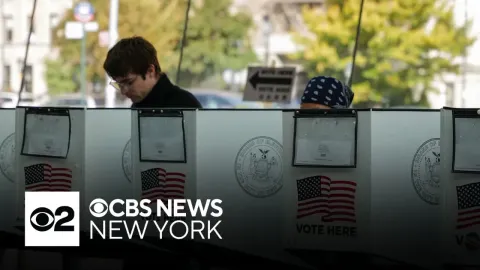
joindeleteme.com/andre20 to get 20% off. Thanks to DeleteMe for this segment, and now back to the topic. So, let's start with the least scary explanation of what's going on in this crazy world right now. The first theory says that events in the world are an algorithmic cycle, reinforced by the most powerful emotion in the world: fear. And all because midterm elections are scheduled for November 3. Fear is one of the oldest tools to get people to do something. Scared people buy things, right? They come to certain places. Both political parties know this, and both take advantage of it. They simply exploit various fears. Here is a test you can try. Ask a friend with different political views if they've heard anything about the blackout or this
90-day military training. Most likely, he will have no idea what you are talking about, because his algorithm is scaring him with something completely different. Now we no longer have a shared news cycle. Each of us has a different picture of reality. Part of this panic may be aimed at getting people to vote a certain way, which means that if it's true, it should fade after the election . So keep an eye on this. But fear is also very good at doing something else. It effectively grabs your attention, and attention is important to advertisers.
Advertisers pay money, right? So, it's entirely possible that this cycle is just about that. Fear is also extremely effective at getting people to buy products. You see, when people in the UK were told to stock up, sales increased almost overnight. One retailer reported that flashlight sales increased by 284%. And some supermarket chains saw canned food sales jump by 40% in just one weekend. That's a huge increase, right? And this growth is very important, especially at the end of the year. By the way, this has happened before. This happened in 2017. The American public was momentarily frightened, if you remember, that we could start a war with North
Korea. So, of course, people started preparing. One American emergency food company said its sales had doubled. My favorite example of this, however, happened earlier, in 1961. The US and the Soviet Union were at odds over Berlin, and Life magazine published an article titled "You Can Protect Yourself from Nuclear Strike" with a letter from the president. The government distributed about 22 million copies of a bomb shelter construction manual. And, essentially, a whole new industry sprang up almost overnight. Is n't that right? In July 1961, there were about 40 companies building radiation shelters. By October, about 120 had received government permission, while
hundreds were operating without it. Yes? Plus survival shops. They sold air filters, grocery kits, and all sorts of things. Then the Berlin Crisis subsided, and by 1962, approximately 600 such companies had gone bankrupt. And one of these companies sold off its bunkers, which people were using as garden sheds. So, essentially, fear has built an entire industry. And that's because, again, fear sells. And it's the end of the year, remember, when every company wants to have a strong fourth quarter. But, realistically speaking, if you think about it, canned goods aren't exactly where the real money is. A three-day emergency kit can cost most people around $100. But if you really want to find where the money is, just look at
Fortress. Yes? They need microgrids, battery storage, and portable nuclear reactors for 200 bases. And it brings in billions and billions of dollars over many years. Stockpiles of ammunition, fuel, medicine, plus that $41 million contract for painkillers that was awarded without any competition. Yes? This is profit for pharmaceutical companies. As we said before, defense contractors win regardless of whether a war breaks out. Because preparing for war is also a business. So, this theory argues that part of this panic is entirely driven by algorithms. Some of this is profitable, and some of it is pushed by people who want to scare, because fear is attention, and attention is capital. There
is just one small problem with this theory The problem is that an algorithm didn't create this Fortress initiative, and an algorithm didn't declare martial law and send bulldozers to dig training trenches at Fort Bragg. Usually, when the government makes decisions for the public to see, it means that it wants someone to notice something. And this brings us to the second theory. So, the second theory is a little more gloomy. She says that this event, whatever it is, is not really the main thing. The key is to create enough chaos to centralize the world under one central authority, one world government.
You see, there's a concept that economist Robert Higgs wrote about in his 1987 book, Crisis and Leviathan. He calls it the ratchet effect. The idea is that every major crisis gives the government new powers. And when this crisis is over, these powers remain. The government expands its power during emergencies and perhaps only partially reduces it, right? And history actually confirms this. During World War II, for example, the U.S. government began withholding income taxes from our paychecks. And they presented it to us as a war measure to help finance the war. But the war ended in 1945, and these
taxes are still being withheld from our salaries. Another example, of course, is September 11th. After September 11, President Bush declared a national emergency in 2001. This state of emergency was continued every year by Bush, Obama, Trump, Biden, and Trump again. It's been almost 25 years and we're technically still in it. The Patriot Act's temporary surveillance provisions have been extended again and again for nearly two decades. Additionally, during COVID, the health emergency lasted for over 3 years, and here's how it applies to the present. In July, the Secretary of Defense declared a military emergency, and that declaration is now being used to
supply drugs to the military, bypassing the normal FDA approval process. And this is beneficial to pharmaceutical companies. Moreover, the campaign in the UK is not a three-week event. This is now a three-year program. And "Fortress" is a plan for the military to operate autonomously for 90 days. So, we are told to keep a 3-day food supply, while they have 90 days. So when you build that kind of infrastructure, the point is, it just becomes the new normal, right? Like: always be ready for anything at any time. And now let's move on to where some people go even further. They say that
governments around the world are using this fear to move towards a more centralized and coordinated system, essentially a world government. And in 2015, all 193 UN member states signed a document called the 2030 Agenda. Around the same time, the infrastructure for a more controlled financial and identification system began to be created. The European Union requires each member state to provide citizens with a digital wallet for identification by the end of 2026 And earlier this year, the United Kingdom tried to make digital ID mandatory for proving the right to work. As I've discussed in my recent videos, the foundations for this programmable money are being created through
central bank digital currencies and stablecoins. Then, at the G20 meeting just a few days ago, the US Secretary of State told the world's foreign ministers that we are at, quote, "a moment of choice" and that these crises require collective solutions So, if you tend to see certain patterns, I think they are easy to find here: first you have to sell fear, then the solution, and after that comes control. So, as the world goes through these collective crises, all the governments of the world come out of them a little stronger than they were before. And they all create the same tools: digital IDs, programmable money, and extraordinary powers. All these regional crises are just, I quote, "opportunities" for
the centralization of greater power. And this, of course, brings us to the third theory. This third theory is not what I wanted to make this video about, but I think it's important to tell you about it anyway. This theory argues that it is not just a matter of governments expanding their power. She says that a nuclear strike on Iran could happen very soon. Here is a timeline of events. In October, President Trump said that the United States would not launch new strikes on Iran until the midterm elections, which, I recall, will be held on November 3. The Financial Times later reported why. This is because Israeli Prime Minister Benjamin Netanyahu was preparing a multi-day operation for the weekend of October 10,
larger than the February strikes. Trump blocked it because of the election. One source told the publication that the resumption of war after the elections in both countries is, and I quote, "a very likely scenario." Remember that Netanyahu is in a very difficult political position right now. Historically, his strongest positions were when he acted as a wartime prime minister. They say he had a tense phone conversation with Trump this weekend Netanyahu wants new strikes immediately after the elections, while Trump wants more time for negotiations. On November 1, Tucker Carlson published a warning that the Trump administration could be days away from ordering a strike on Iran. To be
fair, this isn't the first time Tucker Carlson has made this prediction. He has said this many times in the past and it hasn't happened. But if this happens, the target will most likely be a facility in Iran called " Mount Kailo". Here's what Trump says about it. And again, a significant part of what we've done, maybe 99%, is ensure that Iran doesn't have nuclear weapons. Those objects were blown up. We may have to blow up another one-"Mount Kylo." We don't see much activity there, but if we do, we'll destroy it immediately Why is this important? Remember that emergency declaration of war that was used to expedite the
supply of painkillers to the troops? Back in July, Secretary Haeck officially determined that there was a military emergency or potential threat that posed an increased risk to U.S. forces in the form of an attack using chemical, biological, radiological, or nuclear agents. This is a very serious threat. What could provoke Iran to go so far as to use such force? Maybe if they were to suffer a nuclear strike. And if that happens, how will Iran respond? Is n't that right? Their top security official mentioned undersea internet cables, data centers, and AI facilities in the Persian Gulf region. And perhaps what we are seeing now are attacks of a similar nature, but on a smaller scale. Isn't that right? For example, on
November 1, someone hacked the official airstrike app in Ukraine and sent people false warnings about radiation and chemical attacks to their phones. Isn't that right? There were also attacks on grocery stores and freezers. So, hopefully, nothing of this scale will happen, but if it does, that's the logic of this theory. And I think in a few days we will find out whether this theory comes true or not. Now, if you've seen this place, here's what I personally think . I don't necessarily consider these ideas to be separate. I think all of these theories are happening right now to some extent. And once you understand these theories through the lens of incentives and who benefits from it, you can begin to
separate truth from fiction. For example, fear, right? He is 100% real. It is monetized by algorithms, it is monetized by corporations. I mean, think about how many products the companies must have sold, how much extra food, water, and camping gear they sold because of this story. This is used by politicians right before elections on both sides. This is used by influencers. I'm part of this too, right? If I had titled this video something like "The World Will Be Alright." "There's nothing to see here ." Would you click on this video? Probably not. These are all powerful incentives. Governments are using this moment of fear to also expand their power, because that is what governments have always done in times of crisis.
So again, when you understand the game of incentives, you can begin to see the truth, which doesn't mean that truth doesn't exist. I think there is a very real risk of escalation with Iran over the next few weeks. The good news, I think, is that not every scary thing you read is confirmed right now. You may have seen claims that November 17th is the day when the lights will supposedly go out. Part of these rumors come from the animated series "The Simpsons." Admittedly, some of their predictions were surprisingly accurate. They predicted a tiger attack on Siegfried and Roy,
Disney's purchase of Fox, and President Trump's descent down an escalator before he was even president. But to be fair, this series has been airing for over 700 episodes. So, of course, some of these jokes work as predictions and become reality. Regarding this event, the clip about November 17th that people are sharing is actually from the 2023 Thanksgiving episode. And this is what it looked like. Grandma Lisa, why do we light a candle every Thanksgiving? In memory of the great blackout that nearly destroyed our city, when we had to write everything down by hand.
It began on a cold November day, back when snow could only be seen in museums. Although, I have to say, what's interesting about this clip is that on November 17th, FEMA and the FCC are actually conducting a nationwide test of the emergency alert system. This is supposed to only apply to TV and radio and last about a minute, but we'll see if The Simpsons predicted this. I just thought it was pretty funny. Another thing I found funny was that the first three videos I downloaded from the news all start with the same message. This is a nightmare scenario. The Pentagon is preparing for a nightmare scenario. nightmare scenario And when they all follow the same pattern, it usually means they want
us to believe something. There is some interest here. Another version I keep seeing is that artificial intelligence will shut down the power grid. Again, this is entirely, entirely possible. Now, whether this is intentional or not-time will tell. Personally, I'm not panicking. I don't take any drastic steps based on any dates. I don't sell my investments to hold onto cash, but a couple of months ago I made a video about preparing for something like this. This was at the beginning of the conflict in Iran, when the Strait of Hormuz was first blocked. I made a whole video about how I prepared.
I made a list of all the things I stocked up on, and I feel like it was important to do so for my own peace of mind. Overall, I think being prepared is a good idea. Links to such videos are below if you would like to watch them. This is in the premium section where I post videos a day early and share additional thoughts on investing, but in general, I think it's a good idea to have a few days' worth of water, food, and essentials at home, because it's just cheap insurance. The military is preparing for 90 days. Three days for your family is quite reasonable. Keep some cash outside the bank, maybe some silver and gold. I really hope we avoid a nuclear attack. I really hope so. And I hope that there will be no blackout or
AI attack, and that this is all just algorithms doing what they do best- scare us all into giving up our attention and capital. But I think we'll soon find out which of these theories was closest to the truth. As always, I wish you a wonderful continuation of the day. Press the "like" button. Subscribe if you haven't already. I'd be happy to see you here next time. Take care of yourself.