4:04
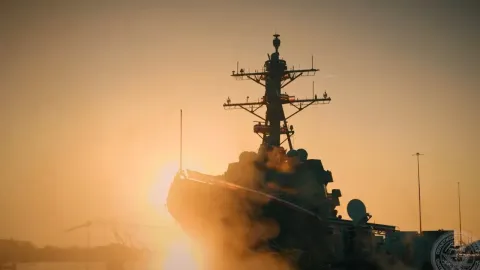



So, let's take a look at what the US public thinks of NATO. And you can see, you know, support is relatively strong. There's There's majority support across the two parties if you average it. But, what's interesting, maybe unsurprising, is that this is becoming an extremely partisan issue, right? If you go back to 2015, there was basically very little gap. Republicans have soured on NATO because Trump has soured on NATO. Democrats seem to be still pretty supportive. What do you read into this? You know, is this going to last beyond Trump? Is this a Trump-specific phenomenon? Well, the first thing that strikes me is I'd want to break down of who's included in the red line of
the Republicans as opposed to independents. Um because I think the Republican Party is changing at pace. Um but when I look at this, it shows me that we have sort of a public diplomacy mission to explain to Americans who are sitting, you know, in their defense across an ocean, not feeling the very acute effects of the war in Ukraine and what's happening in Iran on a daily basis. Um you've got to explain to them why it's in their interest to maintain stability on the European continent. And I don't think we've done a good job of that. Uh we've just sort of taken NATO for granted uh for, you know, several decades and really haven't explained to your average American why it's a benefit to them. But, if we That hasn't been accomplished
during the biggest war in Europe in a generation, um is it possible? You know, it seems to me that a significant chunk of the American electorate uh just don't want the same commitment to the defense of a continent they see as wealthy and take capable of taking care of its own defense. You know, is it really just a sales job? Or I mean, it sounds like it could go deeper than that. A bit of it's a sales job. I mean, there are certain things uh you know, if I if I draw on that example of the Ukraine war, I remember during the Biden administration uh when we got pushed back on the amount of military equipment that was going to Ukraine, we produced flyers showing state-by-state how you
know, sending more missiles to Ukraine benefited Florida and North Carolina. So part of it's a sales job. Part of it though, you're absolutely right, is generational change. And we saw this with President Obama, who was our first Pacific president and was really looking in a different direction. Born in Hawaii and you know, really focused on that. Exactly. You know, you see it with younger generations who I think I don't want to stereotype them, but see the world is sort of interconnected and maybe don't have such a memory of defense and deterrence as you know, my generation. So this rebalance is the right thing to do. And Europeans do need to step up and make this a more equal alliance. Um it won't just make the Americans more
content and more likely to stay in NATO. It will also ensure that Europeans themselves have more agency. And when they are put in situations like what we saw with Iran, where they are unhappy, they have the political capital to push back. So that's that's partly a question of um uh where the Republican Party goes on this. And you can imagine a President J.D. Vance being much more skeptical towards Europeans in NATO or a President Rubio being much more favorable despite his own recent skeptical comments about Europeans. But the interesting thing we don't perhaps spend much time thinking about or not just yet at least is the Democratic side of all of this. That the Democratic voters like NATO. But it
seems to me that if I look at the contenders in the Democratic Party, there's a range of views. There are people who think America is overstretched in the world for different reasons. They are more skeptical of a of a heavy commitment to Europe, a heavy commitment to NATO. And there are others who perhaps, you know, more focused on the American middle class, American prosperity, think American defense spending needs to fall. Where does the Democratic Party go on these questions? Do you have a sense of that? Well, you know, right now, I mean, I've been a bit divorced from those conversations, but I think people are very focused on the midterms um and using the midterms to essentially as a referendum on some of the policies domestic and international that they're
happy or unhappy with. But once we get past that, I think you'll see more of the contenders for the Democratic nomination uh for the presidency um emerge and you'll see that difference in views. I mean, we got a taste of it at the Munich Security Conference um where we had someone like Alexandra Ocasio-Cortez, who's considered to be on the more progressive side of the party, um I think speaking very compellingly on defense and the challenges that are facing us. Um so, I think people will have this foreign policy knowledge, uh but American voters don't vote on foreign policy. I've seen it again and it really does tend to be um you know, pocketbook domestic issues that drive their votes. How high is
inflation? Um do I feel confident in secure in my job? I don't think that's different than other places. So, you know, as we move forward, probably again, the best thing that we can do is move down this path where you're showing that NATO is a good deal and it's more balanced internally.